Permanent Mission to the United Nations Office and other international organizations in Geneva
-
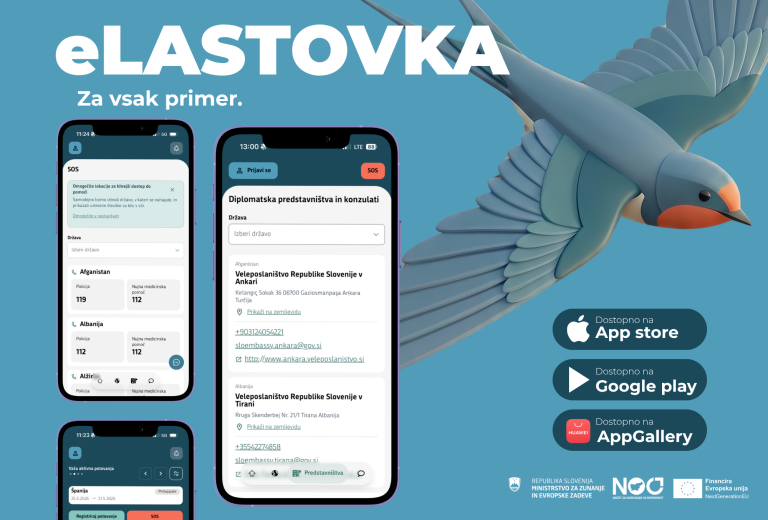
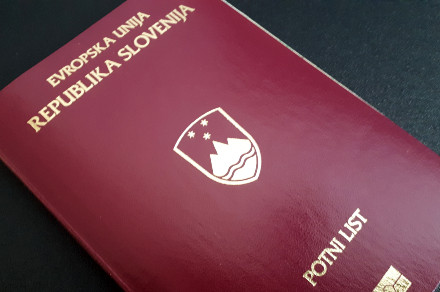
The Ministry of Foreign and European Affairs has launched a new web and mobile eLastovka application for Slovenian nationals travelling abroad. The application allows faster and easier access to key information and significantly more effective notification in case of emergencies or crises.
-
The theme of this year’s World Health Day is Together for health. Stand with science. The Ministry of Foreign and European Affairs has joined the calls to strengthen scientific collaboration in order to protect the health of people, animals, plants and the planet. It supports efforts to strengthen global health and food security, as well as to integrate health considerations into scientific, economic and development cooperation.
-
The 61st session of the UN Human Rights Council (HRC) has ended. This was Slovenia's first session as a member of the HRC since rejoining. Despite the current global tensions, the session yielded significant results, including discussions on the implementation of human rights in individual countries and the protection of children in armed conflict.
News
-
Slovenia’s efforts to promote the rights of older persons at UNHRC 63rd regular session
During the 63rd regular session of the UN Human Rights Council (HRC), Slovenia, as a Council member, actively participated in discussions on the gravest human rights violations worldwide and in negotiations leading to the adoption of numerous regional and thematic resolutions.”
-
International Day of Caves and Karst, proclaimed last year at Slovenia’s initiative, is being celebrated for the first time
UNESCO’s designation of 13 September as the International Day of Caves and Karst is a remarkable diplomatic achievement for Slovenia. It is the result of a successful diplomatic campaign spanning several years and a testament to the excellence of Slovenian karstology. The campaign was also a success thanks to the many years of outstanding work carried out by Slovenian scientists researching and protecting caves, karst and related phenomena.
-
World Humanitarian Day
World Humanitarian Day, celebrated on 19 August, provides an opportunity to honour humanitarian workers and show solidarity with people around the world whose lives are affected by humanitarian crises. On 19 August 2003, 22 humanitarian workers were killed in a bomb attack in Iraq. Five years later, the UN General Assembly adopted Resolution 63/139, designating 19 August as World Humanitarian Day.