

State Secretary Tamara Weingerl Požar on the importance of cross-border cooperation for strengthening strategic supply chains
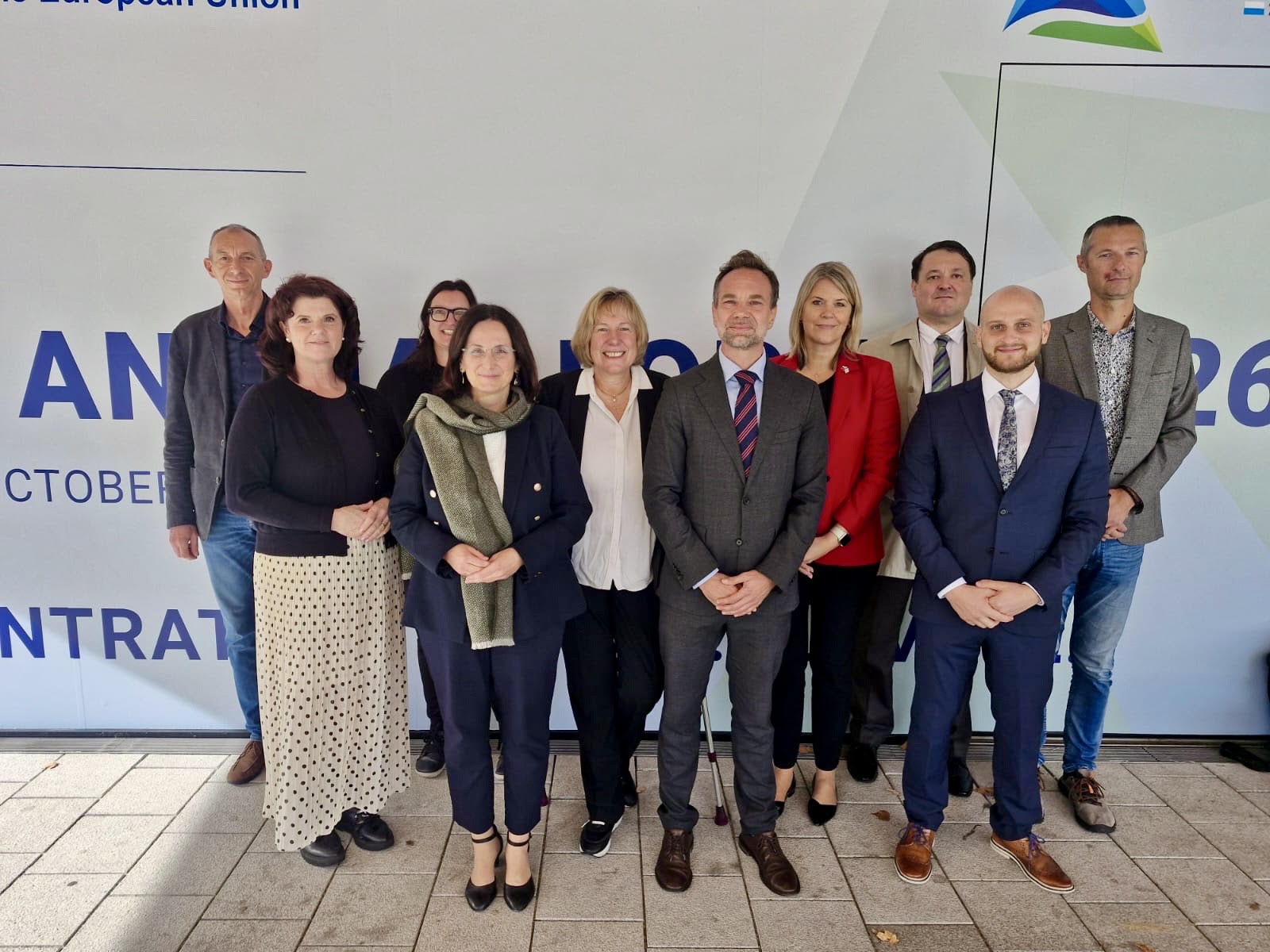
State Secretary Tamara Weingerl Požar attends the 11th Annual Forum and General Assembly of the EU Strategy for the Alpine Region. | Author Ministrstvo za zunanje in evropske zadeve
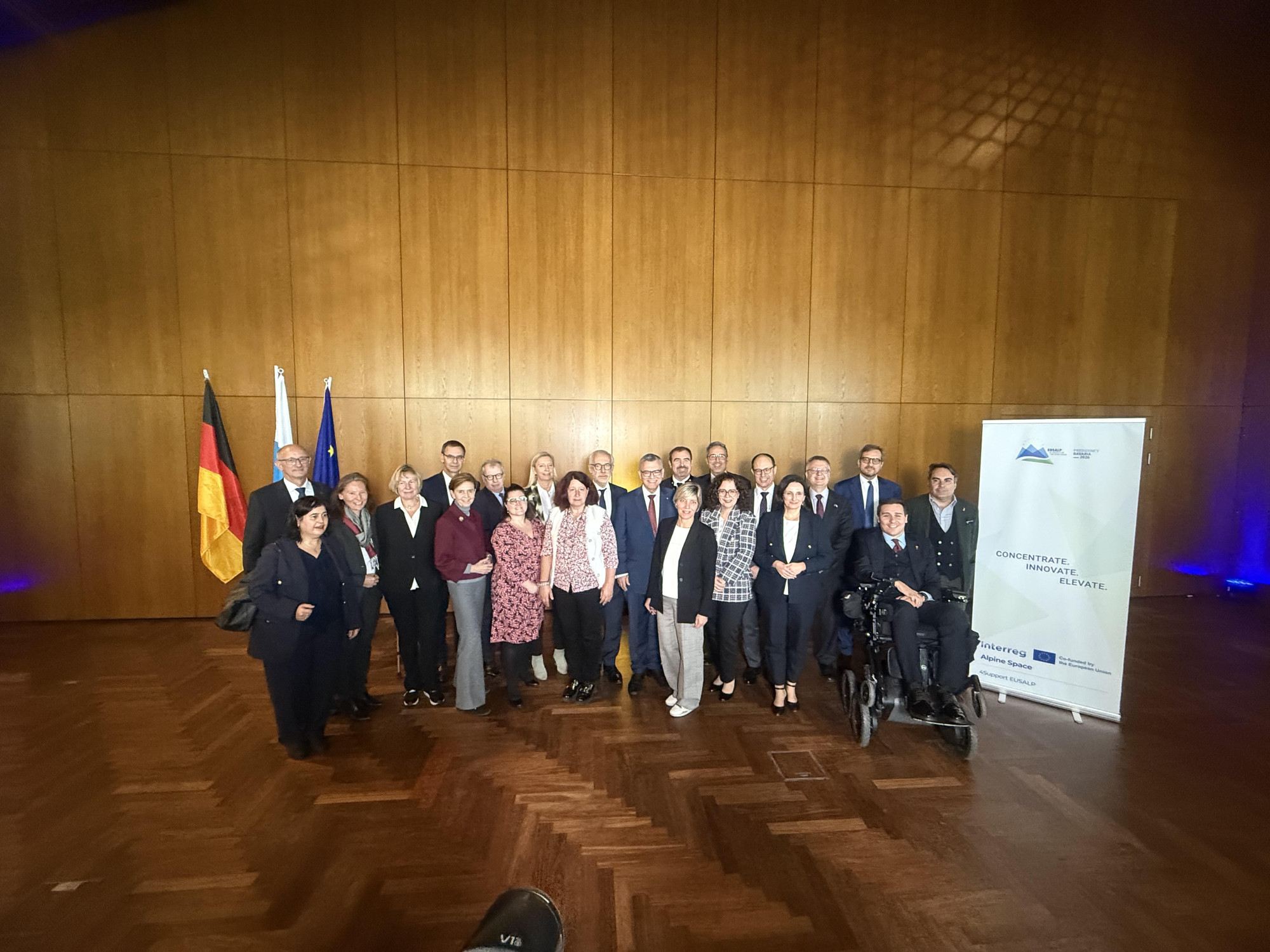
The representatives also approved the revised work plans for the period 2026–2028, officially launched a new strategic instrument known as EUSALP Missions and handed over the leadership of the Strategy to France for 2027.
In her address to the General Assembly, State Secretary Weingerl Požar welcomed the strengthening of the Strategy's operational effectiveness and supported the establishment of the three pilot missions which extend beyond the scope of individual one-year presidencies, thus creating long-term political commitment and strategic focus. Regarding the mission for young entrepreneurs and talent, she emphasised the need to prevent brain drain and to create conditions that would enable young people to develop their entrepreneurial spirit in their home environment (“the right to stay”), which was also a key priority of the Slovenian EUSALP presidency. She highlighted Slovenia’s role in drawing up the EUSALP roadmap for the circular economy. In support of the mission on sustainability and the legacy of major sporting events, she pointed out their significant economic importance for the Alpine region, while also calling for caution regarding the vulnerable alpine environment.
At the main plenary panel of the annual forum, which was dedicated to the EU’s future multiannual financial framework after 2027 (MFF 2028+), the State Secretary stressed the importance of maintaining ambitious funding for the future EU budget. This would allow for the simultaneous strengthening of European competitiveness, security and resilience, while preserving a robust cohesion policy and the Interreg programme. Given the presence of world-class research centres and innovative companies in the Alpine region, she emphasised the importance of close cross-border cooperation in strengthening strategic value chains and boosting the region’s global competitiveness.
The EU’s macro-regional strategies provide a well-established political and strategic framework for multi-level governance. Within this framework, Member States, partner countries and regions can discuss cross-border challenges and strengthen European cohesion. Slovenia is in a unique position due to its geographical location, as it actively contributes to three out of the four EU macro-regional strategies: the Alpine (EUSALP), Danube (EUSDR) and Adriatic-Ionian (EUSAIR) strategies. It also acts as a facilitator in the region.
Established in 2016, EUSALP brings together five EU Member States (Austria, France, Italy, Germany and Slovenia) and two non-Member States (Liechtenstein and Switzerland), with a combined population of over 80 million. As one of the most economically developed and innovative regions in Europe, the EUSALP area strives to strengthen global competitiveness, promote sustainable mobility and protect the fragile alpine environment and water resources.
On the sidelines of the annual forum, State Secretary Weingerl Požar held bilateral meetings with senior representatives of the Federal Republic of Germany and the Federal State of Bavaria. During the meeting with Florian Hahn, Minister of State at the German Federal Foreign Office, both parties confirmed the excellent relations between Slovenia and Germany and expressed their commitment to maintaining an intensive political and economic dialogue. Germany remains one of Slovenia's key strategic and foreign trade partners. They also discussed current global security challenges, paying particular attention to the future enlargement of the EU and the progress of the Western Balkan countries.
During her discussion with Dr Florian Herrmann, Head of the Bavarian State Chancellery and Minister for Federal and European Affairs, International Relations and the Media of the Free State of Bavaria, State Secretary Weingerl Požar emphasised the historically strong ties between Slovenia and Bavaria, stressing the importance of continued cooperation within the framework of the Permanent Slovenian-Bavarian Mixed Commission, which celebrated its 50th anniversary last year. The next meeting will take place in Slovenia in 2027. The two high officials discussed opportunities for deepening economic and technological cooperation, including in space technology, fusion, artificial intelligence, research and innovation.
The meetings reaffirmed the importance of Slovenia’s close cooperation with Germany and the Federal State of Bavaria in strengthening European security, competitiveness and resilience. Slovenia is committed to a united, secure and economically robust Europe with close cooperation between Member States and effective regional partnerships. A significant part of the discussions was also devoted to the challenges and opportunities facing the Alpine region, particularly with regard to transport, energy connectivity and circular economy, while the automotive industry, advanced technologies, artificial intelligence and digitalisation continue to offer great potential for cooperation.