

9th regular session of the Government of the Republic of Slovenia
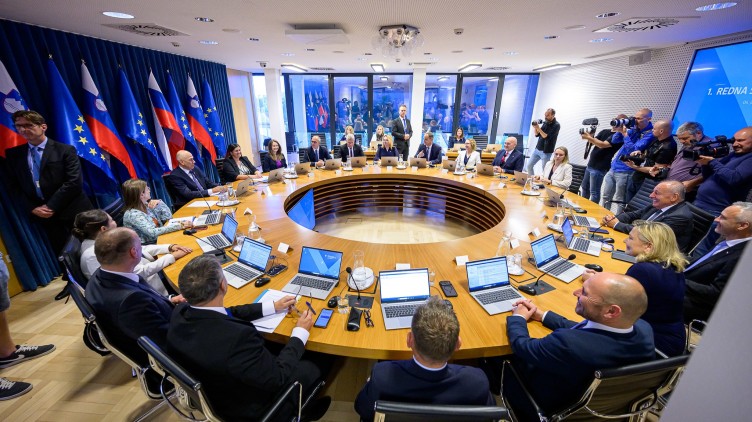
Author Office of the Prime Minister
One of the coalition’s priority objectives is to support the development of the full potential of the younger generation. With this in mind, at today’s session the Government amended the conditions for obtaining a Zois scholarship under the Scholarship Act.
In previous years, many talented young people were unable to receive a scholarship because of an unreasonable restriction determining which national competitions could be taken into account. Instead of the quality of an outstanding achievement being the decisive criterion, only competitions that received public funding were eligible. The legislation thus created an unnecessary administrative obstacle to rewarding talent, rather than focusing on the substance and objectives of the competitions.
The proposed solution will ensure more appropriate treatment of applicants and reduce the administrative burden involved in determining eligibility for Zois scholarships. Developing the full potential of the younger generation is one of Slovenia’s key strategic priorities for achieving a development breakthrough in the years ahead.
The Government of the Republic of Slovenia took note of the report on the state of the energy sector in Slovenia in 2025, prepared by the Energy Agency. In addition to providing a comprehensive overview of developments in electricity, natural gas and heat supply in Slovenia, the report highlights several important challenges for the country’s future energy policy.
The 2025 report showed a concerning decline in the share of domestic production covering electricity consumption, from 97% to 82%. Domestic electricity production, taking into account half of the output of the Krško Nuclear Power Plant, covered only 82.8% of final consumers’ electricity demand. A year earlier, the coverage rate had been significantly higher, at 97.1%.
The decline in domestic production was due, among other factors, to less favourable hydrological conditions and consequently lower hydropower generation. During the previous term of office, in which electricity traders played a major role, insufficient attention was evidently paid to achieving energy sovereignty and self-sufficiency.
The consequences of the misguided approach to the green transition pursued in the past are also becoming increasingly apparent. One important reason for the decline in domestic electricity production is the significantly reduced operation of the Šoštanj Thermal Power Plant (TEŠ) following its transformation into a provider of the public service of heat supply.
The Agency’s report therefore once again confirms the importance of a balanced energy mix capable of ensuring a reliable and affordable energy supply even during periods of adverse weather, market or geopolitical conditions. Slovenia must be able to meet as much of its energy demand as possible from domestic sources, while maintaining the stability of the electricity system and the competitiveness of the economy.
The Ministry of Infrastructure and Energy considers that the Energy Agency’s report on the state of Slovenia’s energy sector in 2025 confirms the need for an energy policy that prioritises security of supply, competitive prices, system stability and stronger domestic energy production.
At a time of growing geopolitical uncertainty, Slovenia must build a robust and diversified energy system for the long term, one that is not excessively dependent on any single energy source or on imports and that is capable of providing sufficient energy for households and businesses even in more challenging circumstances.
The Government also approved a proposal for amendments to the Excise Duty Act, which will make it possible to mitigate the impact of high energy prices on households and businesses, including in relation to gas oil used for heating (extra-light heating oil – KOEL), which in Slovenia is also used, among other purposes, as fuel in agriculture.
In doing so, the Government is responding to exceptionally high and persistently elevated energy prices, which place a significant burden on Slovenian households, businesses and the agricultural sector. Several other EU Member States are also introducing specific measures to support households and individual sectors of the economy.
The proposed amendments introduce a new excise duty rate for KOEL, reducing it from the current €157.50 to €42 per 1,000 litres of fuel. This will enable the Government, by means of a regulation, to reduce the excise duty on this fuel to as little as €21 per 1,000 litres, which is currently the minimum excise duty rate for KOEL permitted under the relevant European Union (EU) directive.
The measure will make it possible to reduce the excise duty on KOEL, which is also used as agricultural fuel, immediately and before Slovenia receives a decision on its request for temporary permission to reduce excise duties on energy products below the minimum EU taxation levels.
The Government submitted this request to the European Commission at the end of July and today approved amendments to the request that also cover KOEL.
The adoption of the proposed amendments and their consideration under an urgent legislative procedure will enable the Government, within a short period of time, to gain greater scope to influence retail energy prices by reducing excise duties. In the case of KOEL, this will initially be possible through a systemic reduction in the excise duty within the existing framework of the applicable EU directive. Once a decision by the Council of the EU has been received, excise duties could also be temporarily reduced for all relevant energy products – unleaded petrol, diesel and KOEL.
If the Government’s proposal is approved, it will be possible to temporarily reduce the excise duty on KOEL even further than envisaged in the proposed amendments to the Excise Duty Act.
The changes will provide the Government with additional flexibility in responding to exceptional conditions on energy markets and enable it to mitigate sudden price shocks more effectively. They will also give the state greater room for manoeuvre in adjusting excise duties during periods of pronounced volatility on international markets, particularly where the scope for reducing excise duties to the currently permitted minimum levels has already been almost fully exhausted.