

195th regular session of the Government of the Republic of Slovenia
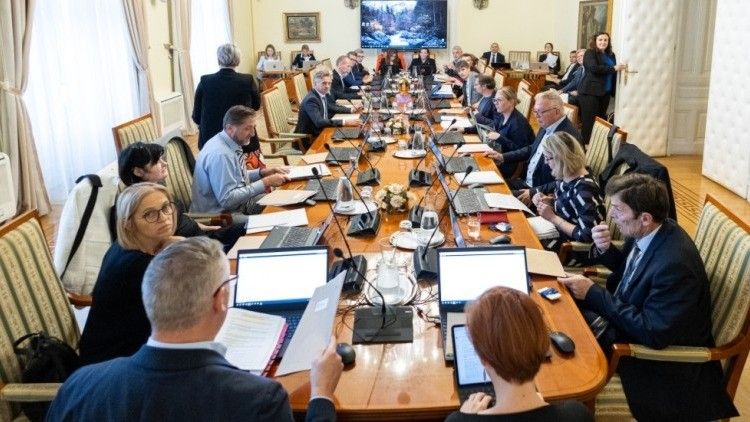
The Government takes note of the information on energy supply
Current conditions in the petroleum products market are characterised by increased short-term risk, primarily due to price volatility on international markets as a result of the ongoing war in Iran and logistical constraints in supply chains. In Slovenia, these constraints are mainly observed in the distribution from traders’ stocks to individual petrol stations, despite there being no shortage of fuel quantities at the broader regional level.
The Government has adopted key stabilisation measures to mitigate impacts on end users, including revised price regulation at petrol stations outside motorways, deregulation of prices at motorway petrol stations, a temporary reduction in excise duties, the abolition of the CO2 environmental levy, and the release of part of state reserves. Key risks remain linked to crude oil supply routes to Mediterranean refineries and potential disruptions in refining and transport infrastructure, which may affect supply dynamics in the short term.
In the natural gas sector, risks are assessed as moderate and medium-term. Slovenia’s gas supply for 2026 is contractually secured and is not directly dependent on liquefied natural gas from crisis-affected regions; however, a certain level of price exposure remains, particularly for larger business consumers.
Electricity supply remains stable and reliable, with a low level of risk, as key production sources and supply chains are adequately secured for the coming period.
On 21 March 2026, the Market Inspectorate carried out inspections of petroleum product sales at petrol stations. A total of 41 petrol stations were inspected, including 38 operated by Petrol, two by Shell and one by MOL. The Inspectorate found that petrol stations were not withholding products; where sufficient stocks were available, they were sold to customers. Documentation on deliveries of petroleum products indicates that deliveries over the past 14 days were less frequent, while demand increased. It was established that deliveries in the past two days were reduced by half, and in some cases by as much as two thirds.
Between 23 and 25 March 2026, mobile units of the Financial Administration of the Republic of Slovenia (FURS) conducted field inspections at various locations across the country, focusing on compliance with the Excise Duty Act and the Transport of Dangerous Goods Act. No violations of these acts were identified, and fuel supply proceeded without disruption. Traffic at the inspected petrol stations was low, with only occasional instances of fuel being dispensed into portable containers. In cases of inappropriate containers, fuelling was refused by petrol station staff. At border-area petrol stations, fuelling by vehicles with foreign licence plates was still observed.
Source: Ministry of the Environment, Climate and Energy; Ministry of the Economy, Tourism and Sport; Ministry of Finance
The Government adopts the Resilience Strategy of the Republic of Slovenia until 2030
The modern security environment is characterised by increasingly frequent and interconnected crises, underscoring the need for a comprehensive and coordinated strategic framework to strengthen the resilience of the Republic of Slovenia. The Resilience Strategy of the Republic of Slovenia until 2030 sets out a common vision and mission and provides guidance for strengthening national resilience. It builds on existing strengths, addresses identified gaps, and establishes solid foundations for comprehensive and long-term resilience across all levels of state functioning. The strategic framework is aligned with NATO and European Union concepts and mechanisms.
The Strategy covers 13 areas of national resilience, each with defined strategic objectives. These will be implemented through an action plan derived from a comprehensive national crisis management and response exercise, as well as through activities carried out by responsible authorities and cooperating state bodies.
The areas of national resilience are:
- national security system and continuity of government,
- energy,
- drinking water,
- food supply,
- financial system and banking,
- economy,
- health,
- information and communication systems and networks,
- transport,
- societal resilience,
- environment, spatial planning and natural resources,
- strategic communication,
- space and new technologies.
Some strategic objectives are already being implemented on the basis of the Action Plan to Strengthen the Resilience of the State and Society, adopted by the Government following the comprehensive national crisis management and response exercise conducted in 2024. Such exercises will be carried out every two years, with the next planned for the second half of 2026. A review and update of the action plan will be conducted no later than six months after each exercise.
Pending the revision of the current action plan, short-term measures will be developed within three months of the adoption of the Strategy to further support its objectives ahead of the 2026 exercise. These measures include the establishment of 13 working groups corresponding to the individual areas of national resilience. Each group will define measures to achieve strategic objectives, monitoring indicators, responsible authorities and partners, timelines, financial frameworks and required investments, all of which will be incorporated into the revised action plan.
This will establish solid foundations for the systematic and comprehensive strengthening of Slovenia’s resilience, as well as close cooperation among state authorities, local communities, security councils, the economy, residents and other key stakeholders. Activities will focus on effective preparedness for crises, their prevention and management, and rapid recovery.
Stakeholders will ensure the necessary capacities and resources to achieve resilience objectives. Strategically important goals will also be supported by the Defence, Security and Resilience Company (DOVOS) and the Ministry of Defence.
The Ministry of Defence will be responsible for monitoring the implementation of the Strategy. Designated lead authorities, together with cooperating state bodies, will be responsible for implementing individual measures and will clearly define the human, material and financial resources required. Funding will be planned and secured within the state budget.
Source: Ministry of Defence