

194th regular session of the Government of the Republic of Slovenia
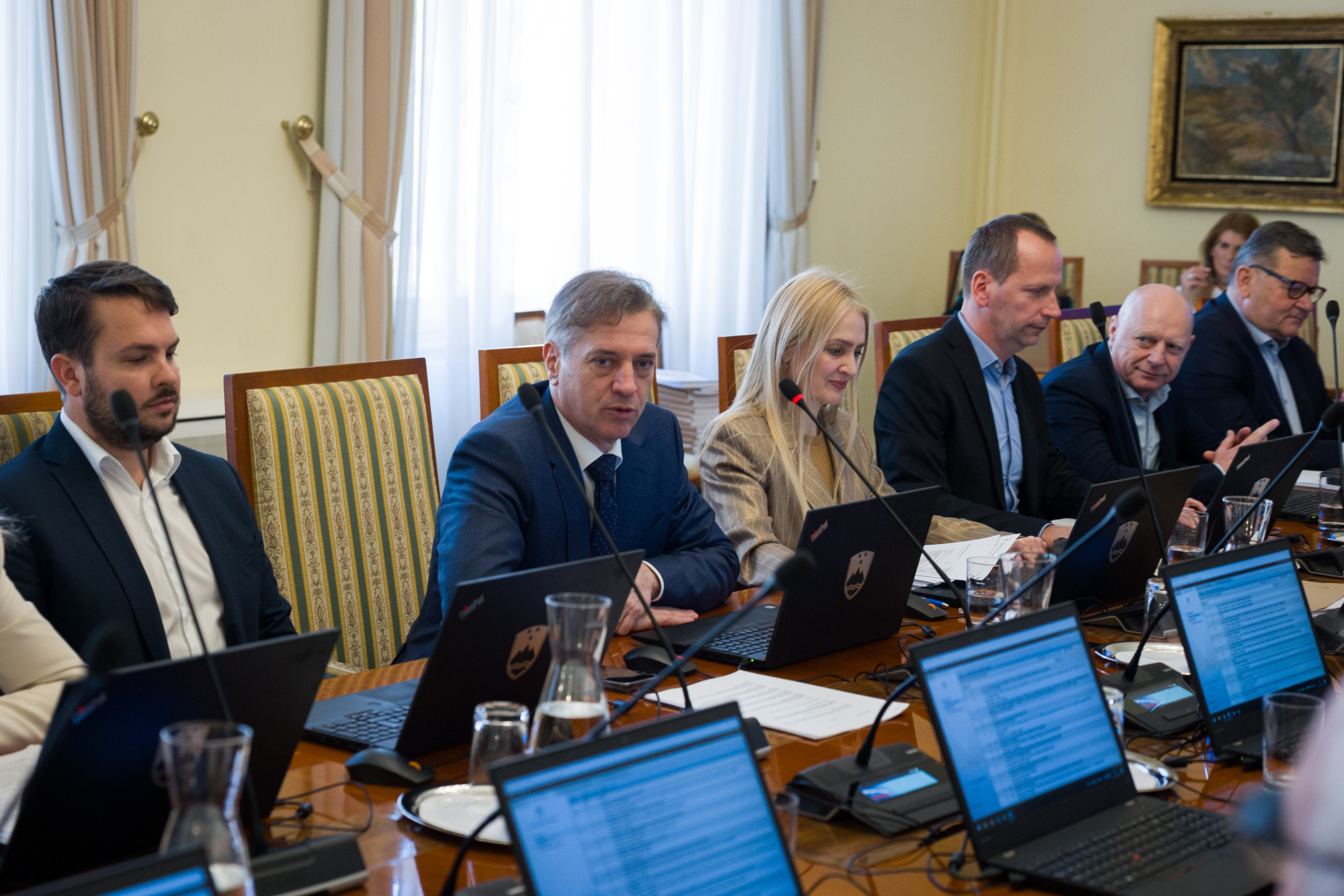
Author Bor Slana, STA
The Strategy for the Management and Development of Healthcare and Allied Professionals in the Healthcare System 2026–2036 establishes a long-term framework for the stable and sustainable management of the healthcare workforce with the aim of ensuring accessible, high-quality and safe healthcare. It focuses on modernising education, strengthening the recruitment and retention of healthcare personnel, improving working conditions, and optimising work processes. A well-functioning healthcare system depends on skilled, empowered, available and appropriately deployed healthcare and allied professionals. As accessible, high-quality and safe healthcare cannot be ensured without sufficient human resources, workforce planning represents one of the fundamental strategic issues of any healthcare system. The strategy therefore focuses on modernising education, improving the recruitment and retention of healthcare personnel, creating a more attractive and safer working environment, optimising work processes, and strengthening national workforce planning and monitoring. The implementation of the strategy will be coordinated by a new organisational unit at the Ministry of Health responsible for ensuring coordinated stakeholder engagement and for implementing the strategy over the period 2026–2036.
The Government gave its consent to the decision adopted by the Council of the Pension and Disability Insurance Institute of Slovenia (ZPIZ) on an extraordinary adjustment of pensions of one per cent. The Institute’s Council considered the matter at the initiative of the Government’s representatives on the Council, bringing the total pension adjustment for this year to 5.2%. On 26 February 2026, the Institute’s Council considered an additional extraordinary adjustment of pensions for 2026 at the initiative of the Government’s representatives on the Council. The Council subsequently adopted a decision calling on the Government to give its consent to an extraordinary adjustment of pensions of one per cent with effect from 1 March 2026. In its work, the Government consistently strives to ensure the social and material security of all categories of pensioners. The adjustment of pensions is a key instrument for preserving their real value over time, thereby ensuring the social and material security of pensioners. In this way, the principle of the rule of law is upheld, as are legal certainty and individuals’ trust in the system. These had been undermined several years ago by repeated interventions in the pension insurance system through other legislation. Recognising that the extraordinary adjustment of pensions improves the social position of pensioners, who represent a more vulnerable segment of society, the Government supports the proposal for an extraordinary adjustment put forward by the Institute’s Council.
The Government also issued the Ordinance on financial assistance to family farms following the transfer of agricultural holdings. The ordinance sets out the beneficiaries, conditions and procedures for granting financial assistance to transferors of agricultural holdings who have transferred their farms to a younger successor within the framework of measures under the Rural Development Programme 2014–2020 or the Common Agricultural Policy Strategic Plan 2023–2027. The measure is intended to mitigate the loss of income experienced by older transferors who, following the transfer, generally no longer carry out agricultural activities to the same extent, and to encourage timely generational transfer of farms. Funds in the amount of €1.2 million are provided from the budget of the Ministry of Agriculture, Forestry and Food for 2026.
The Government also issued the Ordinance on the co-financing of vaccination against bluetongue disease in 2026. The ordinance provides the basis for financial assistance to breeders who will vaccinate sheep and cattle against the bluetongue virus (BTV) in 2026. Following the outbreak of bluetongue disease (BTV) in Slovenia in 2025 and to protect the sheep and cattle sectors, mandatory vaccination of cattle and sheep against BTV serotypes 3, 4 and 8 — currently the most widespread in Europe — will be carried out in 2026. Breeders must ensure that their animals are vaccinated no later than 24 April 2026. Funds in the amount of €2.6 million will be provided for assistance under the ordinance through a reallocation within the Ministry of Agriculture, Forestry and Food. Financial assistance amounts to €2 per vaccination carried out within the vaccination programme. Sheep are vaccinated with one dose of the vaccine, while goats and cattle receive two doses. In addition, fixed vaccination costs of €16 per agricultural holding will also be co-financed. These costs are independent of the number of animals vaccinated and include the veterinarian’s visit to the holding, the use of portable equipment, and the basic organisational and logistical procedures required to carry out the vaccination programme.