

Highlights of Slovenia's activity in the UN Security Council in December 2025
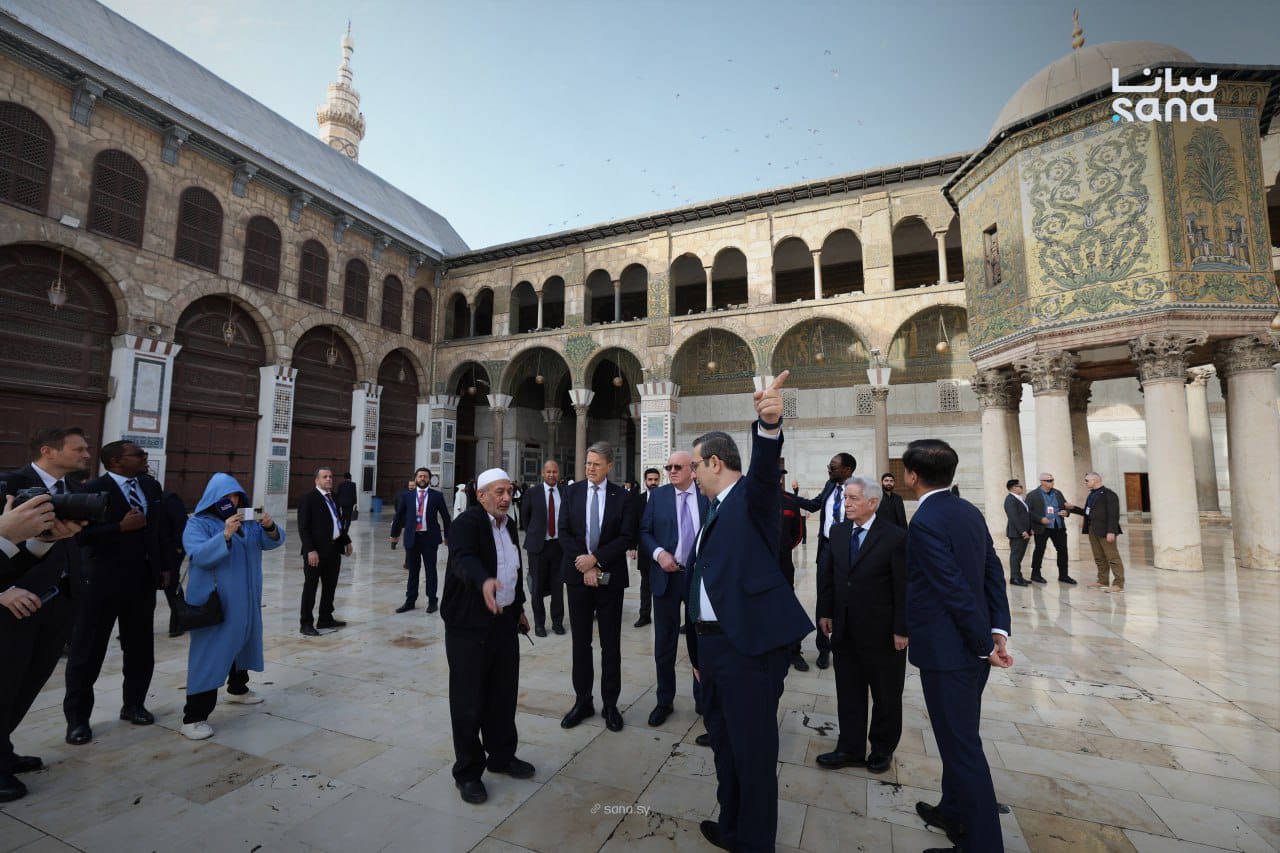
UN Security Council delegation in Syria | Author Sana.gov
During the first week of December, the Council, led by Slovenia, travelled to Syria and Lebanon. One year after the fall of the Assad regime, the visit to Syria was intended to build trust and express solidarity with the Syrian people during this challenging transition period. The discussions emphasised the importance of inclusive national dialogue and ensuring justice and reconciliation. The talks in Lebanon focused on the support for the country’s independence, sovereignty and territorial integrity; the Council also visited members of the UNIFIL mission in the south of Lebanon.
Minister of Foreign and European Affairs Tanja Fajon chaired three Council meetings: on cooperation between the UN and the Organization for Security and Co-operation in Europe (OSCE), on the situation in Ukraine and on Afghanistan. Prior to the debate on Afghanistan, which took place on World Human Rights Day, Minister Fajon issued a joint press statement on behalf of the 55 UN Member States. The statement emphasised that human rights are a prerequisite for peace and security, not just an embellishment.
The meeting on Ukraine was the last one requested by Slovenia during its membership as part of its efforts to keep the issue of Ukraine high on the agenda. One of the three rapporteurs at the meeting was Tomaž Lovrenčič, Director of ITF Enhancing Human Security.
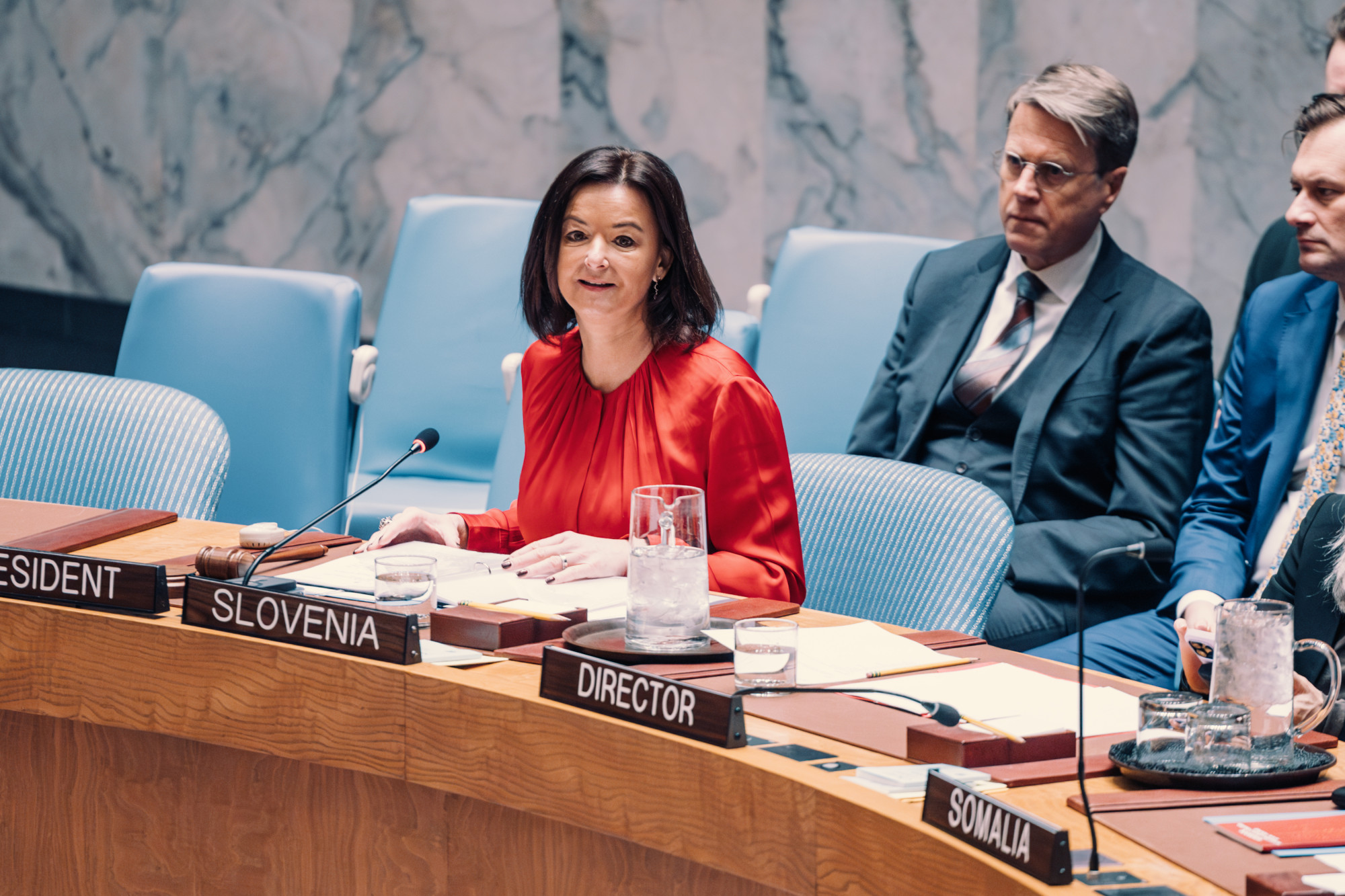
In December, when Slovenia held the UN Security Council presidency, Minister Fajon chaired a discussion | Author MZEZ
Open debate Leadership for Peace
As the signature event of its presidency, Slovenia organised an open debate entitled Leadership for Peace, continuing the theme of last year’s presidency: the commitment of Security Council members to maintaining international peace and security by fully respecting the principles of the UN Charter and international law. The debate centred on expectations surrounding the ongoing UN reform processes and the new Secretary-General, female or male, who will be elected in autumn 2026.
As holder of the presidency, Slovenia drafted the presidential statement on Bosnia and Herzegovina to mark the 30th anniversary of the signing of the Dayton Peace Agreement. The unanimously adopted statement expresses the Council's support for the sovereignty, territorial integrity and political independence of Bosnia and Herzegovina, and highlights the importance of regional cooperation, good neighbourly relations, dialogue and reconciliation.
At its regular briefing on the implementation of Resolution 2334 on settlements, the Council discussed the Middle East. Slovenia emphasised the importance of the ceasefire in Gaza and once more called on all parties to uphold it. Slovenia also expressed concern about possible sanctions against the United Nations Relief and Works Agency for Palestine Refugees in the Near East (UNRWA), and reiterated that the only viable outcome is a two-state solution, with two states coexisting peacefully alongside one another. Prior to the debate, the European members of the Security Council issued a joint media statement.
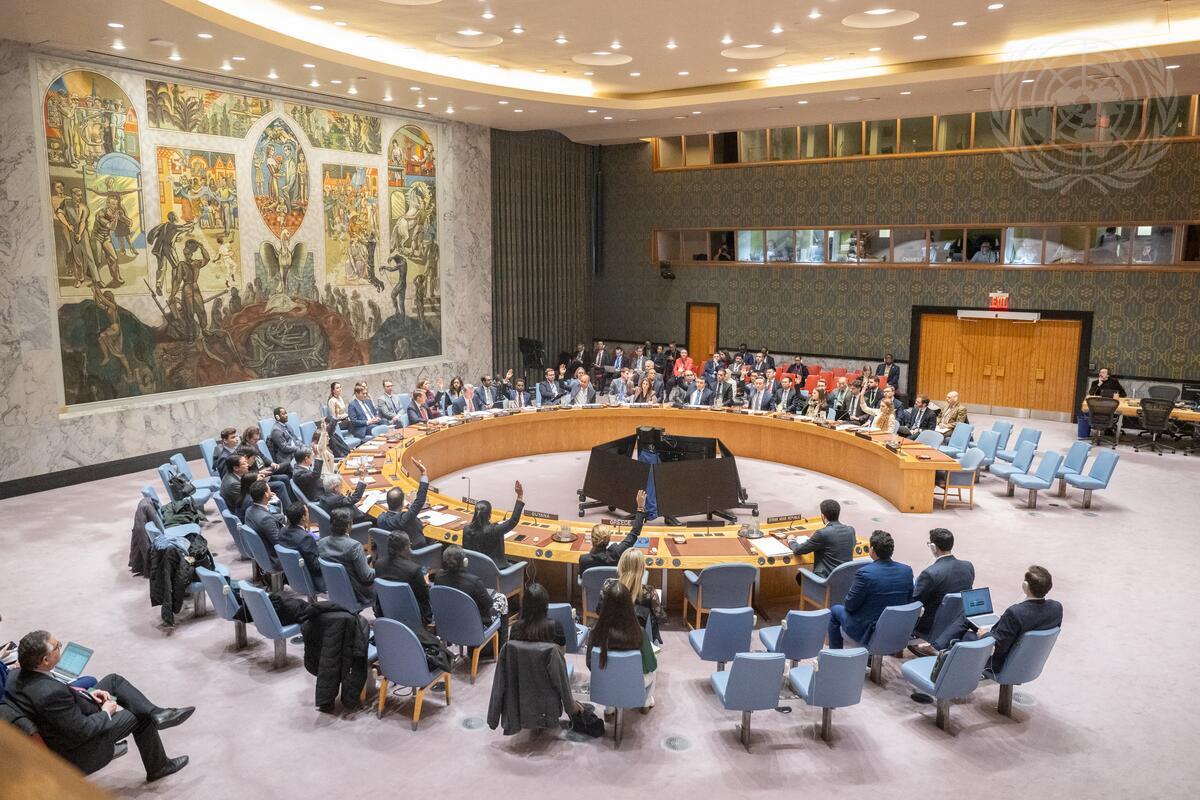
UN Security Council | Author OZN
During a regular briefing on Syria, Slovenia welcomed the Syrian authorities' efforts to establish bodies to address recent violence, as well as issues relating to transitional justice and missing persons. The establishment of national security forces and the prevention and countering of terrorism and violent extremism are equally important. Syria's success will depend on trust: between Syrians; between Syrians and the Syrian authorities; between Syria and its neighbours; and between Syria and the international community.
In the context of nuclear non-proliferation, the Council discussed Iran. Slovenia emphasised the need for a long-term diplomatic solution, calling on all parties to engage in serious and focused negotiations.
In December, the Council discussed Sudan three times, but unfortunately this has not yet led to progress in overcoming differences among members regarding further steps and responses to the increasingly tense security situation.
The Council devoted considerable time to the situation in Somalia, unanimously adopting resolutions to extend the sanctions regime against the terrorist group Al-Shabaab, and authorising the African Union Support and Stabilisation Mission (AUSSOM) and the United Nations Support and Stabilisation Mission (UNSOS). Despite major financial challenges, these missions are maintaining their mandate and number of personnel unchanged – a position also advocated by Slovenia.
The Council held an emergency meeting after Israel became the first country to officially recognise Somaliland as an independent, sovereign state and establish diplomatic relations with it. Most members confirmed their support for the sovereignty, territorial integrity, political independence and unity of Somalia in their statements.
The Council discussed the coup in Guinea-Bissau and held regular discussions on the work of the United Nations Support Mission in Libya (UNSMIL), and the United Nations Office for West Africa and the Sahel (UNOWAS). Prior to the UNOWAS meeting, Slovenia, as holder of the presidency, organised a press encounter with the Joint Pledgers on Climate, Peace and Security in West Africa and the Sahel, drawing attention to the consequences of climate change in the region, where floods, droughts, and water shortages are exacerbating existing security challenges and fuelling tensions between communities, thus creating space for criminal and extremist networks.
At the emergency meeting on Venezuela, Slovenia emphasised the heightened tensions in the region and urged all parties to de-escalate and calm the situation. Slovenia highlighted the importance of consistent respect for international law and peaceful dispute resolution, and drew attention to the poor political and humanitarian situation in Venezuela.
The Council adopted resolutions renewing the mandates of the United Nations Mission to the Democratic Republic of the Congo (MONUSCO), and the United Nations Disengagement Observer Force (UNDOF) in the Golan Heights. It also adopted resolutions on Youth, Peace and Security, and on the mandate of the Counter-Terrorism Executive Directorate. The Council released a press statement on the situation in Yemen and the drone attacks against UNISFA peacekeepers on the border between South Sudan and Sudan.
Slovenia organised a field visit for the UNSC Informal Expert Group on Climate, Peace and Security to Chad, and coordinated a joint statement by Security Council signatories of the Shared Commitments on Women, Peace and Security.