

On the challenges of communication, the benefits of knowledge exchange and the harmful effects of deliberate disinformation
- Government Communication Office
- Ministry of Digital Transformation
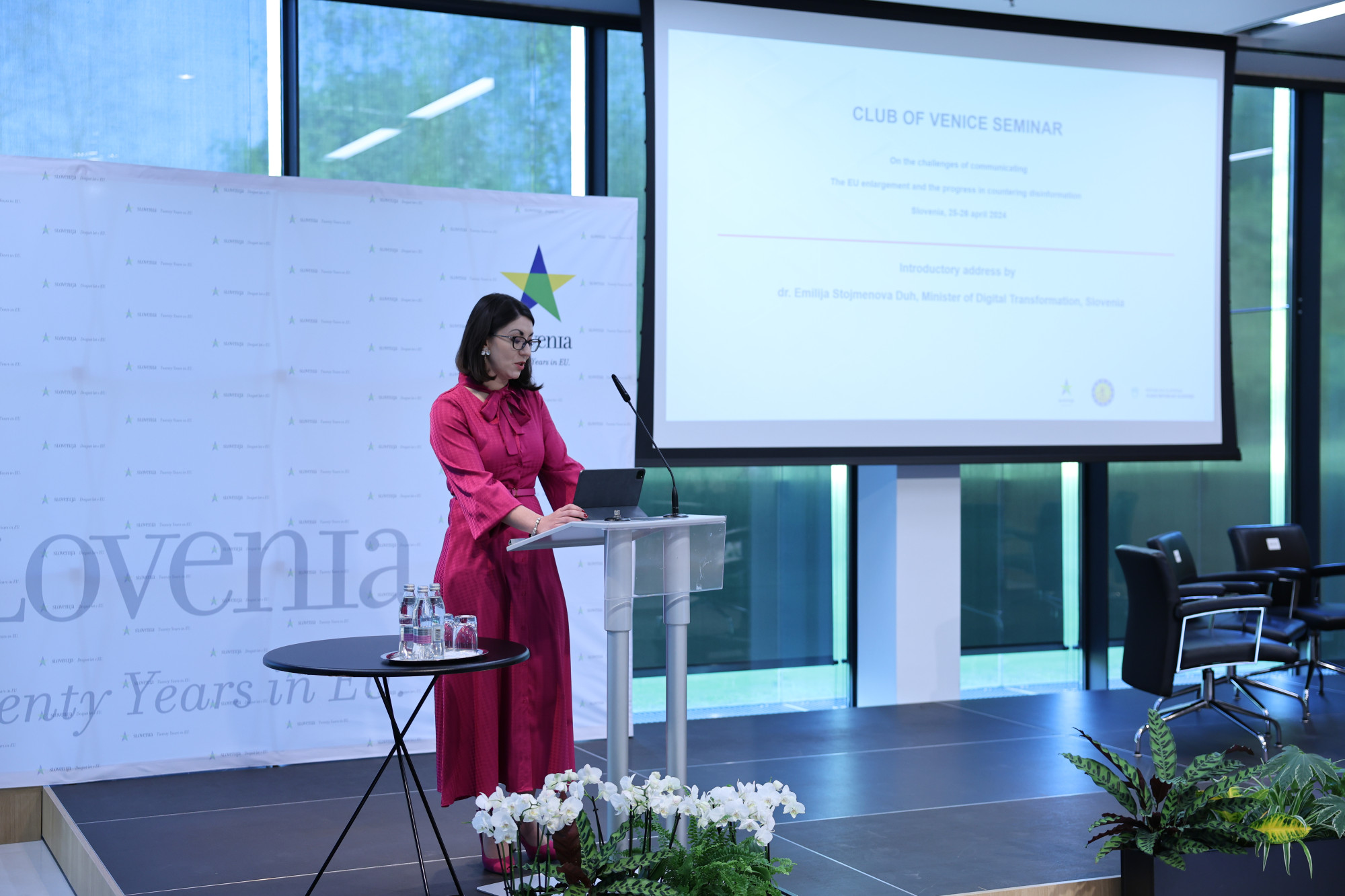
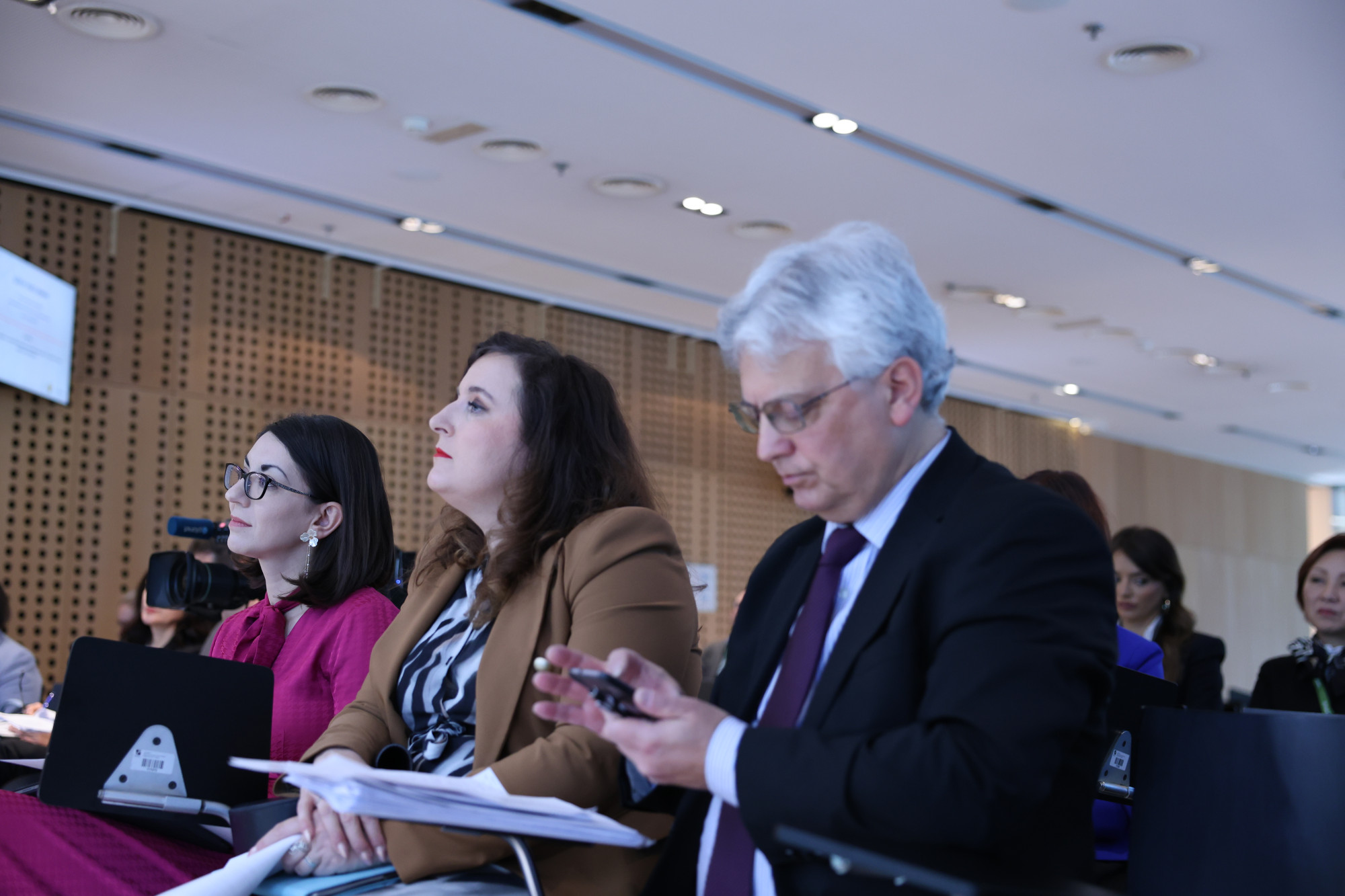
The seminar was held today at Brdo pri Kranju by the Club of Venice in cooperation with the Communication Office of the Government of the Republic of Slovenia. The Club of Venice is one of the oldest associations of public sector communicators.
In addition, this is a year of elections taking place in the European Union as well as in many other countries representing almost half of the world's population. According to the Minister, trust and awareness of the harmful effects of disinformation are therefore of key importance. "Trust is built through consistent dialogue. With trust, we develop better policies and solutions to shared challenges, achieve better results and stronger synergies with fewer financial resources. Trust also makes it easier to raise awareness about the harmful effects of disinformation and hate speech," said Minister Stojmenova Duh.
"Digital technologies and digital communication tools play a key role in shaping our media landscape and society as a whole. In addition to providing access to information and knowledge and enabling the exchange of expertise and good practices, they facilitate dialogue between governments, the media and citizens. We are aware that the use of artificial intelligence raises important ethical questions. Artificial intelligence systems must therefore be human-centred and aligned with ethical principles and human rights, while algorithms should be designed with transparency, accountability and fairness in mind. The spread of disinformation, fake news and harmful content through AI-driven platforms should be prevented," the Minister added.
According to the Minister, the European Parliament did important work when it adopted legislation on artificial intelligence in March this year and regulated its use through safeguards to ensure that artificial intelligence systems are safe, transparent, traceable, non-discriminatory and environmentally friendly. There are also high expectations for the convention on artificial intelligence to be adopted by the Council of Europe.
In addition to regulating the use of new technologies, European regulatory frameworks also increase the responsibility of online platforms, social media and search engines with a significant impact on society in order to create safer digital spaces and prevent unfair practices and harmful content affecting citizens. However, excessive regulation of harmful content could hinder freedom of expression, so a balance must be found, the Minister said.
"In Slovenia, we are aware that greater digital and media literacy is needed in society, which is why we are working intensively on raising awareness among users of online platforms in the fight against hate speech, and on strengthening citizens' skills to recognise disinformation, attempts at fraud and online violence," said Minister Stojmenova Duh, recalling the recent signing of a memorandum by which six ministries committed themselves to preventing peer violence and hate speech online.
"In addition, through education and training we strengthen digital skills and encourage children to think critically and logically, as only digitally skilled citizens will recognise digital trends, know how to use digital platforms, understand digital risks and disinformation, and become more active citizens," said the Minister.
According to the Minister, "communication and the exchange of information with citizens about the importance of EU policies, including through new digital communication networks, are essential for the effective implementation of the EU agenda. When citizens understand how EU policies work, as well as their potential and their impact on everyday life, they become truly active EU citizens. The exchange of information about the EU agenda is not a process that ends with accession to the EU; rather, it requires consistent communication efforts by all stakeholders at both the national and European levels."
Resilience to disinformation can be built through cooperation: governments and institutions set policies, scientific and academic communities provide reliable expertise and evidence, while the media inform citizens. In this way, society will not only be well informed, but will also recognise disinformation and be able to counter it more effectively. "In an interconnected world, the exchange of knowledge and good practices is essential," added Minister Stojmenova Duh.