

Government Civic Education Programme
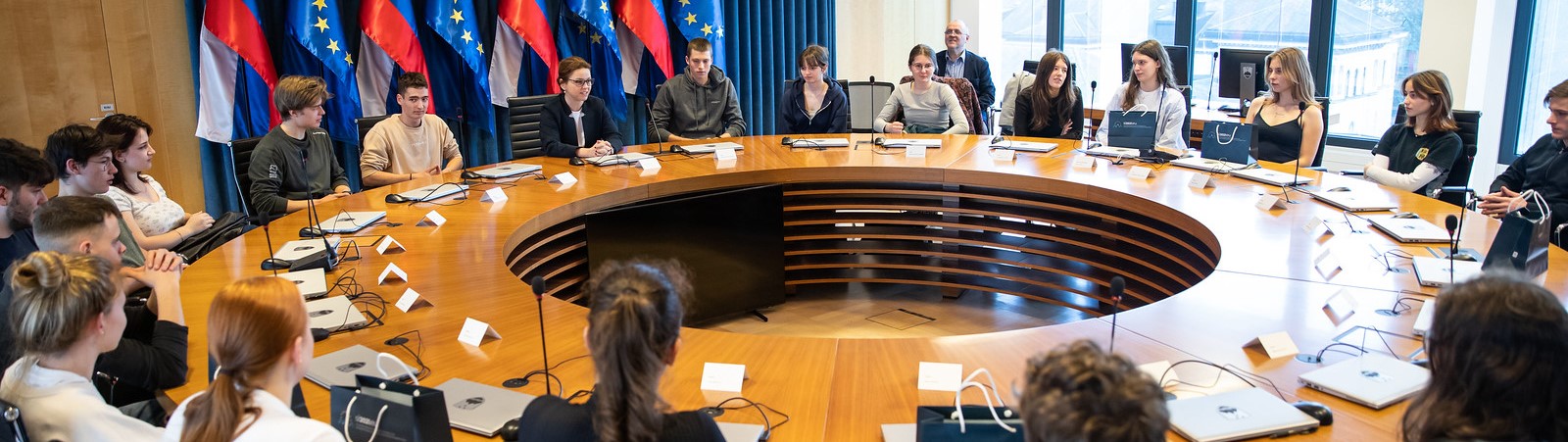
The programme provides age-appropriate learning experiences for primary school pupils, secondary school students and university students, enabling them to explore how government works and how citizens can participate in democratic processes.
The programme combines educational content, direct engagement with public officials and experiential learning methods to promote informed and active citizenship.
Why We Created the Programme
Democratic societies require citizens who understand public institutions, decision-making processes and the importance of participation in public affairs.
Young people often encounter concepts related to government and democracy in school but have limited opportunities to experience how political and administrative institutions operate in practice. The programme bridges this gap by connecting civic education with real-life government processes and direct interaction with public institutions.
Particular emphasis is placed on young people approaching voting age. The programme seeks to ensure that first-time voters enter adulthood with a better understanding of democratic institutions, government decision-making processes and opportunities for civic participation.
The programme follows a progressive learning model. Young people can engage with increasingly advanced activities as they move through different stages of education.
-
1
Primary School Pupils (ages 12–14)
Young learners explore the role and responsibilities of the Government of Slovenia through an animated educational video and supporting classroom materials. Teachers can use discussion guides and knowledge quizzes to facilitate classroom learning.
Learning outcomes:
- identifying key state institutions,
- understanding the role of government,
- recognising ways citizens can participate in society,
- developing early civic awareness.
-
2
Secondary School Students (ages 17–18)
The programme is specifically designed for third-year secondary school students, who typically reach the age of 18 during the school year and acquire the right to vote for the first time. By engaging young people at this important milestone, the programme helps them better understand democratic institutions, public decision-making and the responsibilities associated with active citizenship.
Students visit the Government headquarters in Ljubljana and learn first-hand about government decision-making and public policy development. The two hour programme includes discussions with government officials and experts, presentations on current public policy topics, and an introduction to government communication and state protocol.
Learning outcomes:
- better understanding of democratic governance,
- stronger awareness of voting and civic participation,
- critical thinking about public issues,
- improved communication and discussion skills,
- direct engagement with public institutions and decision-makers.
-
3
University Students
University students enrolled in programmes that include public finance participate in a simulation of a government budget session.
Participants assume the roles of ministers and the prime minister, negotiate budget priorities, discuss fiscal constraints and jointly prepare a balanced state budget proposal. The exercise concludes with a simulated government press conference, where students present and justify their decisions to the public.
The focus on budgeting is intentional. Public finance lies at the heart of government decision-making and directly affects the delivery of public services, social policies and economic development. The simulation therefore complements Slovenia's broader efforts to strengthen financial literacy and understanding of public finances (Financial education | GOV.SI).
Learning outcomes:
- understanding public finance and budgeting,
- practical experience of policy negotiation,
- analytical and problem-solving skills,
- public speaking and media communication skills,
- appreciation of the responsibilities associated with public decision-making.
Governance and Partnerships
The programme is coordinated by the Government Communication Office of the Republic of Slovenia.
Implementation is supported by ministries, the Office of the Prime Minister, the Secretariat-General of the Government, the Protocol of the Republic of Slovenia, the Ministry of Finance and other public institutions, depending on the activity.
Beginning with the 2026/2027 academic year, the programme will be further expanded through cooperation with the National Assembly of the Republic of Slovenia. University students participating in the budget simulation will not only prepare and negotiate a government budget proposal but will also take part in a parliamentary budget debate simulation, providing them with a comprehensive understanding of both executive and legislative decision-making processes.
Why This Is a Good Practice
The programme is innovative because it combines civic education, government transparency and youth participation within a single, structured learning pathway.
Rather than providing information only, the programme enables participants to experience democratic processes directly through interaction with decision-makers and realistic simulations.
Another distinctive feature is its focus on critical life stages. Secondary school students participate just before becoming first-time voters, while university students engage with complex policy and budgetary decisions that mirror real responsibilities faced by public officials.
Its scalable, age-adapted design makes the model transferable to different education systems and public administrations. At the same time, the programme demonstrates how governments can use communication, education and citizen engagement tools to strengthen democratic resilience and trust in public institutions.
Results and Evaluation
Since its launch in 2023, the Government Civic Education Programme has evolved from a pilot initiative for secondary school students into a comprehensive civic education pathway covering primary, secondary and higher education. But it focuses on third-year secondary school students, who are approaching adulthood and, in most cases, become eligible to vote during the school year. This targeted approach enables the Government to engage young citizens at a formative moment, when many are developing their political awareness and preparing to participate in democratic processes for the first time.
The programme was formally integrated into the Government Communication Office's regular activities in the 2023/2024 school year. Building on its success, it was expanded in the 2025/2026 school year with educational materials for primary school pupils and a government budget session simulation for university students.
The response from educational institutions has been overwhelmingly positive. Already during the first year of implementation, schools welcomed the opportunity to visit the Government headquarters and engage directly with government representatives. Demand has continued to grow each year and currently exceeds available capacity.
The Government of Slovenia hosts between 2,000 and 2,300 secondary school students annually. For international comparison, a typical generation of secondary school students in Slovenia consists of just over 20,000 young people. As a result, the programme reaches approximately one-tenth of an age cohort each year through direct participation. Due to organisational and space constraints, not all requests from schools can be accommodated.
To extend the programme's impact beyond individual visits, each activity is accompanied by public communication materials, including news articles published on the GOV.SI portal, social media posts on Facebook and Instagram, and photo galleries published on Flickr. These publications consistently achieve significantly higher reach and engagement than average government communication content.
Participant feedback is collected through post-visit surveys completed by accompanying teachers. Satisfaction ratings demonstrate a consistently high level of approval:
- School year 2024/2025: 4.3 out of 5
- School year 2025/2026: 4.4 out of 5
Survey responses indicate that teachers particularly value:
- direct interaction between students and government representatives,
- practical insight into democratic institutions and decision-making processes,
- opportunities for discussion of current public policy issues,
- the programme's contribution to civic literacy and active citizenship.
Contribution to Broader Public Policy Goals
The programme is closely linked to wider government priorities. Special attention is given to topics that are particularly relevant for young people, including financial literacy, digital citizenship and participation in democratic processes.
By connecting civic education with real public policy challenges, participants gain a better understanding of how government decisions affect everyday life and how citizens can contribute to shaping public policies.
Future Development
The Government Civic Education Programme continues to evolve in response to feedback from participants, teachers and partner institutions.
Future plans include the development of a dedicated online platform providing accessible information about the state, democratic institutions and political processes for young people. The programme will also strengthen its outreach activities through digital communication channels and social media platforms, with a particular focus on reaching younger audiences through formats and platforms they use most frequently.