Upgrade of the radar receiver at Pasja ravan for improved weather monitoring and forecasting
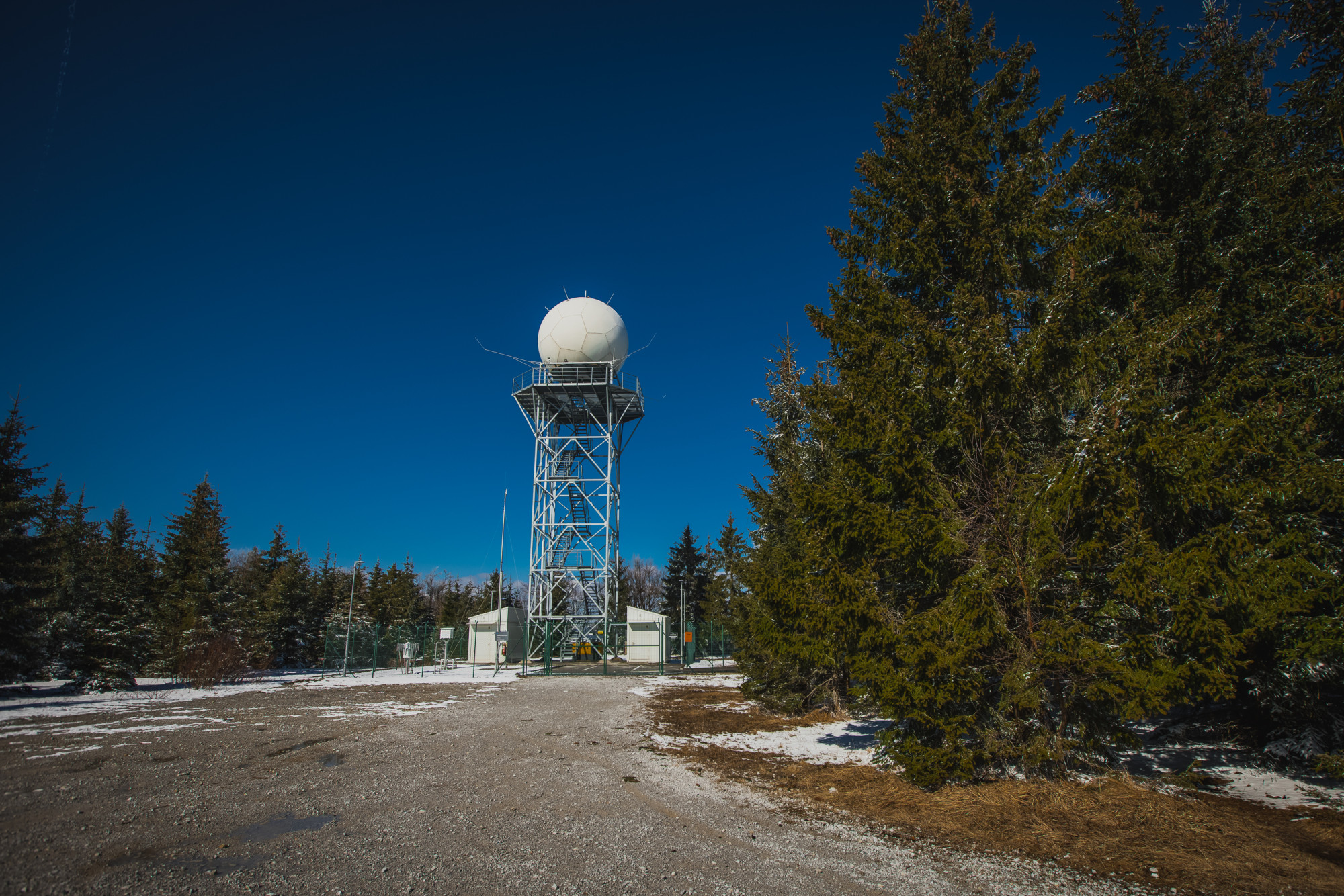
Pasja ravan - weather radar | Author Getty images
The absence of the radar image from Pasja ravan is particularly noticeable on snowy days. Precipitation clouds often sit low above the ground, sometimes below the lowest radar beam, making them more difficult for the radar to detect. For example, at an elevation angle of 0.5°, the lowest radar beam from the Lisca radar passes over Koper at an altitude of approximately 3.2 kilometres above sea level.
The Pasja ravan radar is expected to be integrated into the public radar image within the next week or two, once testing has been completed. Currently, western Slovenia, the northern Adriatic and the Friuli region are less effectively covered by the publicly available radar imagery.
Upgrade under the SOVIR Project
The upgrade forms part of a wider modernisation of the Slovenian Environment Agency's meteorological radar network. It is being carried out as part of the SOVIR cohesion project, which is co-financed by the Republic of Slovenia and the European Union Cohesion Fund. A comprehensive infrastructure upgrade is planned for the Lisca site next year, including the construction of a new, taller radar tower and the installation of a new solid-state power amplifier (SSPA) weather radar.
To ensure the highest possible compatibility between the two radar systems, an upgrade to the receiver at Pasja ravan is also necessary. The new receiver will greatly improve the radial resolution of measurements to 25 metres, compared to 100 metres previously. The new receiver is also equipped with a filter designed to eliminate interference caused by wireless Wi-Fi networks operating in the 5 GHz frequency band.