

Charity and reconciliation at the heart of missionary Opeka's message to Slovenia
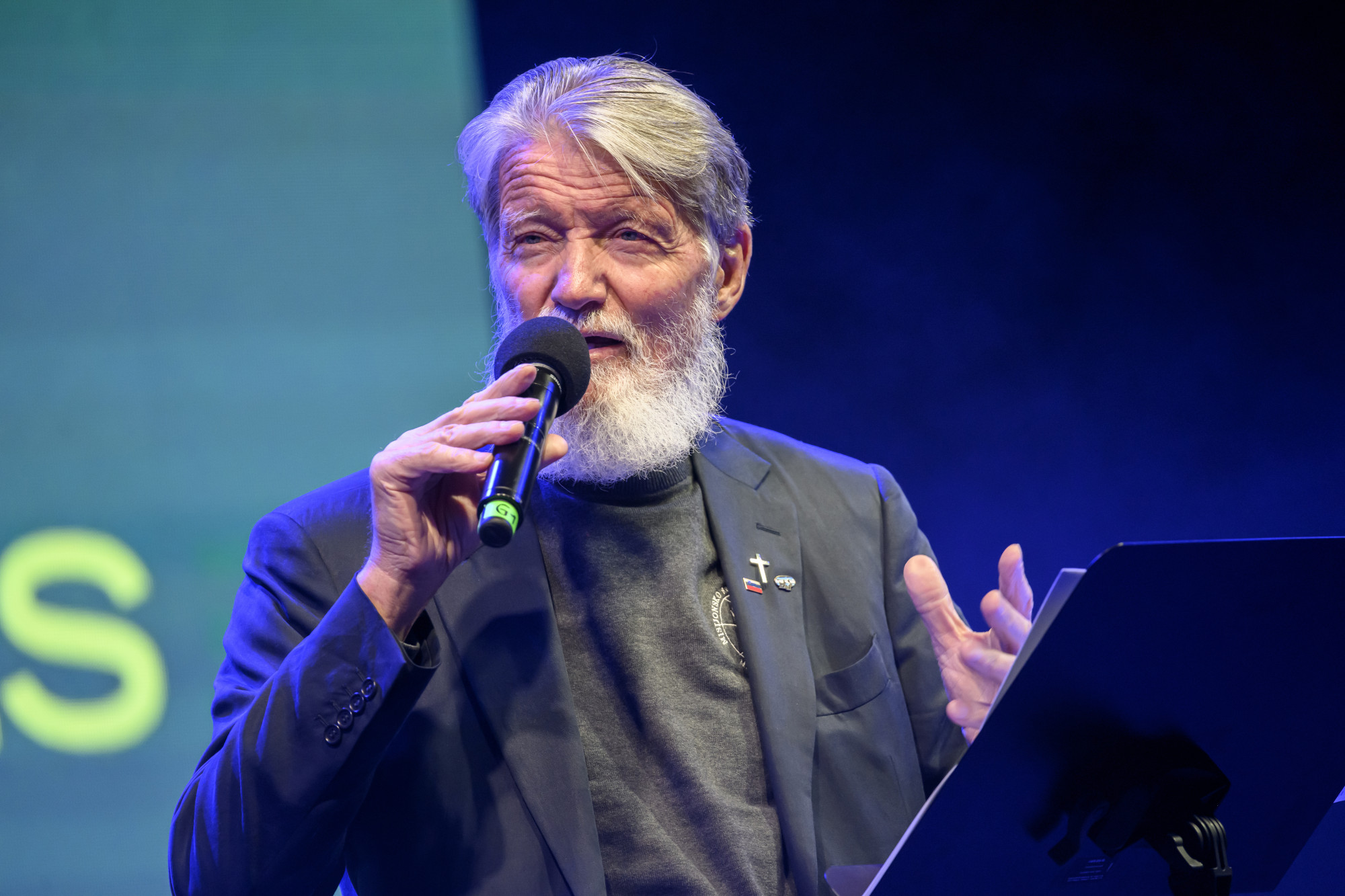
Pedro Opeka | Author Tamino Petelinšek, STA
The 78-year-old missionary has been received by all of Slovenia's most senior officials, including the president, the speakers of both houses of parliament and the prime minister. He has also addressed the National Assembly since arriving in the homeland of his parents for a nearly two-week trip.
His father, who fought for the Slovenian Home Guard (Domobranci) during the Second World War, lost his mother, sister and brother in the post-war summary executions. He himself managed to flee and save his life. He then moved to Argentina with his wife, a Slovenian he met in a refugee camp in Italy.
Pedro Opeka told members of parliament that his family in Argentina still live with the painful memory. "But I will not hate those who caused this suffering," he said, adding: "In forgiveness, I see humanity's triumph over hatred."
He said we should know how to listen to each other and recognise the other's pain even when their story is different from ours. He told lawmakers that despite their different persuasions they share a common task: "to protect the dignity of all people, including the dead and those yet to be born."
Support for Akamasoa project
Opeka thanked Slovenia for its solidarity with Africa and for donations going toward the Akamasoa charity association founded by him, which has been building villages and schools for the poorest people of Madagascar for more than 35 years.
During his visit to the Foreign Ministry, Minister Tone Kajzer announced up to half a million euros in aid as part of the ministry's partnership with Catholic charity Caritas Slovenia to build a new faculty building of the University of Saint Vincent de Paul in Akamasoa near the capital Antananarivo, as well as to support the food security of children and improve healthcare for the most vulnerable residents. Kajzer described Opeka's work as an inspiration for Slovenians.
In his meeting with President Nataša Pirc Musar, Opeka presented the work of the Bemasoandro school in Antananarivo, which had been built with Slovenia's support and inaugurated by the president during her 2025 visit to Madagascar. They also discussed solidarity, education and persistent efforts for better opportunities for the poor.
In his address to the press before the meetings with top officials, Opeka appealed for increased aid to the poorest, especially in education, healthcare and sport. "Supporting our work means supporting the people that have been most forgotten ... It is difficult to overcome poverty today because there is so much of it," Opeka said.
Prime Minister Janez Janša, who also met with Opeka, welcomed his "message about truth and justice without hatred, and forgiveness without forgetting" as a valuable one for all Slovenians. "Your love for humankind and homeland, and your commitment to truth, reconciliation and peace, set an extraordinary example for present and future generations," Janša wrote in a post on X.
Meanwhile, National Assembly President Zoran Stevanović nominated Opeka for the European Order of Merit, an order awarded by the European Parliament in recognition of outstanding contributions to European democracy, integration and values.