

Prime Minister Janez Janša: Europe must take a more active role in the search for peace in Ukraine
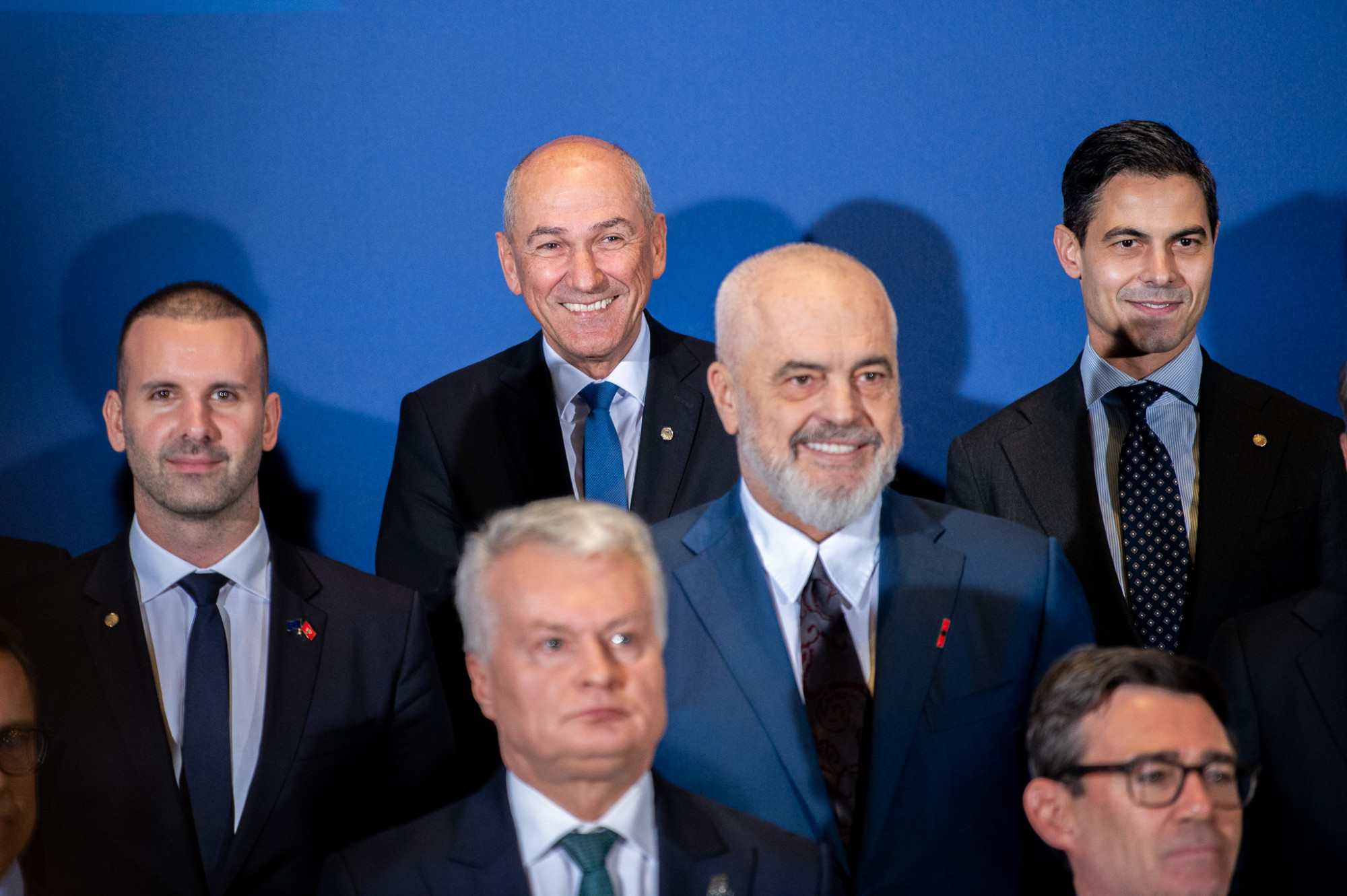
Prime Minister Janez Janša today attended a meeting in Berlin of the leaders from the coalition of countries supporting Ukraine | Author Office of the Prime Minister
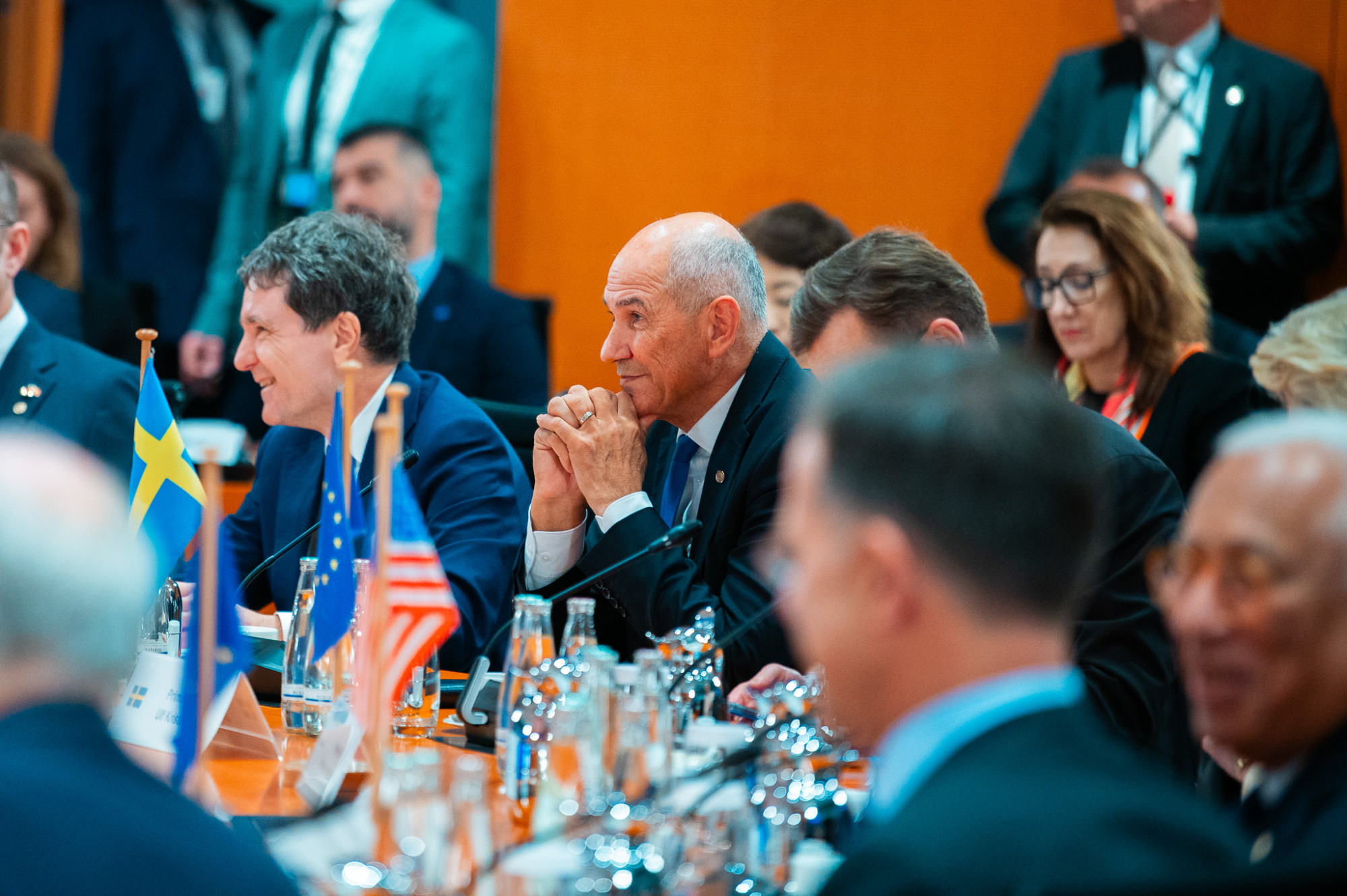
Talks focused on continued support for Ukraine, strengthening its resilience ahead of the coming winter and efforts to achieve a just and lasting peace.
Leaders discussed further military, financial and economic assistance to Ukraine, the protection of its critical infrastructure, in particular its energy infrastructure and ways to achieve a ceasefire. A significant part of the discussions was also devoted to the role of Europe in future peace negotiations.
On the margins of the meeting, Prime Minister Janez Janša stressed that Europe must take a more decisive and active role in efforts to end the war. He pointed out that Europe's weakness so far was not only due to limited military capabilities but also due to the lack of decisive diplomacy.
“Now, when we talk about position having been too weak, I do not just mean that we provided too little assistance, say military assistance, because Europe was objectively weak in this respect, as it did not have the necessary capabilities. I also mean that we were too weak diplomatically,” said the Prime Minister.
He highlighted that in shaping future peace arrangements, Europe should act more proactively, not only responding to the demands of other actors but also setting out its own clear negotiating positions.
“We have only been responding to the demands of the Russian Federation instead of making our own. And this must change in the future,” he emphasised.
At the meeting, the leaders reaffirmed their commitment to supporting Ukraine in 2027. At the end of the meeting, German Chancellor Friedrich Merz highlighted the European Commission’s proposal to provide an additional EUR 45 billion in aid to Ukraine next year, which received broad European support.
The leaders also discussed common European negotiating positions for potential peace talks. They emphasised that any negotiations must involve Ukraine and Europe and be based on respect for Ukraine's sovereignty, the provision of firm security guarantees and ensuring the long-term security of the European continent.