

Prime Minister Janez Janša: We are strengthening our defence capabilities to ensure Slovenia's security
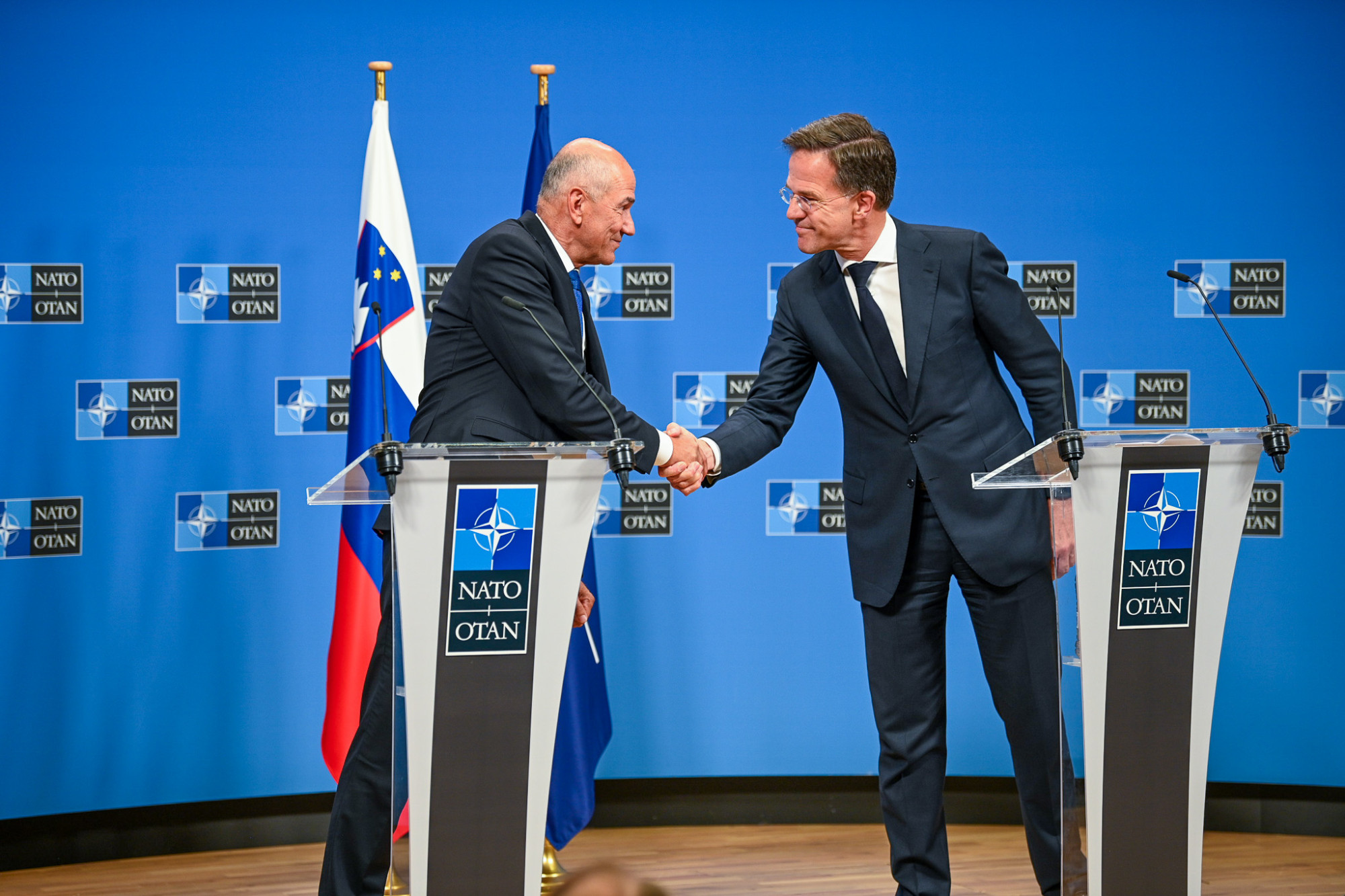
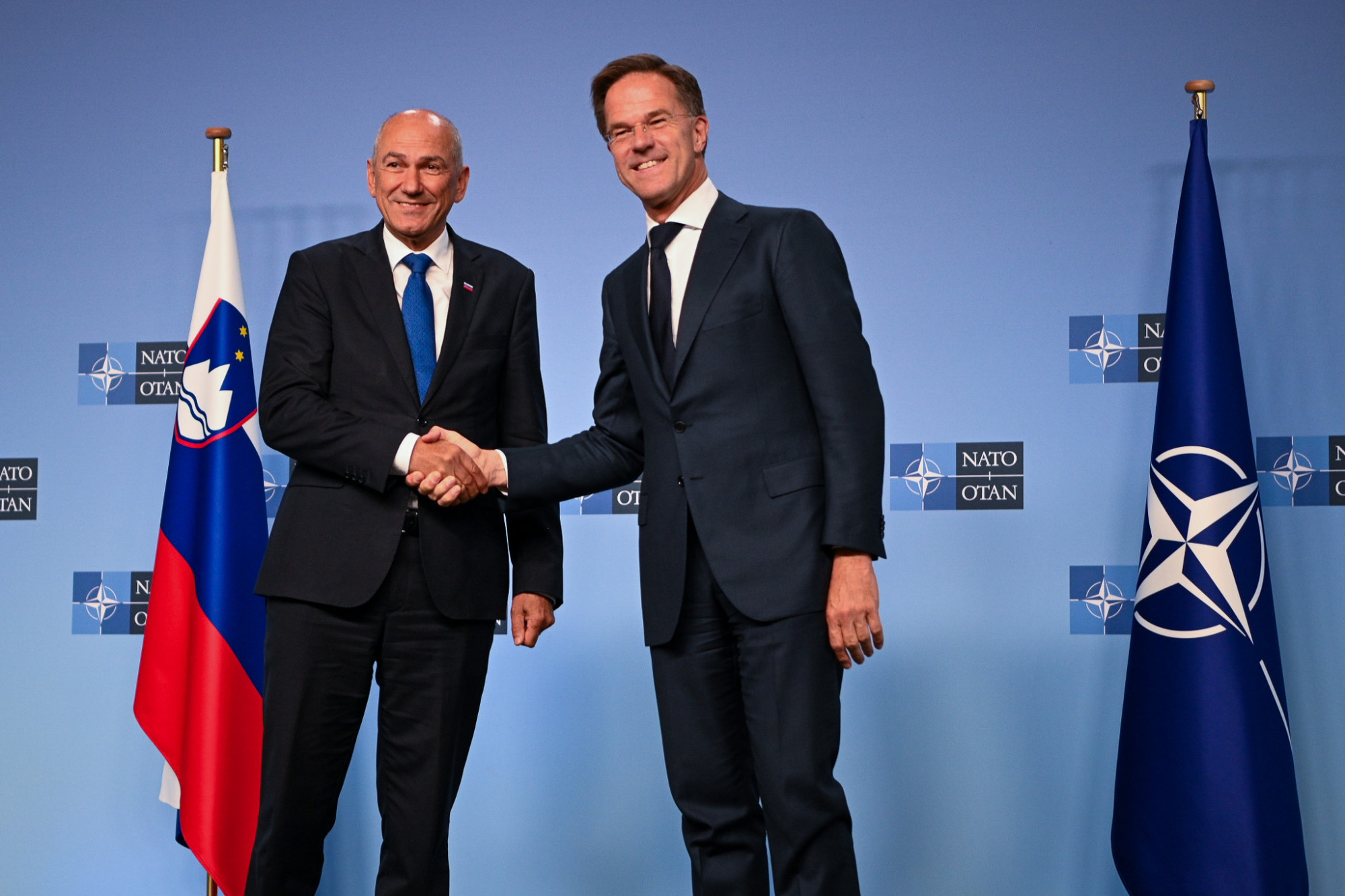
Prime Minister Janez Janša met with NATO Secretary General Mark Rutte at NATO Headquarters in Brussels today | Author Kabinet predsednika Vlade Republike Slovenije
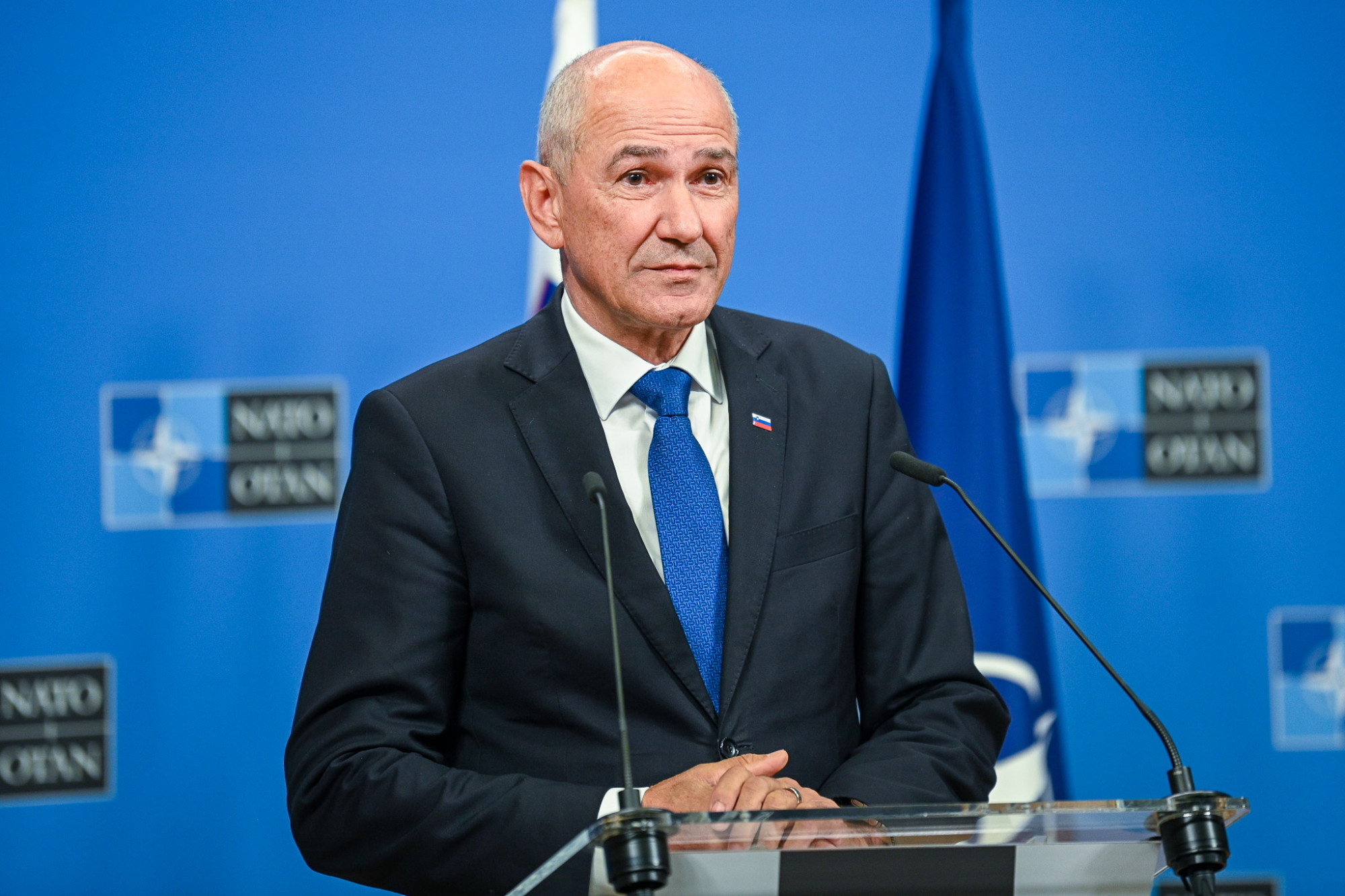
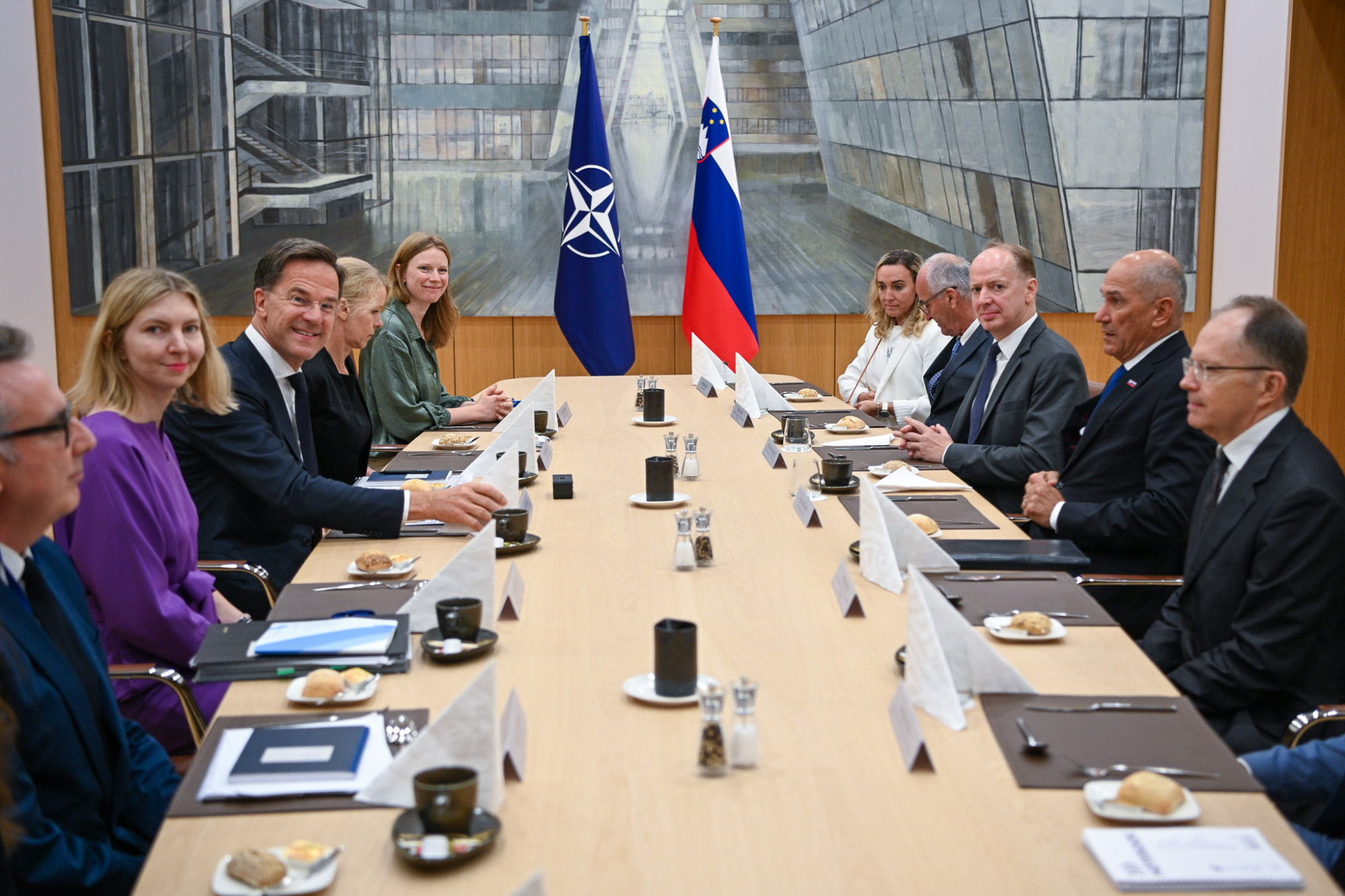
The discussions focused on strengthening the defence capabilities of Slovenia and the Alliance, meeting defence spending commitments, continued support for Ukraine and further enhancing the personnel and technological capabilities of the Slovenian Armed Forces.
Following the meeting, the Prime Minister described the discussions as highly constructive and substantive, noting that his exchange with the Secretary General had focused primarily on further strengthening the Alliance and reinforcing collective defence.
He recalled that discussions on meeting the 2% of GDP defence spending target had already been underway when Slovenia joined NATO in 2004. Slovenia will achieve this objective this year. "I am pleased that Slovenia is finally joining the ranks of Allies that meet this target. With the decision adopted as part of this year's revised budget, Slovenia will reach 2% of GDP in defence spending this year," the Prime Minister said. He added that, in the years ahead, Slovenia would also strive to meet the targets agreed within the Alliance for the period up to 2035.
He particularly emphasised that increasing defence spending is not about meeting the demands of others, but first and foremost about ensuring Slovenia's own security.
"We are not increasing defence spending because NATO requires us to do so or because someone has told us to. We must strengthen our defence capabilities to ensure that Slovenia is able to defend itself and contribute effectively to the Alliance," the Prime Minister stressed.
According to the Prime Minister, every country must possess the capabilities necessary for its own defence; however, in today's security environment, it is virtually impossible for any single country to guarantee its security entirely on its own. Collective defence is therefore of crucial importance.
"If NATO did not exist, we would have to invent collective defence," the Prime Minister said, stressing that providing security within the Alliance is both more effective and more cost-efficient than defending ourselves independently. "If Slovenia had to provide entirely for its own defence, we would not be able to defend ourselves effectively, even if we dedicated the entire state budget to defence."
The Prime Minister rejected the notion that increased defence spending is about meeting the expectations of other countries or of the Alliance. "This is not about pleasing others. It is about strengthening our own defence capabilities, and that comes at a cost."
According to the Prime Minister, a significant portion of future defence investment will be dedicated to personnel and advanced technologies. The Prime Minister noted that equipment alone does not guarantee a country's ability to defend itself. "We will invest in people, in our personnel and in the advanced technologies we need for our defence."
The Prime Minister also addressed equipment procurement for the Slovenian Armed Forces and the implications of the previous government's decision to cancel the contract for the acquisition of Boxer armoured vehicles. He expressed regret that the contract had been terminated, resulting in Slovenia having to pay contractual penalties, while, over the following four years, no appropriate procurement procedure was undertaken to secure replacement equipment.
He pointed out that, as a result of the time lost, the situation is now significantly less favourable. Financing and military equipment have become more expensive, while delivery times are significantly longer. "Sooner or later, someone will have to take responsibility for this," the Prime Minister stressed.
According to the Prime Minister, the time that has been lost cannot be made up overnight. Even if Slovenia were to order the necessary equipment immediately, it could not be delivered straight away because of lengthy delivery times. Slovenia will therefore also seek to cooperate with friendly and allied nations to provide certain capabilities.
However, the Prime Minister warned that the main challenge is not merely equipment, armoured vehicles or other military technology, but above all people.
"We are talking about battalions and brigades. In the armed forces, people come first. And this is precisely Slovenia's greatest challenge. We must first increase our personnel capacity and then provide those personnel with the appropriate equipment," he said.
He stressed: "We are not talking only about armoured vehicles. Armed forces are made up of people, not equipment."
The Prime Minister and the NATO Secretary General also discussed the war in Ukraine and continued support for Ukraine's defence.
The Prime Minister reaffirmed Slovenia's steadfast commitment to supporting Ukraine through the various assistance programmes in which it has participated to date. "Slovenia remains firmly committed to supporting Ukraine's defence. We have contributed to a range of assistance programmes and will continue to do so."
In conclusion, the Prime Minister emphasised that Slovenia remains a reliable member of the Alliance and an advocate of strong collective defence.
"Our message is clear: we remain committed to a strong and credible NATO, to continued fair burden-sharing, and to ensuring that the Alliance has the capabilities and resolve required to protect all Allies," the Prime Minister concluded.