

World Bee Day highlights the importance of the partnership between people and bees
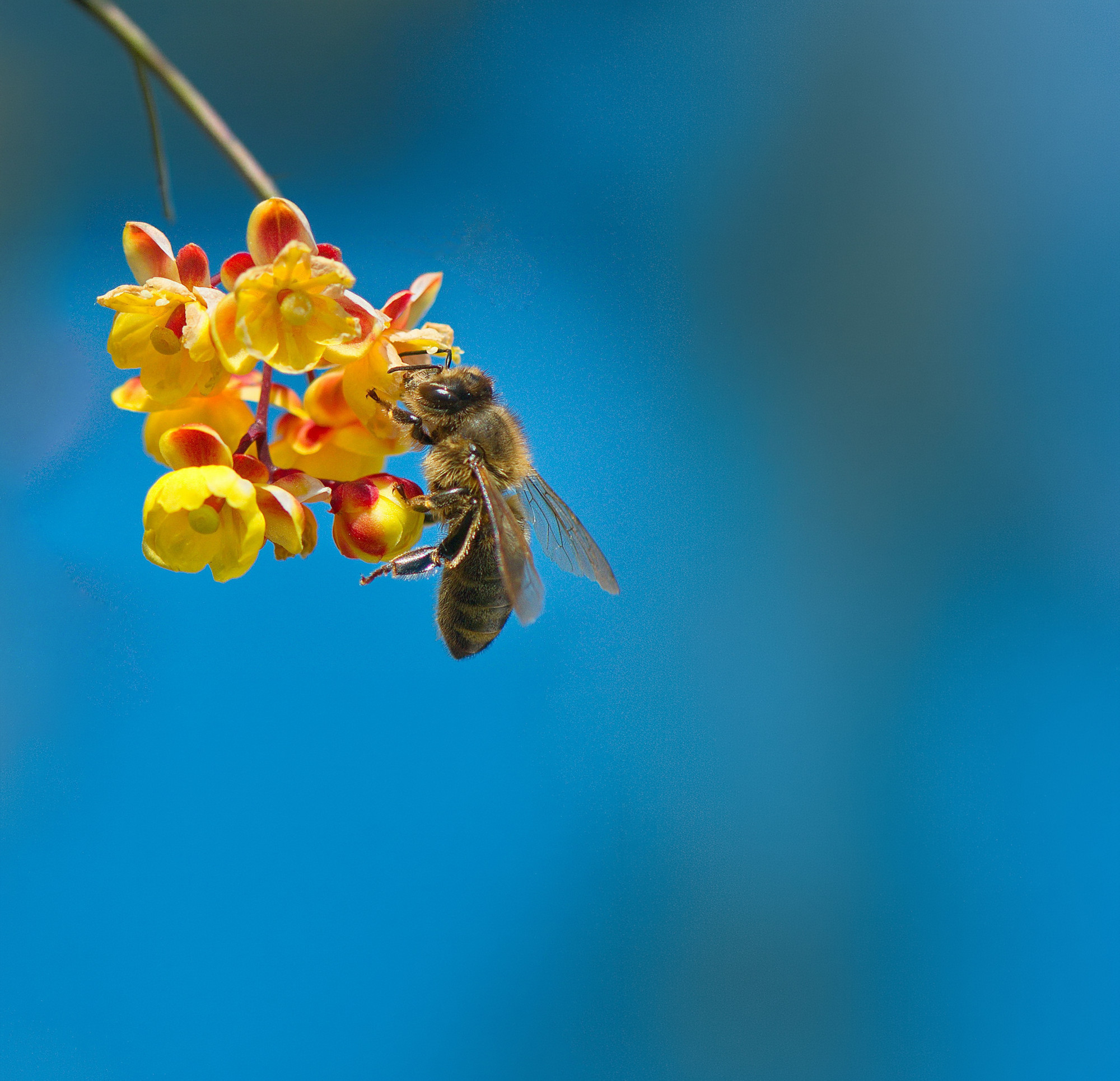
Author Depositphotos
Following Slovenia's initiative, the UN General Assembly proclaimed 20 May as World Bee Day in 2017, and the day was first commemorated in 2018.
This year, World Bee Day is being celebrated under the slogan "Bee together for people and the planet – a partnership that sustains us all", highlighting the vital role of bees and other pollinators in agri-food systems and in maintaining the health of ecosystems worldwide. "For millennia, bees and people have shared a close and evolving connection, shaped by the ways communities across the world have relied on bees and other pollinators for food and livelihoods, with bees often becoming part of their cultures," wrote the UN Food and Agriculture Organization (FAO).
On this occasion, Boštjan Noč, President of the Slovenian Beekeepers' Association and the European Beekeeping Association, emphasised that bees can no longer survive in the modern world without beekeepers' help. Their survival is seriously threatened by climate change, pesticides, intensive farming and bee diseases. "Beekeepers, you are among the key guardians of the future of the world's food supply. That is why the positive news from earlier this year is that Europe is finally allowing direct payments per beehive as compensation for the pollination services provided by bees. I believe that Slovenia will be the first European country to actually provide this support to beekeepers, as early as in 2027," he said.
He also reiterated concerns about counterfeit honey, which, according to European Commission data, accounts for as much as 47 per cent of the European market. "European policymakers are well aware of the problem, but concrete solutions are still lacking. Let’s be honest: the trade lobbies promoting counterfeit honey are currently more powerful than the voice of beekeepers. The only real solution is for beekeepers and consumers to come together and demonstrate through our purchasing decisions that we will not buy counterfeit honey," Noč urged.
The Ministry of Natural Resources and Spatial Planning noted that pollinators comprise over 200,000 wild animal species, including wild bees, hoverflies, butterflies, birds, bats and more than 20,000 species of bees. It added that, under the new European Nature Restoration Regulation adopted in 2024, EU Member States will be required to stop the decline in pollinator populations by 2030 through conservation measures and subsequently reverse the trend and ensure a favourable conservation status. "Due to a lack of data on the status and rate of decline, Slovenia and the other EU Member States will start monitoring pollinator populations next year," the Ministry announced.
Numerous events will take place in Slovenia to mark World Bee Day. In Maribor, President Nataša Pirc Musar will present the sixth Golden Bee Award, the nation's highest honour for the promotion, conservation and research of bees and other pollinators. The ceremony will also be attended by the Minister of Agriculture, Forestry and Food, Mateja Čalušić, who is also the President of the Golden Bee Award Committee.
The City of Ljubljana is organising an all-day event on Stritarjeva ulica, celebrating bees and other pollinators. In Domžale, Grosuplje and Ivančna Gorica, Slovenian Railways will hold symbolic sowings of sunflowers as a "symbol of unity, sustainability and environmental responsibility".
Cankarjev dom is also joining in the World Bee Day celebrations, with a special morning event marking the 15th anniversary of urban beekeeping. There will also be a tour of the rooftop beehives for Cankarjev dom employees and visitors.