

On May Day about the importance of workers’ rights, social dialogue and the challenges of the modern labour market
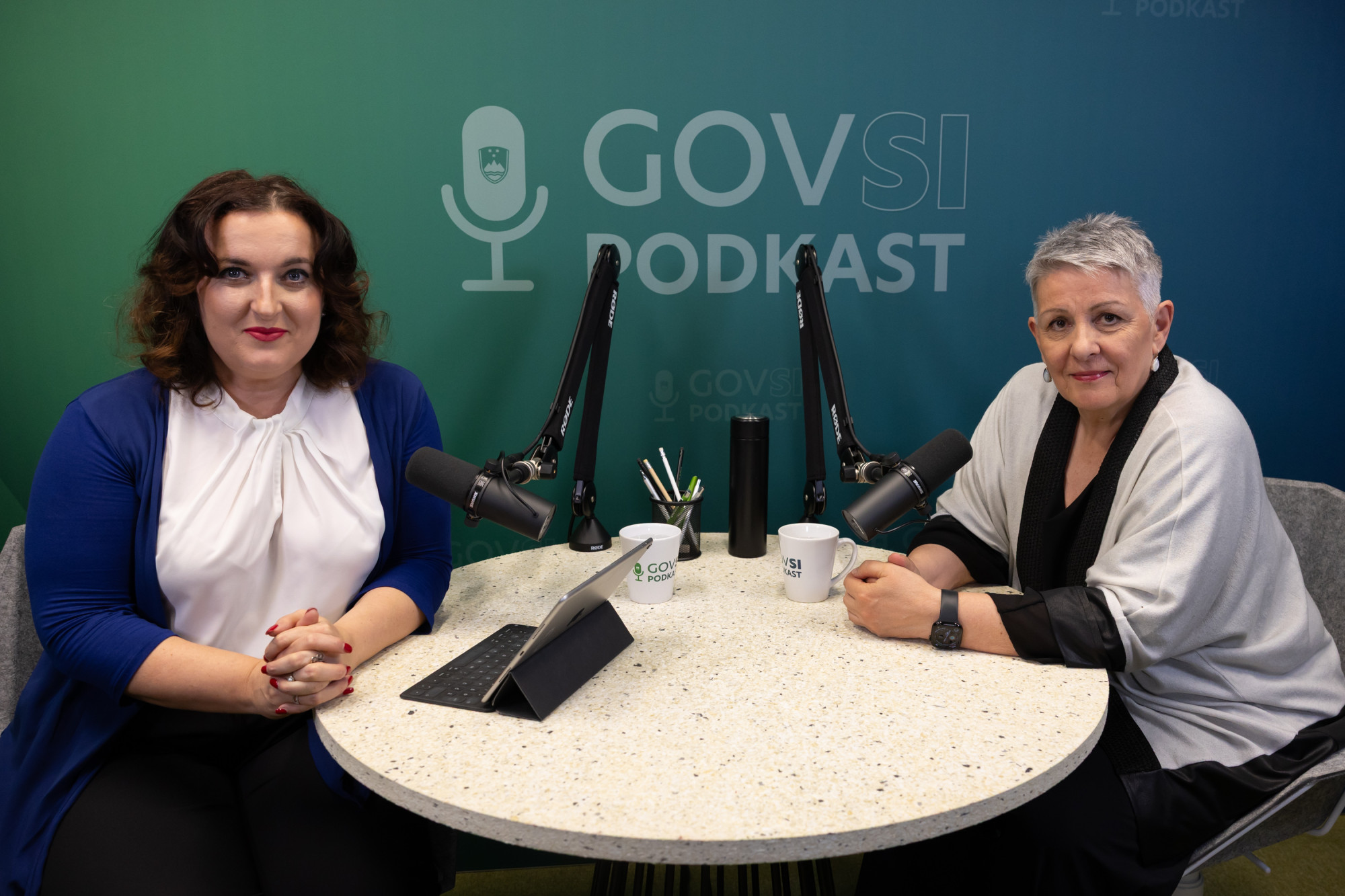
Petra Bezjak Cirman and Lidija Jerkič. | Author Urad vlade za komuniciranje
Labour Day, celebrated on 1 May, has its roots in workers’ protests for the eight-hour workday in Chicago in 1886. Today, more than a century later, it remains a symbol of the fight for decent working conditions. As Jerkič pointed out, while circumstances change, the core message remains the same: “Nothing is given, everything is fought for – and it can be lost very quickly.”
In her view, trade unions still play a key role in representing employees’ interests and participating in social dialogue. In Slovenia, this also takes place within the framework of the Economic and Social Council, which brings together representatives of the government, employers and employees. According to the guest, high-quality social dialogue is one of the foundations of a stable and fair society, and she emphasised that it has significantly strengthened during the current government’s term.
The discussion also focused on the challenges of the modern labour market, including the fragmentation of employment, the rise of precarious work, labour shortages and increasing reliance on foreign workers. These workers often find themselves in a vulnerable position due to a lack of knowledge of the language and legislation, which can lead to violations of their rights.
The guest also highlighted the importance of appropriate legislation, such as the minimum wage, which becomes necessary when social dialogue does not function effectively. She noted that Slovenia has relatively well-developed labour legislation, but that problems often arise in its implementation.
The conversation also touched on broader social issues such as inequality in wealth distribution, the role of taxation in maintaining the welfare state, and the impact of digitalisation and artificial intelligence on the future of work. According to Jerkič, it is essential to maintain a balance between economic development and social security.
In conclusion, ahead of Labour Day, the guest emphasised the importance of solidarity: “An individual can hardly stand alone, but together it is easier. It is important that people are aware of their rights and also exercise them.”
Once again, the GOVSI podcast encourages reflection on the kind of society we want to build and the place of work within it – today and in the future.