

Conference: Protecting Civilians and Civilian Infrastructure under International Humanitarian Law
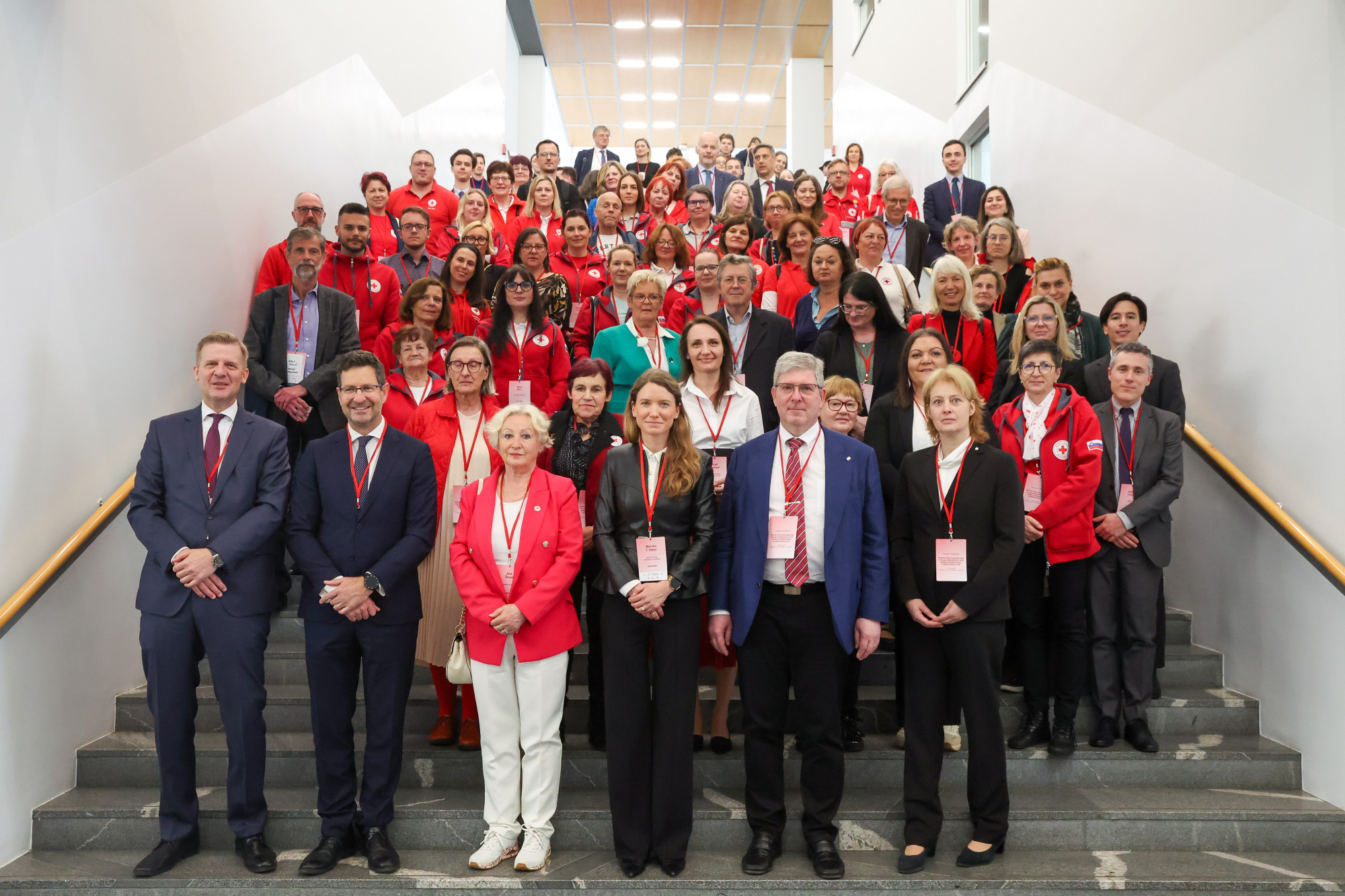
Group photo. | Author Red Cross Slovenia
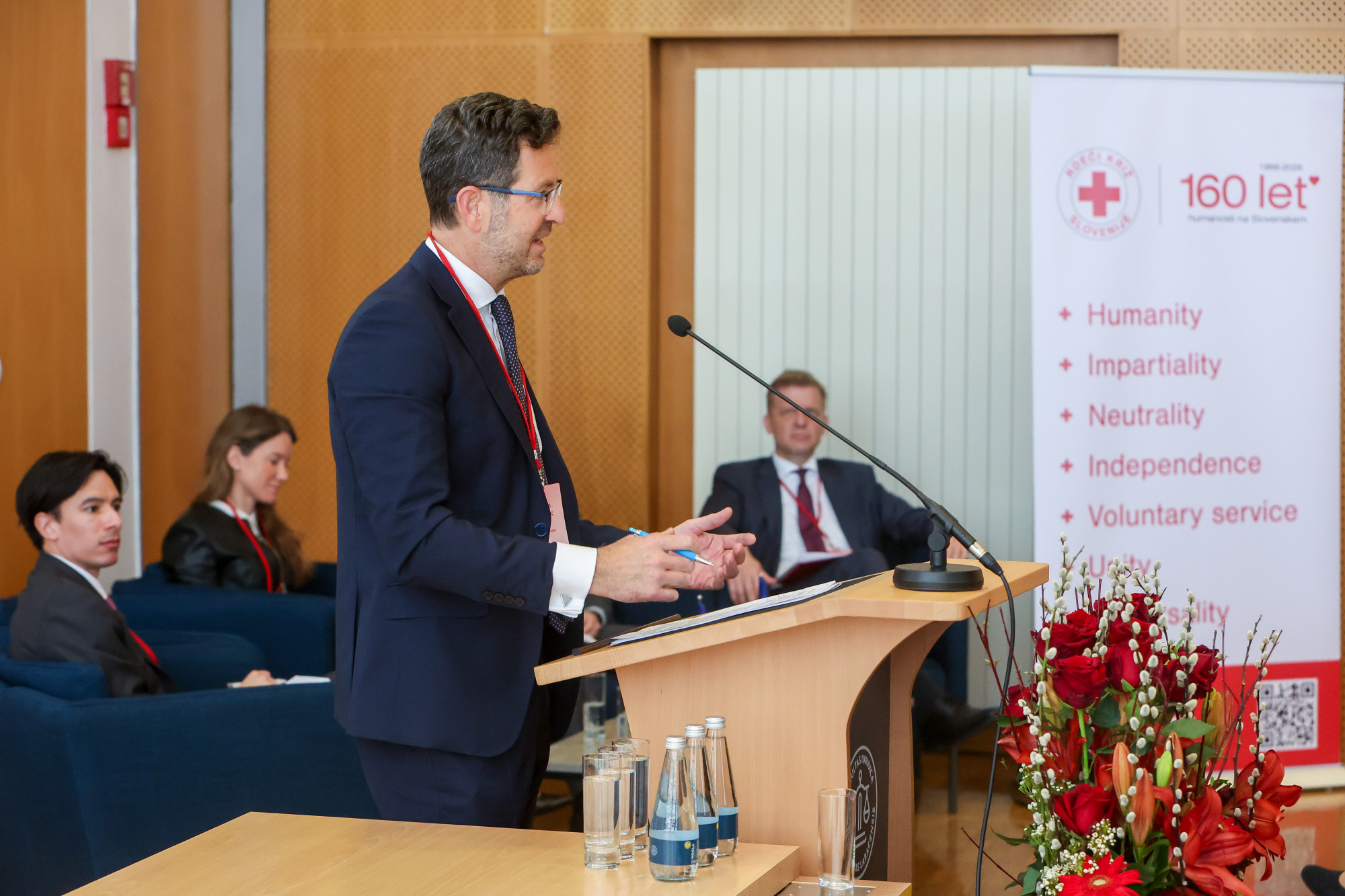
In her opening remarks, Professor Dr Vasilka Sancin, Judge at the European Court of Human Rights, emphasised the importance of positive obligations of states to protect human rights, even during armed conflict, and highlighted the simultaneous application of international humanitarian law (IHL) and human rights law.
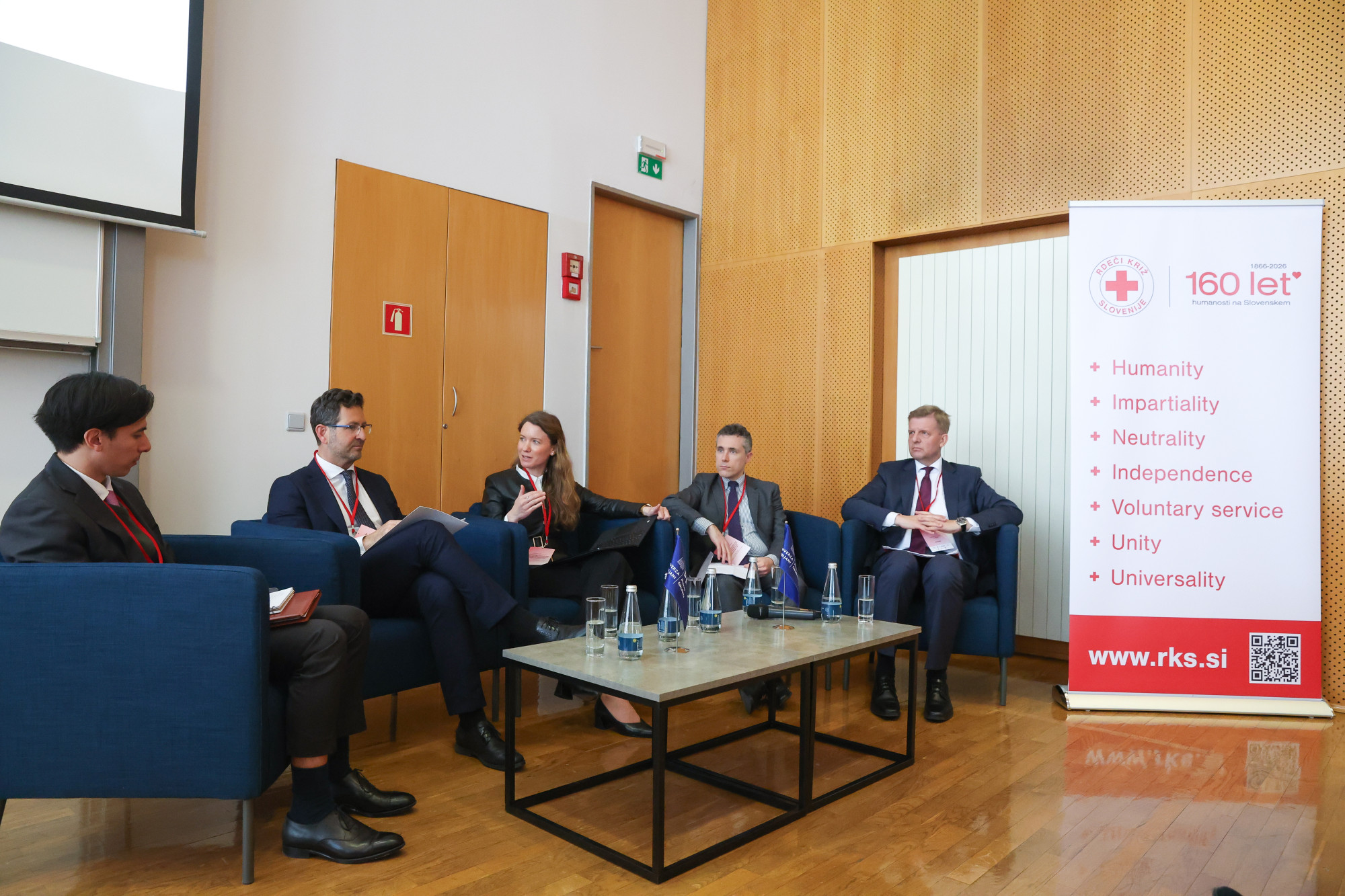
The trilateral conference consisted of three panels.
Panel 1 focused primarily on the Global Initiative to Galvanize Political Commitment to International Humanitarian Law, launched by the International Committee of the Red Cross (ICRC). Dr Marko Rakovec, Director-General for International Law and Protection of Interests and Chief Legal Adviser at the Ministry of Foreign and European Affairs, outlined Slovenia’s numerous activities to protect civilians and civilian infrastructure during its term as a non-permanent member of the UN Security Council (2024–2025). He also presented Slovenia’s engagement as co-chair of Workstream 4: Protecting Civilian Infrastructure, established within the ICRC Global Initiative. Dr Rakovec highlighted proposals and practical measures aimed at strengthening respect for IHL to protect civilian infrastructure in today’s urbanised armed conflicts. He further discussed Slovenia’s role in the Global Alliance to Spare Water from Armed Conflict and the importance of Slovenia’s Voluntary Report on the Implementation and Dissemination of Knowledge of International Humanitarian Law at national and international levels.
Dr Kosuke Onishi, Legal Adviser at the ICRC, presented the work of the seven workstreams established within the Global Initiative and outlined the next steps. He noted that Slovenia was among the first countries to join the Initiative and commended its active participation in Workstream 4: Protecting Civilian Infrastructure.
Panel 2 focused on the role of national Red Cross societies in the protection of civilians. The discussion highlighted the challenges of implementing international law in practice, including the influence of political interests and double standards. The importance of education and awareness-raising, as well as the work of national committees for the implementation of IHL, was emphasised. The significance of the Red Cross emblems, together with approaches to preventing their misuse, was presented alongside examples of best practice in engaging young people and the general public with IHL.
The academic panel addressed key legal and practical issues relating to the protection of civilians in contemporary armed conflicts. The speakers underlined the importance of the principle of precautions in the planning and conduct of military operations, as well as the complexity of proportionality assessments. They also examined the issue of civilians’ direct participation in hostilities, particularly in the context of new technologies and private-sector involvement, which raises numerous unresolved legal questions. Dr Maruša T. Veber, Director of the Institute for International Law and International Relations and Assistant Professor at the Faculty of Law, University of Ljubljana, discussed the role of state consent in the provision of humanitarian aid. She focused on situations of occupation and emphasised the increasing significance of artificial intelligence and the processing of civilian data in modern armed conflicts.
The conference reaffirmed the importance of close international cooperation and the exchange of best practice for the further development of legal and practical mechanisms to ensure more effective protection of civilians and civilian infrastructure. Participants agreed that consistent respect for IHL is essential for mitigating the consequences of armed conflict and safeguarding fundamental human values.