

Fajon on the blockade of the Strait of Hormuz: A sustainable solution cannot be achieved by military means
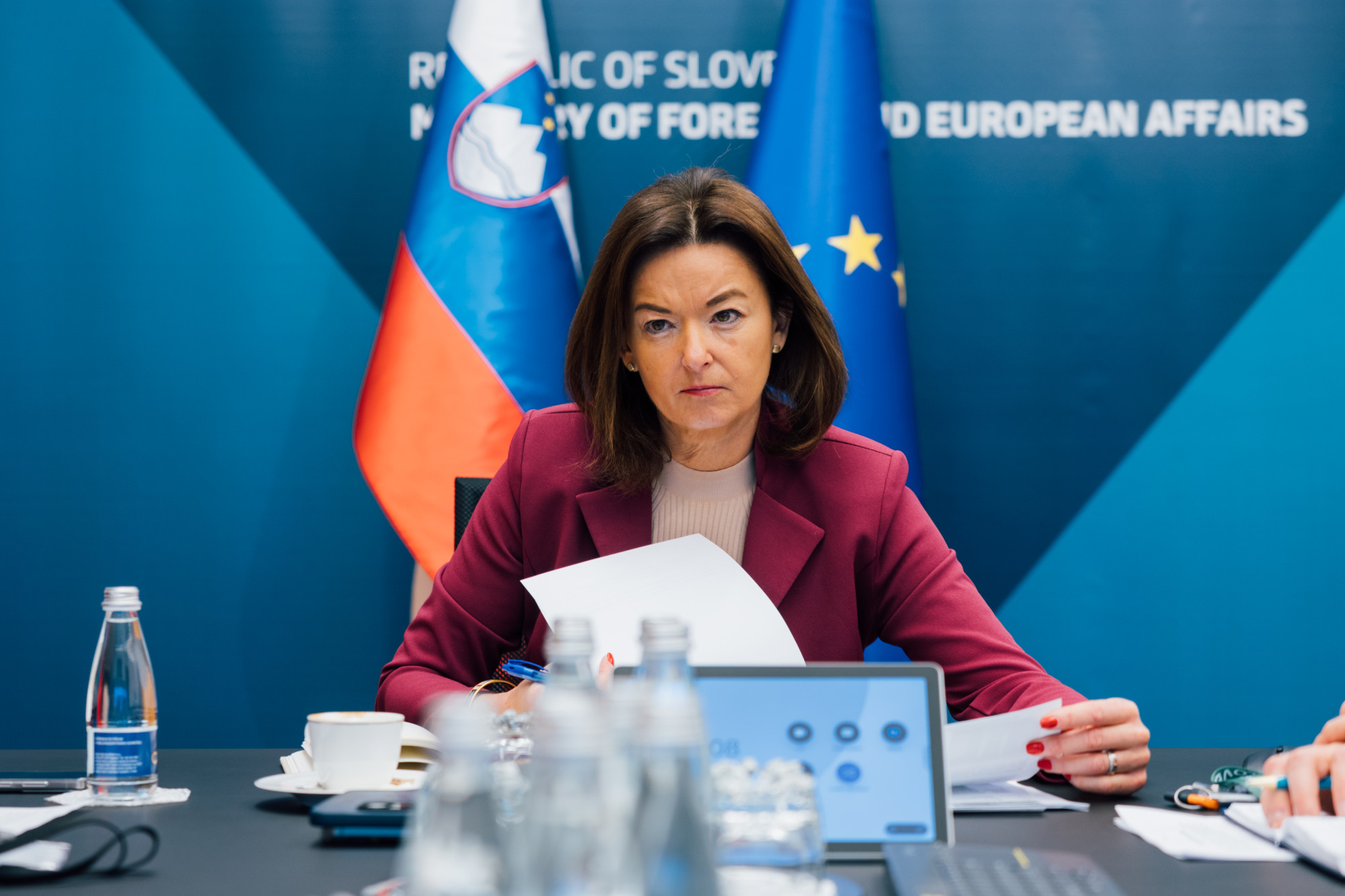
Minister Tanja Fajon at the virtual meeting of foreign ministers. | Author Ministry of Foreign and European Affairs

The ministers agreed that it is essential for countries from all corners of the world to work and speak together as one, adopting a unified, collective approach. Minister Fajon emphasised: “It is vital that we take coordinated diplomatic action, but we must be cautious about any military involvement in the Strait.”
She strongly condemned attacks on civilians and shipping, mine-laying and all actions that resulted in Iran blocking the Strait of Hormuz to regular commercial traffic: “Almost a fifth of the world's oil supply has been disrupted, and many fertiliser shipments are no longer being delivered. This is not just a regional disruption but rather a systemic shock with direct impacts on food security, inflation and the most vulnerable economies.”
When advocating for the opening of the Strait and freedom of navigation, as set out in the United Nations Convention on the Law of the Sea (UNCLOS), Minister Fajon emphasised the importance of multilateralism. She also called for a UN-led mechanism to be set up swiftly to guarantee the safe passage of essential goods, particularly food and fertiliser. We must ensure that the most vulnerable do not bear the brunt of this crisis. This must be an urgent global priority.
Slovenia supports a diplomatic approach aimed at achieving immediate de-escalation and ensuring humanitarian access. In this regard, the Slovenian foreign minister expressed satisfaction that communication channels remain open, calling for a greater role for the EU: “In cooperation with our partners, we should actively support the transition from the current military phase to structured negotiations that also address broader security issues. What is required is a long-term solution based on international law and the UN Charter.”
Unrest, instability and danger in the Middle East and the Persian Gulf are exacerbating global instability and putting global trade and supply chains at risk, which could lead to a severe global crisis. Although Slovenia seems far removed from the unrest and blockade of the Strait of Hormuz, Minister Fajon said that the country is already experiencing the effects of supply chain disruption, most notably in the form of higher energy prices. “A local crisis can quickly escalate into a global one, causing problems that lead to instability, trade disruptions, inflation and widespread price increases, ultimately resulting in a lower quality of life,” she added.