

Minister Fajon: Report of the Slovenian-Italian Historical and Cultural Commission remains highly relevant
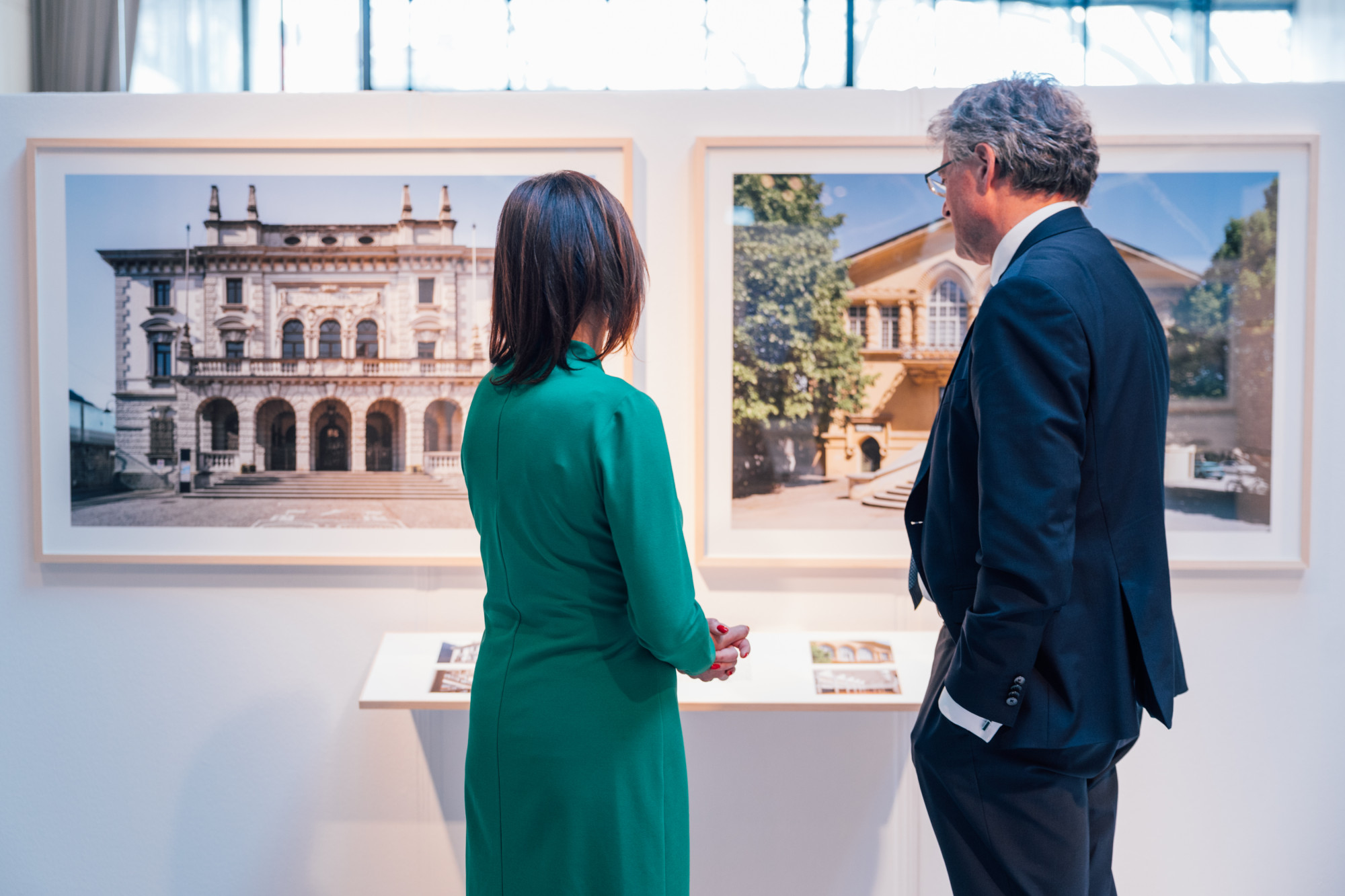
Minister Fajon and Italian Ambassador to Slovenia Giuseppe Cavagno visiting the exhibition Border Affinities at Cankarjev Dom. | Author Ministrstvo za zunanje in evropske zadeve

Minister Fajon began by recalling that the report was first published in Slovenia in 2001 and has now been reprinted in 2026. “The findings are the result of many years of joint research by Slovenian and Italian experts who studied all aspects of our bilateral relations independently and comprehensively, reaching common conclusions.” She pointed out that, while Slovenia is celebrating the reprinting of the report, it has yet to be officially published in Italy. “Objective historiography is important not only in terms of for academic integrity, but also for maintaining social and international stability. When approached responsibly, history deepens understanding and thus protects and preserves peace. However, when used as a propaganda tool, it can reinforce prejudices, deepen divisions and once again justify violence.”
Regarding bilateral relations between Slovenia and Italy, Minister Fajon said that Slovenia's guiding principle in its relations with Italy is to develop good neighbourly relations. However, she added that protecting national interests and safeguarding the rights of the Slovenian national community remain priorities. “I am pleased that the once controversial border areas have become a space for innovative integration. The European Capital of Culture 2025 Nova Gorica–Gorizia has demonstrated that looking beyond borders and fostering cultural connections can effectively eliminate many blind spots of mutual ignorance and disregard. A similar mission is pursued by the 15-year-old Slovenian-Italian remembrance project, the Walk of Peace, which today stretches 500 kilometres, covering the distance from Log pod Mangartom to Trieste,” she added.
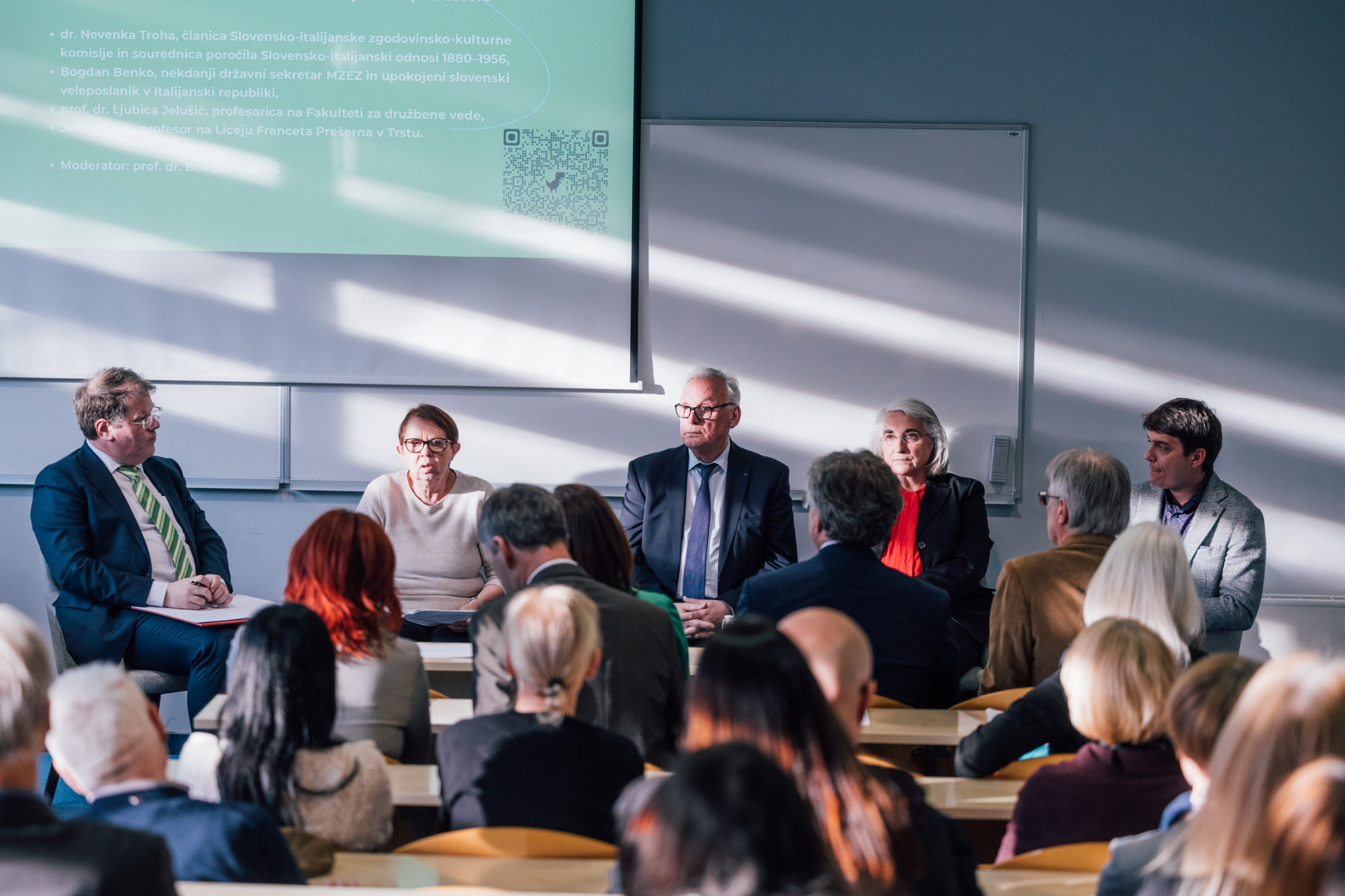
Minister Fajon's address was followed by a roundtable discussion with Dr Nevenka Troha, member of the Slovenian-Italian Historical and Cultural Commission and co-editor of the book Slovene-Italian Relations 1880–1956, Bogdan Benko, former State Secretary at the Ministry of Foreign Affairs and retired Slovenian Ambassador to the Italian Republic, Prof. Dr Ljubica Jelušič, Professor at the Faculty of Social Sciences, and Jernej Šček, Professor at the State Secondary School France Prešeren in Trieste. The discussion was moderated by Prof. Dr Boštjan Udovič.
Before the start of the roundtable discussion, Minister Fajon and the Italian Ambassador to Slovenia, Giuseppe Cavagno, visited the Border Affinities exhibition at the Cankarjev Dom cultural and congress centre, which reveals valuable parallels between the two cultures and nations. Minister Fajon took this opportunity to raise the issues of reducing the number of headteachers in Slovene-language schools, as well as the important matter of minority education in Friuli-Venezia Giulia, which is crucial for preserving the language and identity of the Slovenian minority in Italy. “Any measures that would result in a reduced network of Slovenian schools in Italy are unacceptable. All measures in this area must be carefully considered and coordinated with the Slovenian minority. It is important to take into account that Slovenian schools in Italy are not just educational institutions; they also play a vital role in safeguarding the language, culture and community life of the Slovenian minority in Italy,” commented Minister Fajon.