

Strengthening prevention and response in the event of encounters with large carnivores
- Ministry of Natural Resources and Spatial Planning
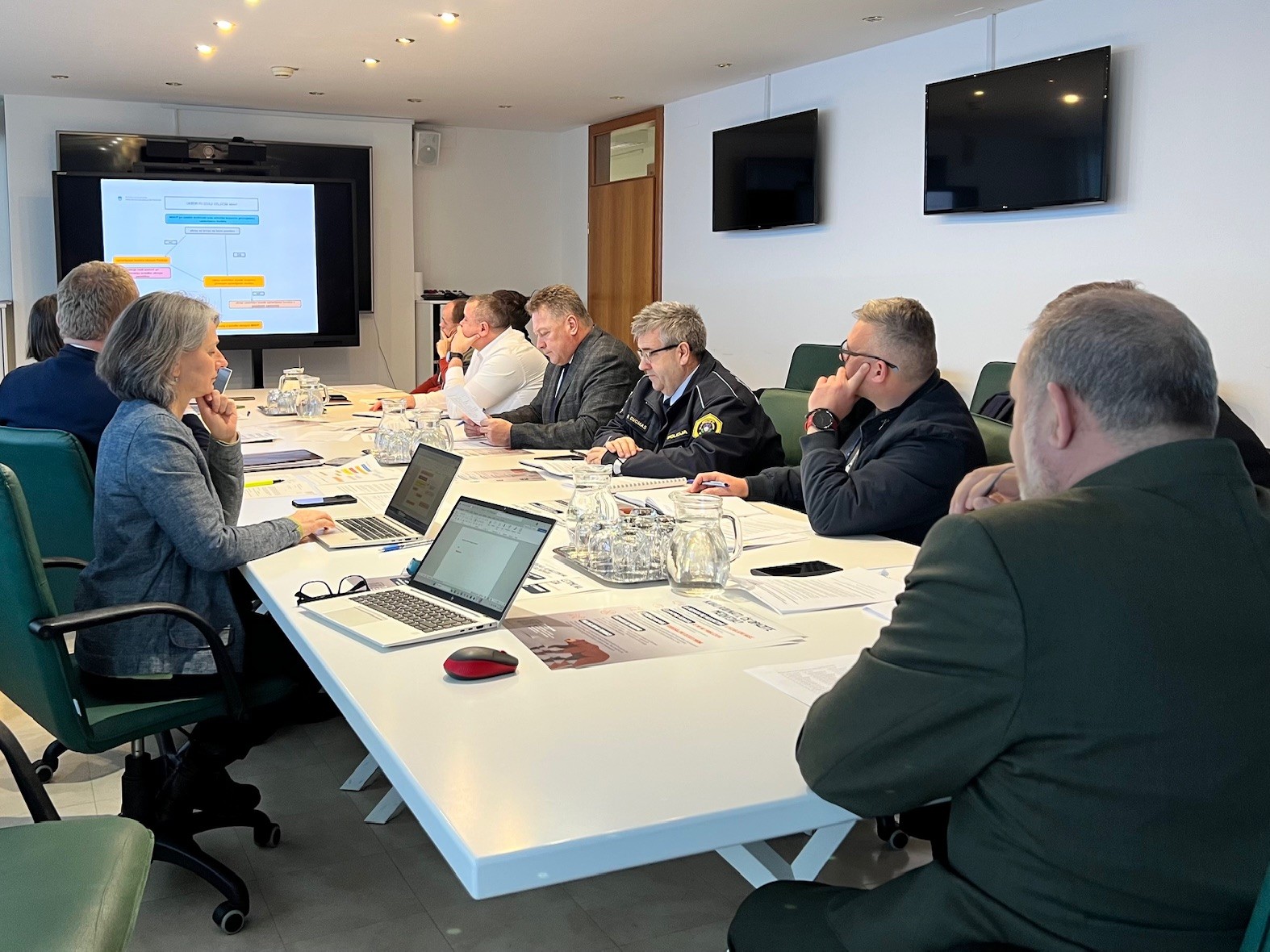
State Secretary Miran Gajšek meets with stakeholders to discuss emergency response to encounters with large carnivores.
With the aim of effectively managing large carnivore populations and coordinating the implementation of measures, the Ministry of Natural Resources and Spatial Planning (hereinafter: the MNVP) held two meetings this week with the interest and expert consultative groups on large carnivore management, as well as with the stakeholders who, in accordance with the amendment to the Nature Conservation Act, take action in cases of direct threat. In addition, we are systematically strengthening preventive measures because preventing conflicts between people and large carnivores is the most effective long-term approach.
Prevention — the first and most important measure
The responsible management of large carnivores aims to prevent situations that could result in threats. Preventing conflict is always more effective than taking subsequent action. Therefore, the MNVP emphasises responsible conduct within settlements. This includes:
- appropriate waste management and consistently closing containers;
- securing containers and reducing carnivore access to food for carnivores;
- not disposing of organic waste in nature;
- removing potential food sources near dwellings.
Large carnivores generally avoid people. Human-carnivore conflicts most often occur during sudden encounters or due to inappropriate human behaviour.
Visitors to nature are advised:
- to move through the forest calmly and make noise while walking (especially in areas with low visibility);
- to keep dogs on a lead;
- to avoid approaching cubs or feeding wildlife;
- not to leave food waste in the countryside;
- to stay calm if they encounter a large carnivore, not approach it, and withdraw slowly without running or causing panic.
Particular caution is recommended during the birthing season and at dawn and dusk, when carnivores are most active.
What should you do if you encounter a direct threat?
In the event of a threat, such as the appearance of a brown bear in a settlement or nearby, observations should be reported via the MedvedoFON app on Slovenia's Nature Conservation Information System (NarcIS). The Slovenia Forest Service will then verify and analyse the data, and may initiate additional field checks if deemed necessary. Furthermore, public cooperation allows for a more comprehensive understanding of developments and faster response times.
In exceptional circumstances, if either you or another person is injured in an attack, or if a brown bear is injured in a traffic accident, you should call the National Notification Centre on 112 immediately.
The competent authorities will respond in a timely and effective manner when a direct threat is imminent.
In the event of an emergency, the 112 Notification Centre is responsible for activating the relevant services. These include the police, emergency medical services and the hunting ground managers. The Ministry issues an oral directive for the emergency culling of the brown bear, and the measure is carried out immediately. Each intervention is meticulously recorded, overseen and documented.
Culling is a measure of last resort, which is strictly reserved for situations where the safety of human life is at risk.
A cooperative approach to the management and implementation of measures related to large carnivores
The purpose of the interest and consultative group on large carnivore management is to inform all stakeholders and exchange different views on large carnivore management, and to maintain or increase public acceptance of large carnivores. The purpose of the expert group is to provide professional views and proposals for the implementation of large carnivore management tasks and measures in Slovenia.
In addition to representatives from the Ministry, the groups include representatives from non-governmental organisations dedicated to the protection of animals, nature and the environment; the Association of Municipalities and Towns of Slovenia; the Association of Municipalities of Slovenia; the Association of Urban Municipalities of Slovenia; the Slovenia Forest Service; the Institute of the Republic of Slovenia for Nature Conservation; the Biotechnical Faculty of the University of Ljubljana; the Veterinary Faculty of the University of Ljubljana; the Chamber of Agriculture and Forestry of Slovenia; the Farmers Trade Union of Slovenia; the Association of Sheep and Goat Breeders of Slovenia; the Hunting Association of Slovenia, the Slovenian Beekeepers’ Association and the Ministry of Agriculture, Forestry and Food.
The amendment to the Nature Conservation Act from December 2025 provides for coordinated and effective action in the event of direct threats posed by large carnivores. The responsibility for emergency response lies with the hunting ground managers. The emergency response procedure involves the Administration of the Republic of Slovenia for Civil Protection and Disaster Relief, the General Police Directorate, the Slovenia Forest Service, the Hunting Association of Slovenia and the Institute of the Republic of Slovenia for Nature Conservation. The overarching objective is to ensure rapid on-site responsiveness and the health and safety of people.