Minister Fajon in Munich on dialogue, international law and shared responsibility for peace
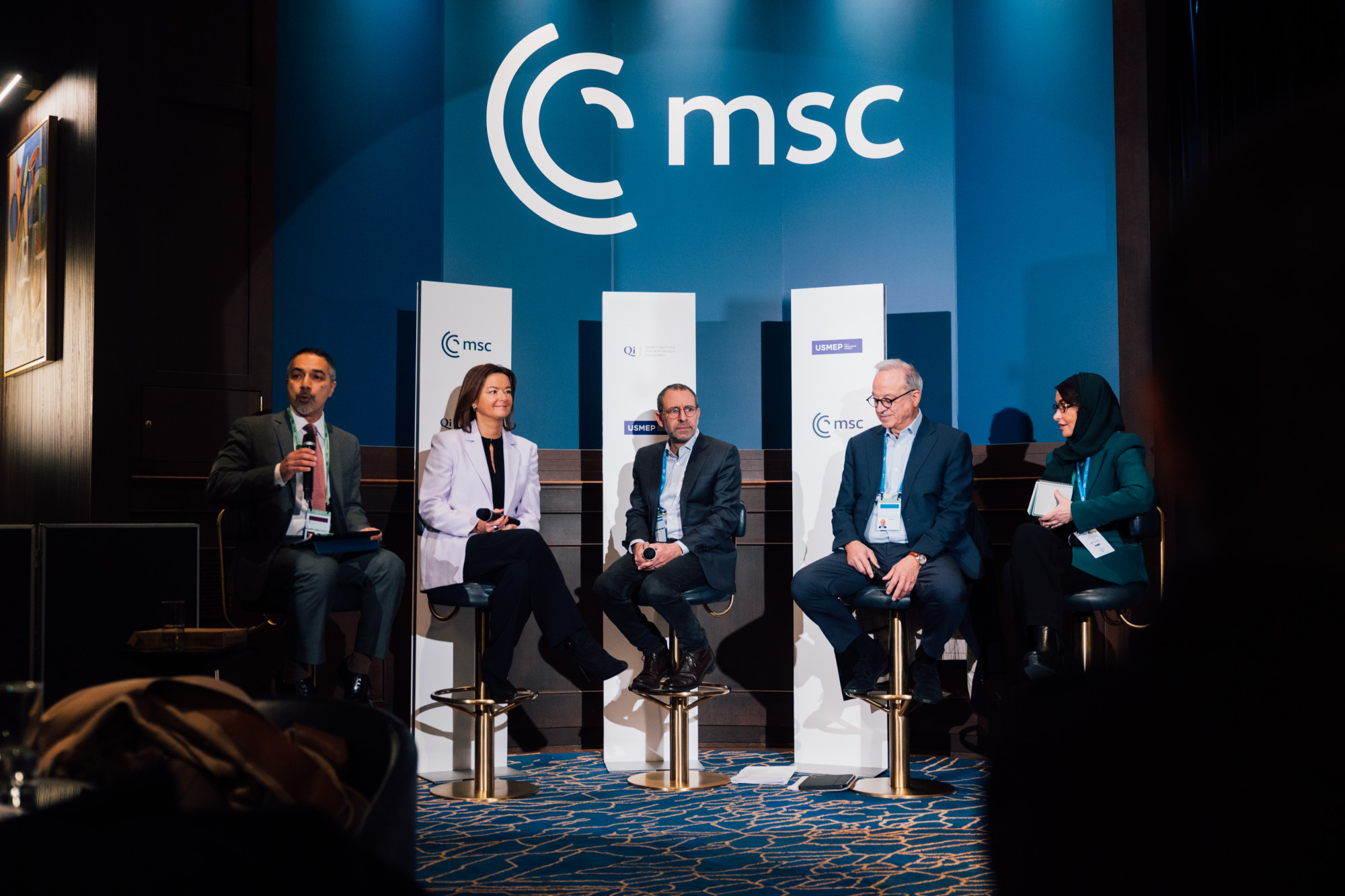
Minister Fajon at the panel discussion | Author Ministry of Foreign and European Affairs

On her first day at the world’s largest security conference, Minister Fajon participated in a discussion entitled 'Oslo is dead, long live New York? Evaluating new pathways to Palestinian self-determination,' where she emphasised that Slovenia remains firmly committed to respecting international law and the international order based on the UN Charter: "Slovenia supports all sincere efforts to establish peace in the Middle East, but wishes to point out that, despite the second phase of the peace plan being underway, the situation in Gaza remains extremely alarming. Slovenia consistently and persistently calls for the safe, comprehensive and unimpeded delivery of humanitarian aid to Gaza, in accordance with humanitarian principles and under the leadership of UN agencies."
Regarding the Board of Peace, Minister Fajon stated: "Slovenia supports any peace initiative that stops violence and human suffering. However, it is difficult to imagine any lasting peace without it being based on UN resolutions and UN institutions. We definitely do not want a structure parallel to the UN."
Minister Fajon also outlined Slovenia’s efforts to establish peace in Gaza, including those made during the country’s membership of the Security Council: "The right of nations to self-determination is written into Slovenia’s DNA. That is why we recognised Palestine – not as a gesture, but as a clear political message that lasting peace cannot be built without recognition. We believe that the two-state solution is the only way to ensure security and a dignified future for both Israelis and Palestinians."
In addition to Minister Fajon, the panel discussion was attended by former Jordanian Foreign Minister Marwan Muasher, who praised Slovenia for its support of Palestine: "Slovenia is an example of how Europe as a whole should respond to events in Palestine." Israeli analyst and former peace negotiator Daniel Levy and senior Saudi Arabian diplomat Manal Radwan also took part in the discussion. Both had previously appeared as guests at the 20th Bled Strategic Forum in September 2025.
As the international order crumbles, dialogue and multilateralism are key
At the opening of the Munich Security Conference, Minister Fajon highlighted the conference's broader significance in an era of crumbling rules-based international order: "At a time of serious pressures on the international order, direct dialogue between allies and partners is essential. Munich remains a place where countries can exchange views, build trust and develop joint responses to global security challenges. As long as we talk, there is hope for those living in fear and uncertainty.
She added that the world is facing an increasing number of military, hybrid, cyber and other threats, and emphasised: "Small countries do not have the influence of the great powers, but we have the ability to connect with one another, develop trust and build bridges between different perspectives, and this is really important in today’s world."
At the same time, Minister Fajon insisted that Slovenia wants to see a strong and united European Union: "Only such a Europe can respond effectively to contemporary security challenges."
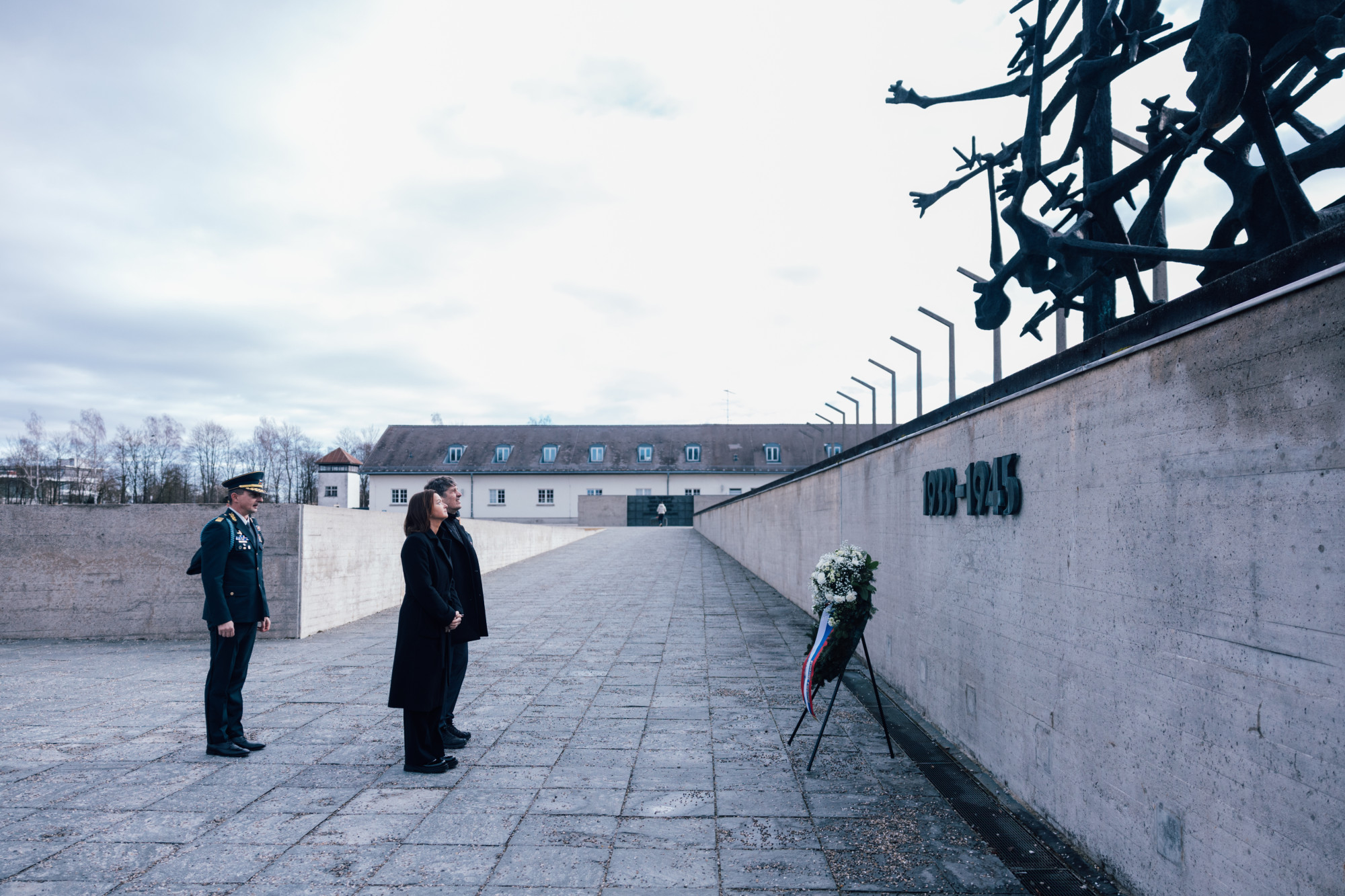
Minister Fajon visits the former Dachau concentration camp | Author Ministry of Foreign and European Affairs
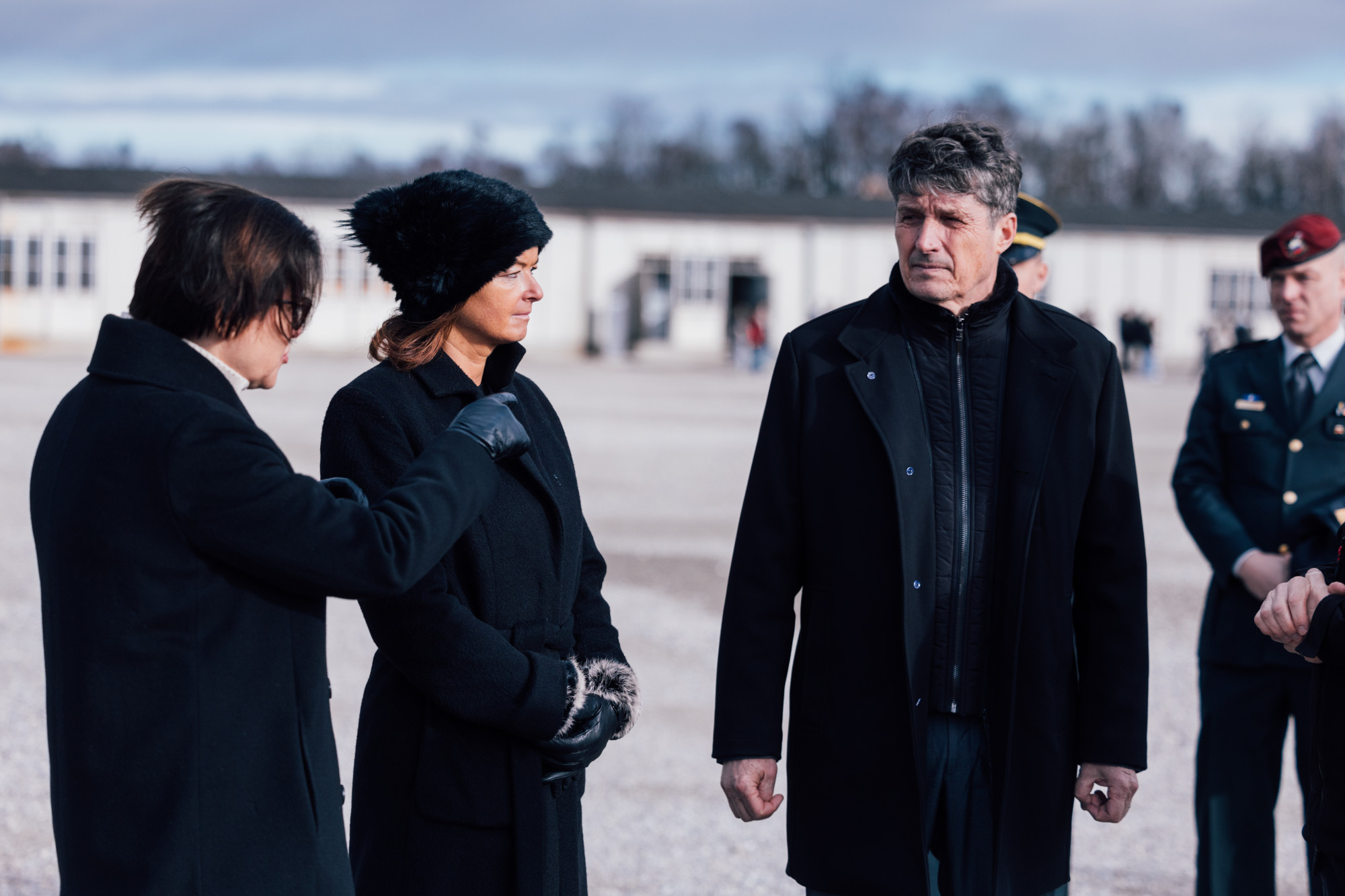
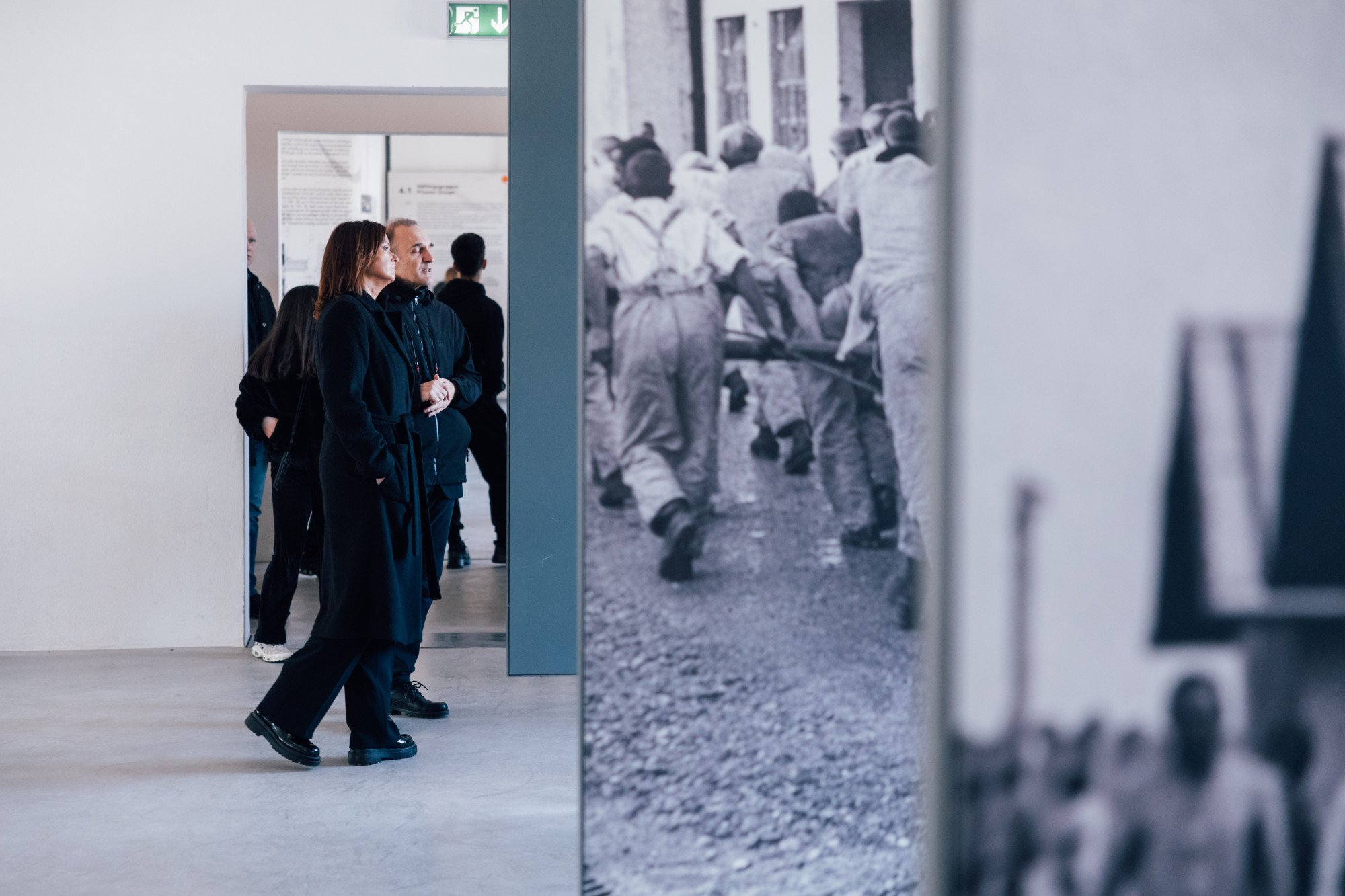
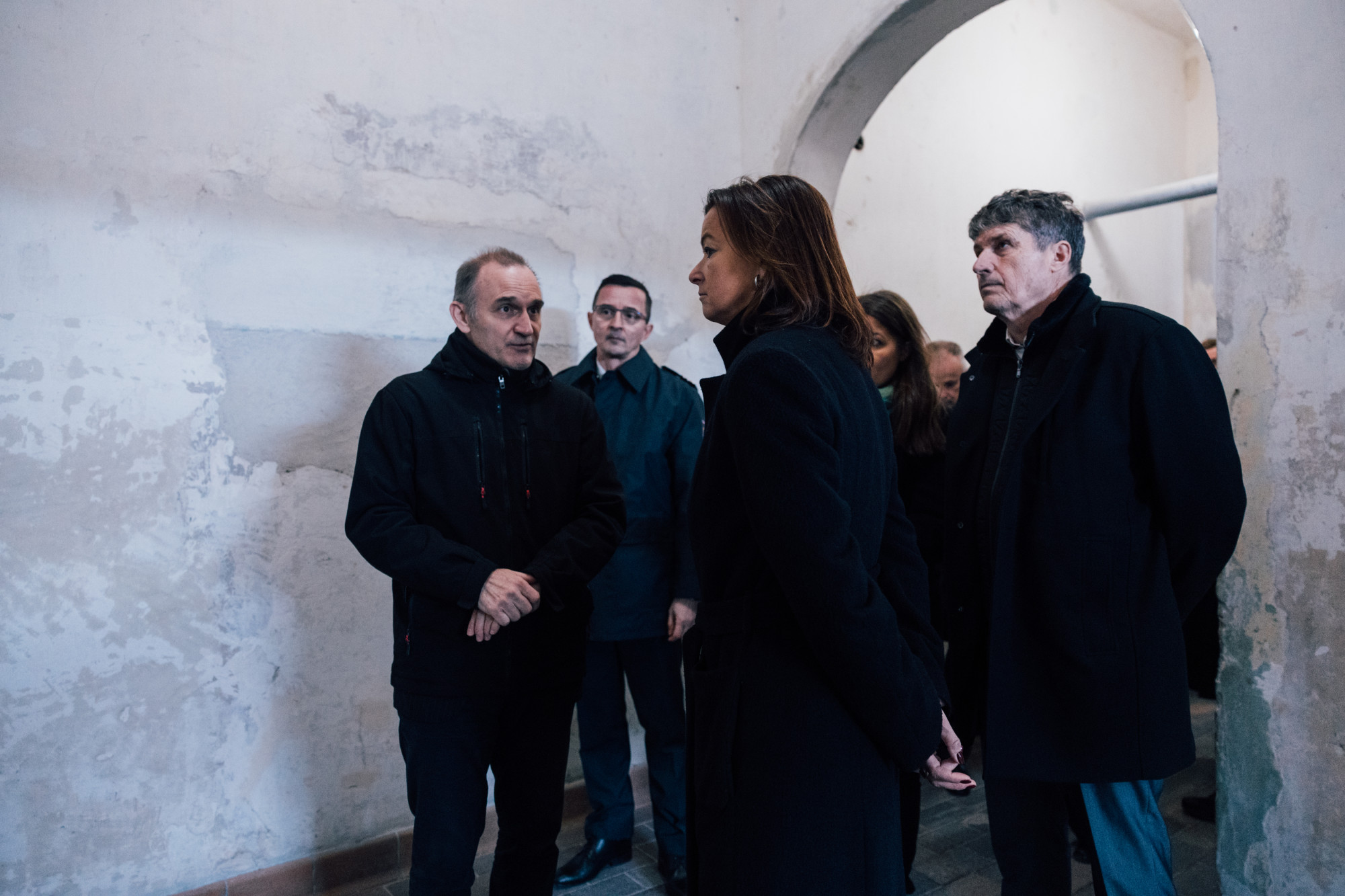
Dachau: Historical memory as a reminder for the present
Later in the day, Minister Fajon visited the former Dachau concentration camp, where she laid a wreath in tribute to the Slovenes who were deported to and imprisoned in the camp during World War II. She said: "Dachau is a poignant reminder of the devastating consequences of hatred, exclusion and dehumanisation. Remembering the victims is not only a moral obligation to the past, but also a responsibility to the future. As an international community, we must always clearly and decisively stand up in defence of human dignity, peace and human rights."
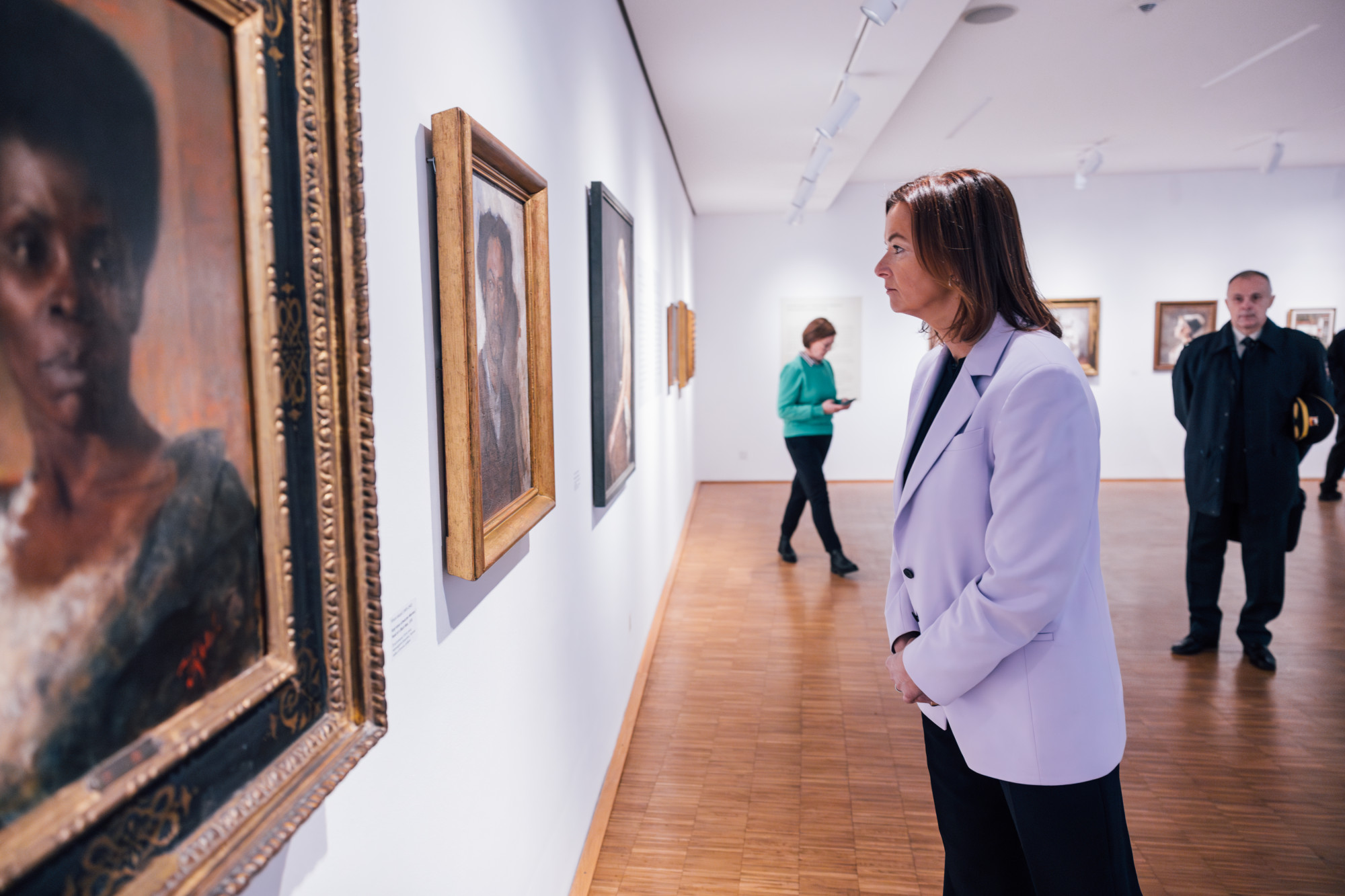
The minister also visited an exhibition of Slovenian impressionists at the Gemäldegalerie Dachau.
Security, humanitarian crises and the future at the forefront of discussions
On the sidelines of the conference, Minister Fajon held separate meetings with Togo’s Foreign Minister Robert Dussey, with whom she exchanged views on regional developments, particularly the situation in West Africa, the Sahel and the Great Lakes region. She also met with Philippe Lazzarini, Commissioner-General of the United Nations Relief and Works Agency for Palestine Refugees in the Near East (UNRWA). They discussed the humanitarian situation in Gaza and the West Bank, as well as the impact of recent Israeli measures on the Agency’s operations.
On 14 February, Minister Fajon participated in a panel discussion on water as a strategic and security issue, and in a discussion entitled 'Power, politics and parity: Mapping the way for the first female UN Secretary-General.' She also held several bilateral talks with her fellow foreign ministers on current global and regional challenges.
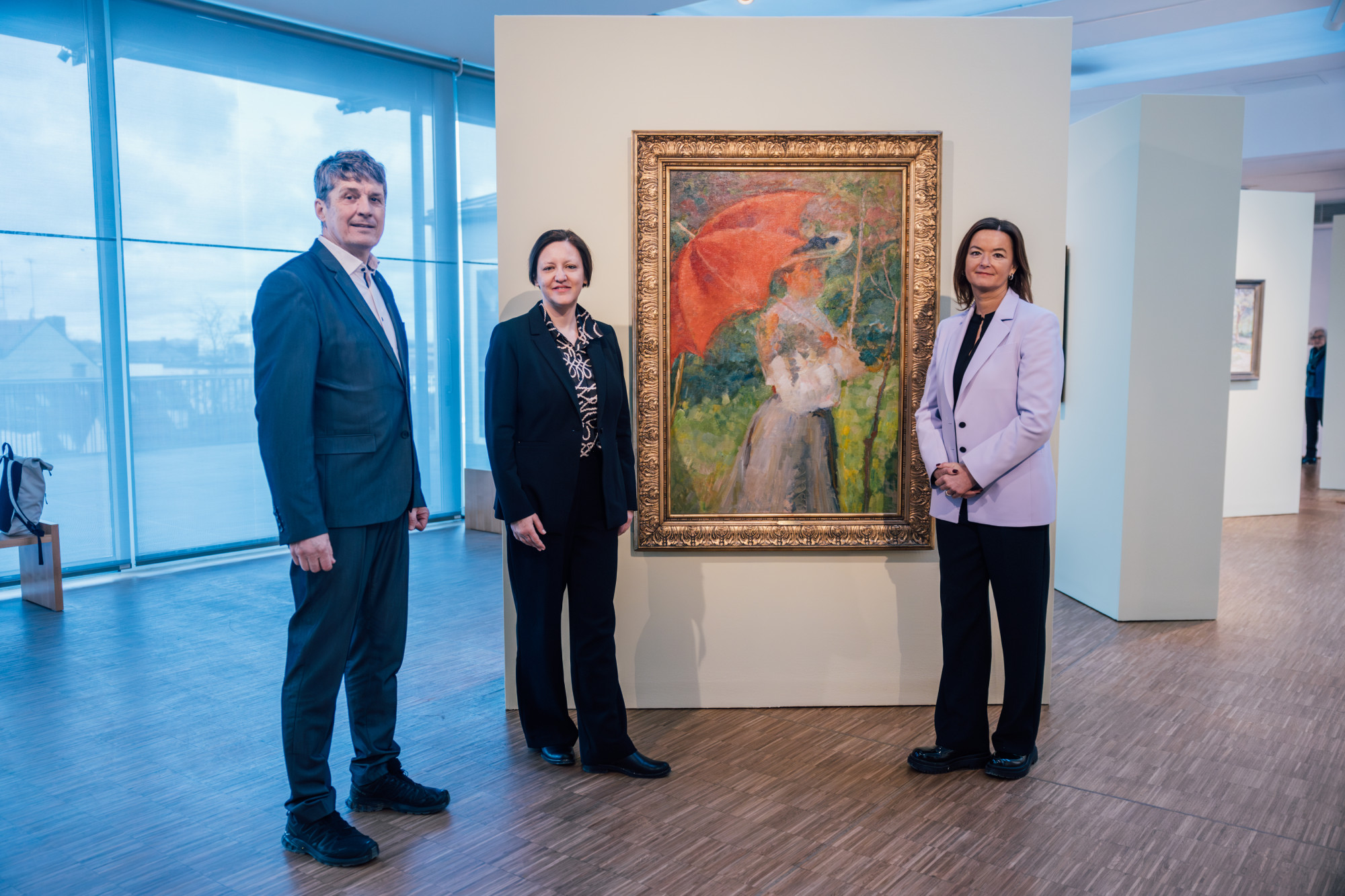
Minister Fajon visits the exhibition of Slovenian impressionists at the Gemäldegalerie Dachau together with Slovenian Ambassador Dr Ana Polak Petrič and Minister of Defence Borut Sajovic | Author Ministry of Foreign and European Affairs