

Joint management of European nature and nature restoration opportunities within Natura 2000 in Brussels
- Ministry of Natural Resources and Spatial Planning
- Ministry of Agriculture, Forestry and Food
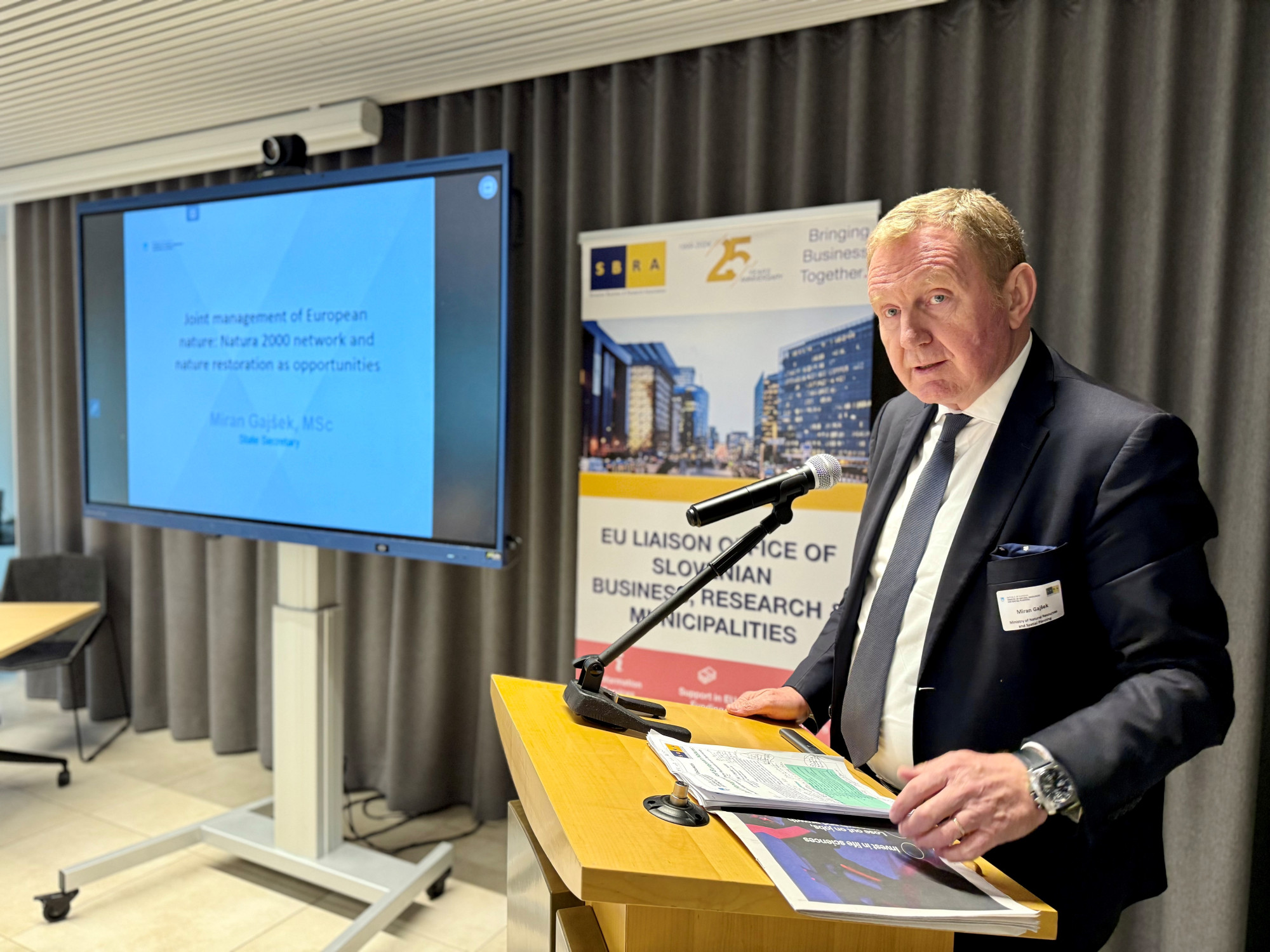
Državni sekretar mag. Miran Gajšek | Author MNVP

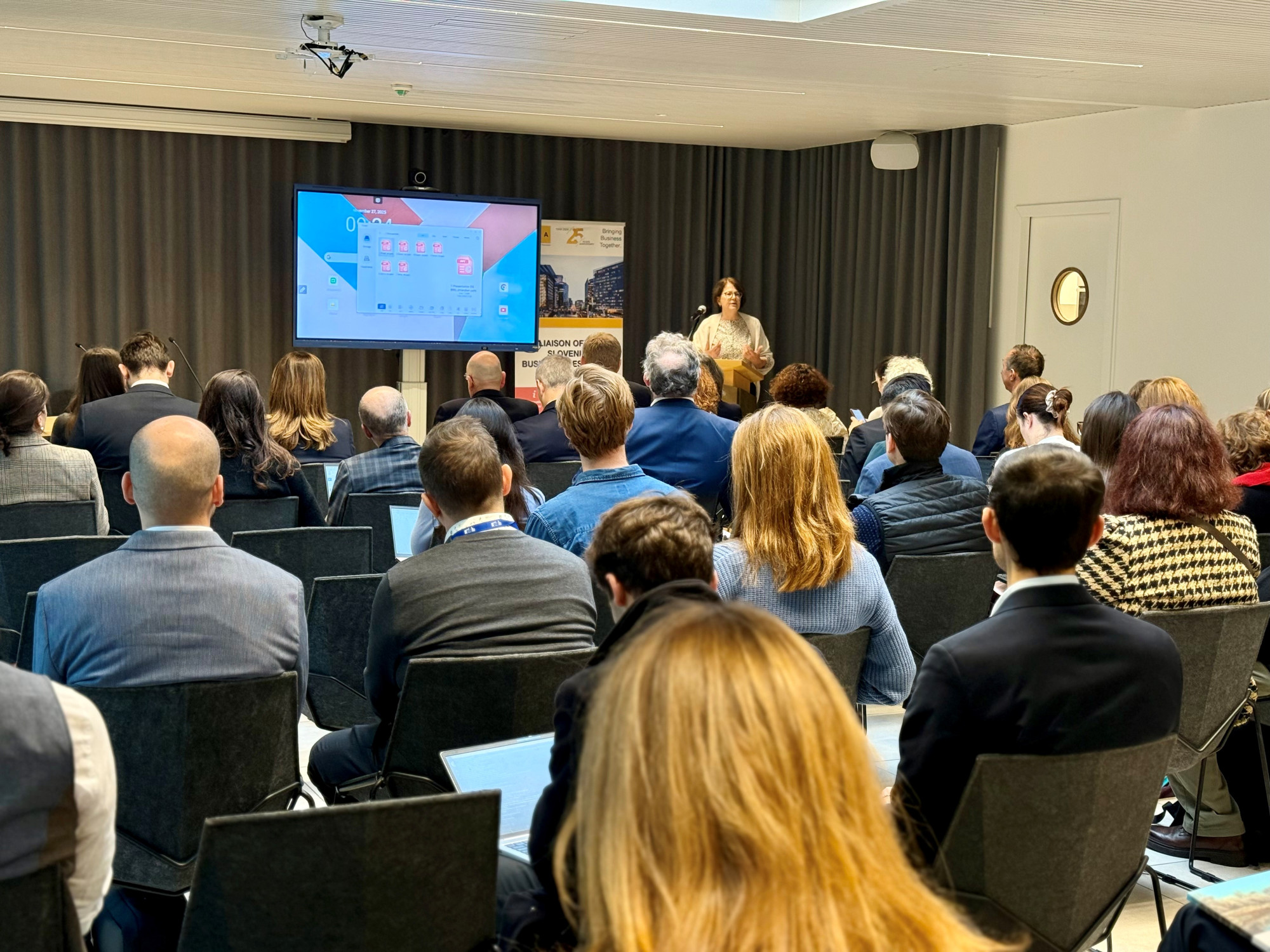
The consultation was opened by Miran Gajšek, State Secretary at the Ministry of Natural Resources and Spatial Planning (hereinafter: MNVP) who emphasised that joint management of natural resources is more vital than ever. "The Natura 2000 network and nature restoration offer opportunities for an integrated approach to managing nature and the Common Agricultural Policy. Achieving both nature conservation and agricultural goals requires continuous coordination, both at the national and European Union (EU) levels."
The participants in the consultation were also addressed by Andreja Viher White, Deputy Head of Permanent Mission of the Republic of Slovenia to the EU; Dr Draško Veselinovič, Director of the Slovenian Business & Research Association (SBRA); Simona Vrevc, Acting Director-General of the Agriculture Directorate at the Ministry of Agriculture, Forestry and Food; and two representatives from the European Commission: Andrea Vettori, Head of Nature Conservation Unit, Directorate General Environment, and Gregorio Davila Diaz, Deputy Head of the Environmental Sustainability Unit, Directorate-General for Agriculture and Rural Development.
Slovenia among Europe's leaders in biodiversity conservation
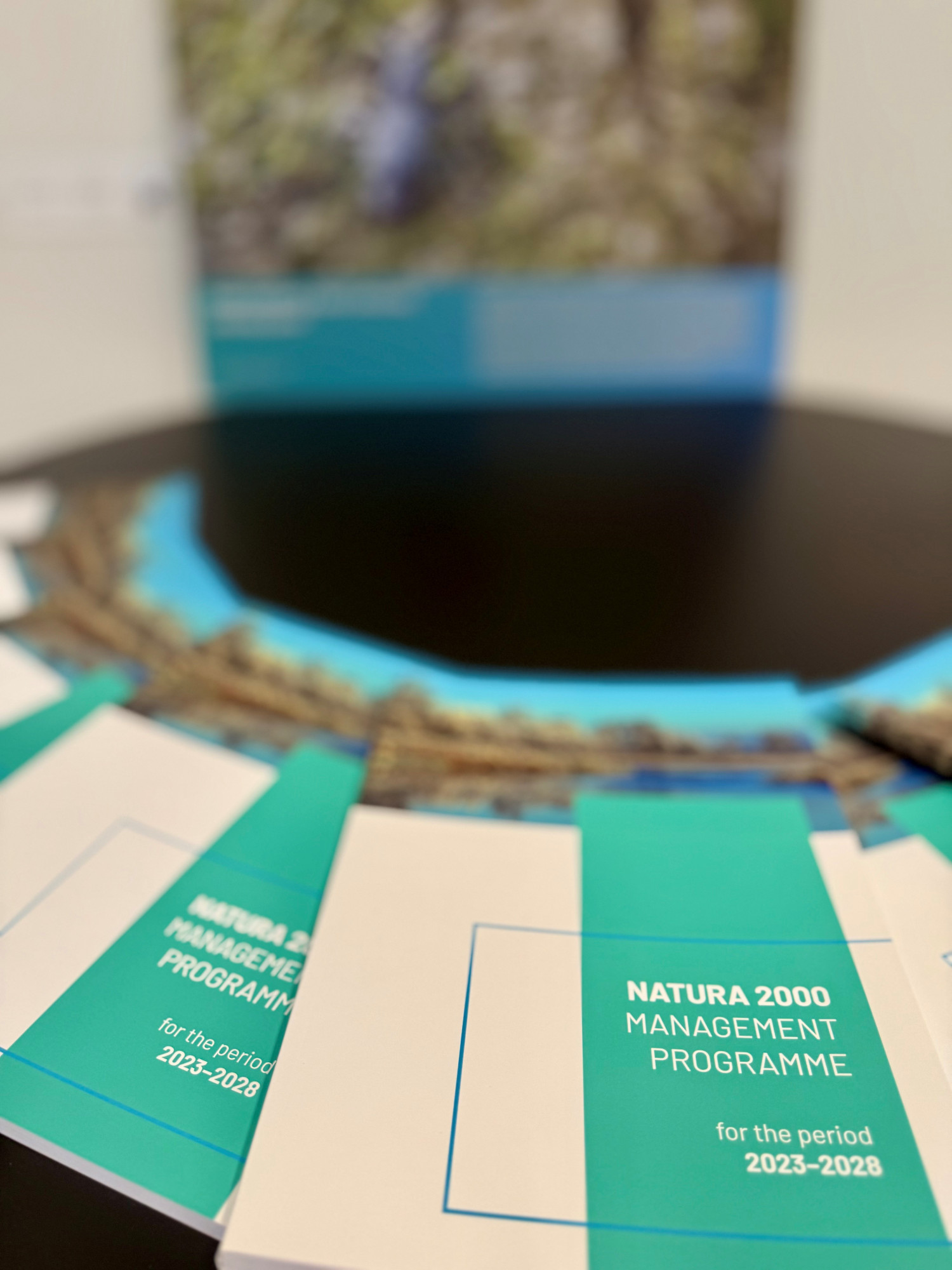
Representing the Nature Directorate at the MNVP, Dr Katarina Groznik Zeiler and Andrej Bibič initiated the presentation by emphasising that Slovenia holds a prominent position in European biodiversity rankings. The high proportion of Natura 2000 sites, alongside protected areas (40%), reflects Slovenia's rich biodiversity and sustainable forest management, with forest covering approximately 60% of the country, and the diligent implementation of EU and international commitments. They then highlighted two key strategic documents for nature conservation in Slovenia: the National Nature Conservation Programme (NNCP) and the Government's Natura 2000 Management Programme.
Nature is highly valued by the people of Slovenia – 80% of respondents consider nature protection to be of the utmost importance. Foreign visitors cite natural beauty and recreational opportunities as the primary reasons for visiting.
Slovenia manages its Natura 2000 sites through a joint management programme which sets out conservation objectives and measures for each site, species and habitat type, and incorporates links to other sectoral plans. Public administration forms the basis of this management approach, and in recent years it has delivered 11 Natura 2000 cohesion projects, including the LIFE IP NATURA.SI project. Furthermore, new cohesion projects and a strategic LIFE project are currently being developed. However, challenges remain, including staffing shortages, fragmented private ownership, and long-term financing.
Agricultural policy and biodiversity – the necessity of cooperation and understanding
Assist. Prof. Dr Tanja Šumrada, from the Biotechnical Faculty, presented an analysis of the challenges at the intersection of the Common Agricultural Policy (CAP), Natura 2000 and nature restoration. Agriculture remains a key driver of biodiversity loss. She identified the lack of expertise in managing biodiversity on agricultural land as an obstacle to introducing additional targeted measures.
Nature conservation measures are often not designed with farmers in mind, resulting in mistrust, administrative burdens, and a poor uptake in the field. Research suggests that improved communication, education, and stronger advisory services are essential.
Countries will need reinforced institutions, from monitoring to advisory services, to implement more targeted conservation policies. In addition to public funding, market mechanisms will become increasingly important as public finance alone cannot cover all restoration needs.
Simona Vrevc, Acting Director-General of the Agriculture Directorate at the Ministry of Agriculture, Forestry and Food, stressed that while farmers do follow modern trends they must also be able to make a living. Measures need to take agricultural realities into account. Therefore, policy coherence is important – good measures should be continued, and financing models must be stable to achieve lasting effects.
Transition regions – hidden pearls of European nature
Prof. Dr Peter Trontelj from the Biotechnical Faculty warned that European biodiversity is globally at its lowest amongst all ice-free continents. Nevertheless, there are areas of exceptional value, such as the transitional regions of the Dinarides, the Balkans and the Pannonian Plain.
These areas' high biodiversity is the result of the overlap of biogeographical zones and historical processes. However, these areas are also among the most threatened due to edge effects, low population density, isolated populations and insufficiently targeted conservation efforts. Trontelj presented Slovenia's outstanding cave biodiversity, raptor migration routes and large carnivore populations as evidence that transitional corridors are crucial for restoring European biodiversity. It is therefore essential to understand, value and protect these areas further.
Monitoring – the key to successful nature restoration
Prof. Dr Al Vrezec from the National Institute of Biology emphasised that high-quality monitoring is the foundation of effective Natura 2000 management. Only reliable, long-term data enable timely identification of changes, the design of tailor-made measures and the designation of areas where restoration is most urgent. Slovenian examples of best practice demonstrate that well-designed monitoring can lead to balanced and effective conservation decisions.
Croatia – ambitious nature restoration targets and challenges
Ivana Jelenić, from the Ministry of Environment and Green Transition of the Republic of Croatia, presented an overview of the state of the Natura 2000 network in Croatia. The network covers nearly 37% of the country's land and over 32% of its sea. Croatia has adopted several hundred management plans and made nature restoration a national priority. However, challenges remain, particularly regarding financing, staffing, monitoring indicators and coordinating measures in the Adriatic Sea.
A national nature restoration plan is being developed through extensive consultation, with a focus on measures within Natura 2000, particularly the restoration of marine ecosystems and the establishment of sustainable spatial use.
Natura 2000 and viticulture: A case of synergy
Robert Gorjak, from the Belvin Wine School, stressed that viticulture in Natura 2000 areas is not only possible but can be highly successful. Organic, biodynamic and regenerative farming produce high-quality products while contributing to landscape preservation. There are around 22,000 winegrowers in Slovenia, yet only a small proportion of the total vineyard area is situated within Natura 2000 habitats.
Natura 2000 for effective on-site solutions
The following participants took part in a roundtable discussion chaired by Miran Gajšek, MSc, State Secretary at the Slovenian Ministry of Natural Resources and Spatial Planning: Ion Codescu, Acting Director of the Directorate for Biodiversity at the European Commission's DG Environment; Gregorio Davila Diaz, Deputy Head of the Environmental Sustainability Unit at the European Commission's Directorate-General for Agriculture and Rural Development; Igor Kreitmeyer, Director of the Directorate for Nature Protection within the Croatian Ministry of Environmental Protection and Green Transition; Simona Vrevc, Acting Director-General of the Agriculture Directorate at the Ministry of Agriculture, Forestry and Food; and Dr Katarina Groznik Zeiler, Director General of the Nature Directorate at the Ministry of Natural Resources and Spatial Planning. The speakers agreed on the following:
- Nature restoration must become a long-term, stably funded priority;
- The EU and Member States must provide predictable and reliable funding;
- Natura 2000 is a model of coexistence, not restriction – dialogue, cooperation and the understanding of local communities are key.
- Slovenia and Croatia will initially prioritise restoration efforts within the Natura 2000 network, but will focus mainly on the water and agricultural sectors outside it.
- The European Commission encourages cross-sectoral cooperation and a bottom-up approach, allowing for the testing of effective solutions on site.
An investment in our shared future
The consultation confirmed that Natura 2000 and nature restoration are exceptional opportunities for the EU, though they pose a significant challenge for biodiversity-rich countries such as Slovenia and Croatia. Success will depend on:
- long-term, stable financing;
- strengthened institutional support;
- The engagement of local communities; and
- deepened understanding of natural processes, especially in transitional regions.
Nature is the foundation of our economy and social well-being – investing in its restoration is investing in our collective future.