

Focus on migration during visit by Bosnia and Herzegovina's Ministry of Security
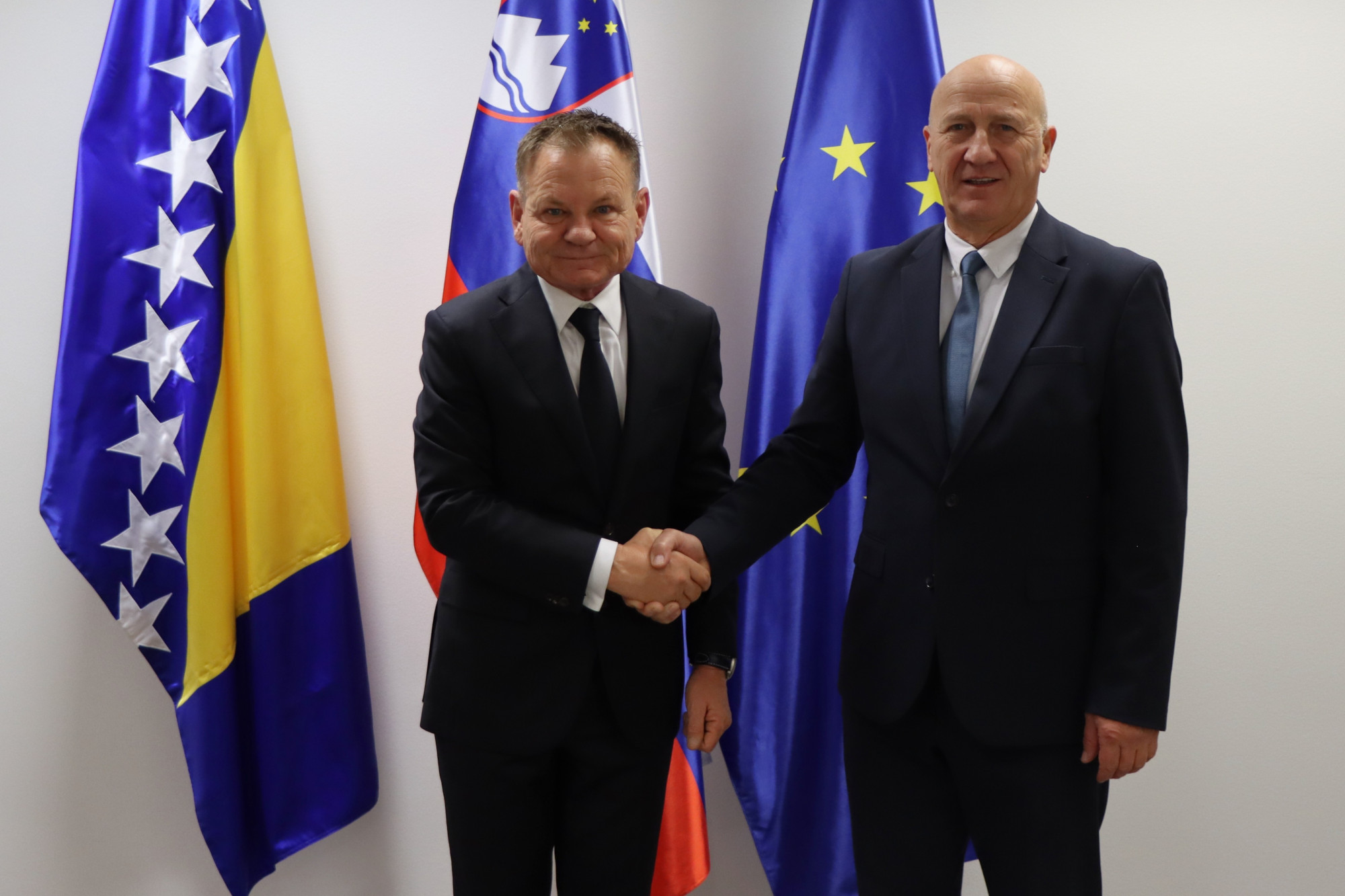
Slovenian Minister of the Interior and Public Administration Franci Matoz and Deputy Minister of Security of Bosnia and Herzegovina Ivica Bošnjak | Author Ministry of the Interior and Public Administration
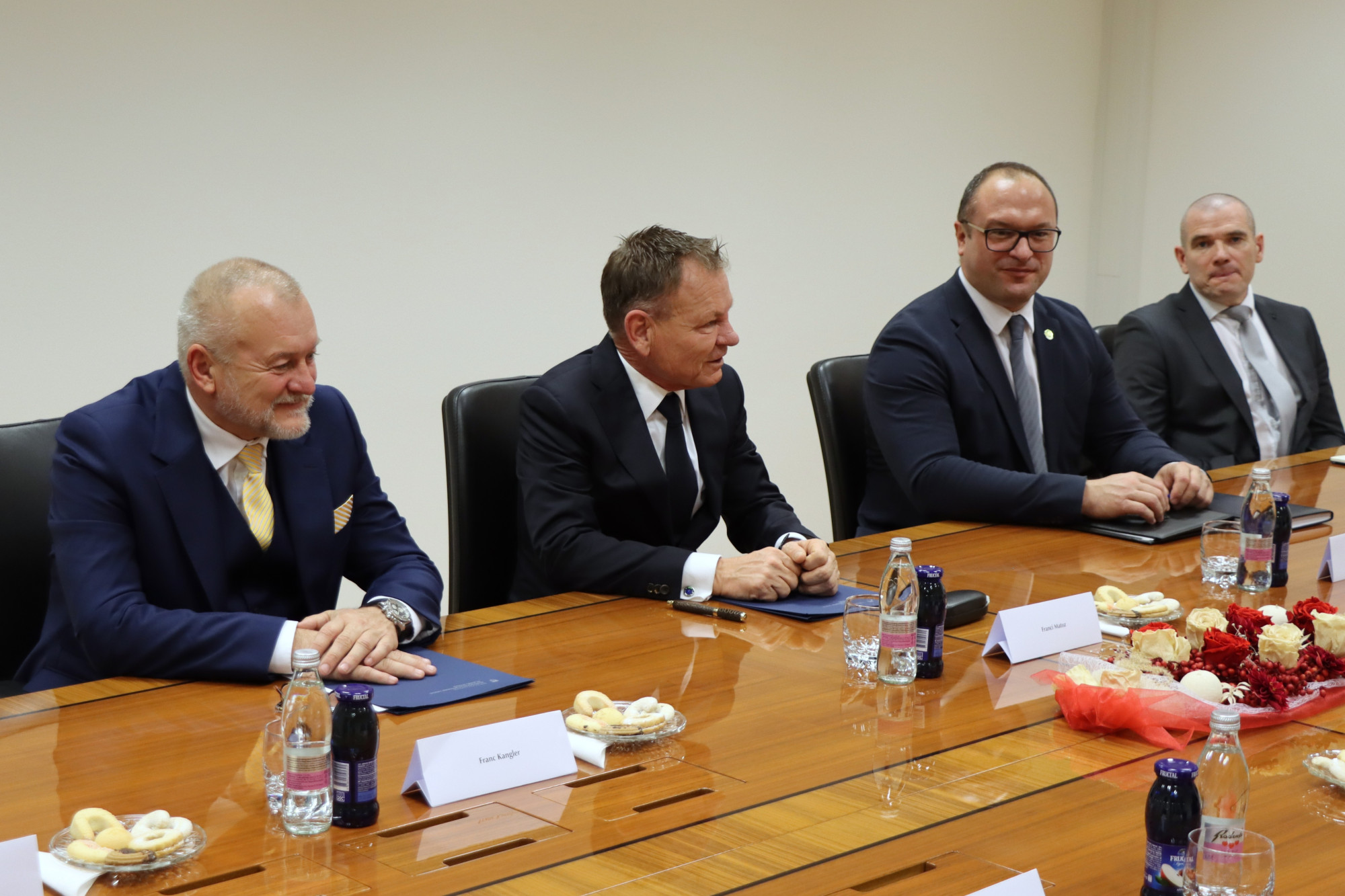
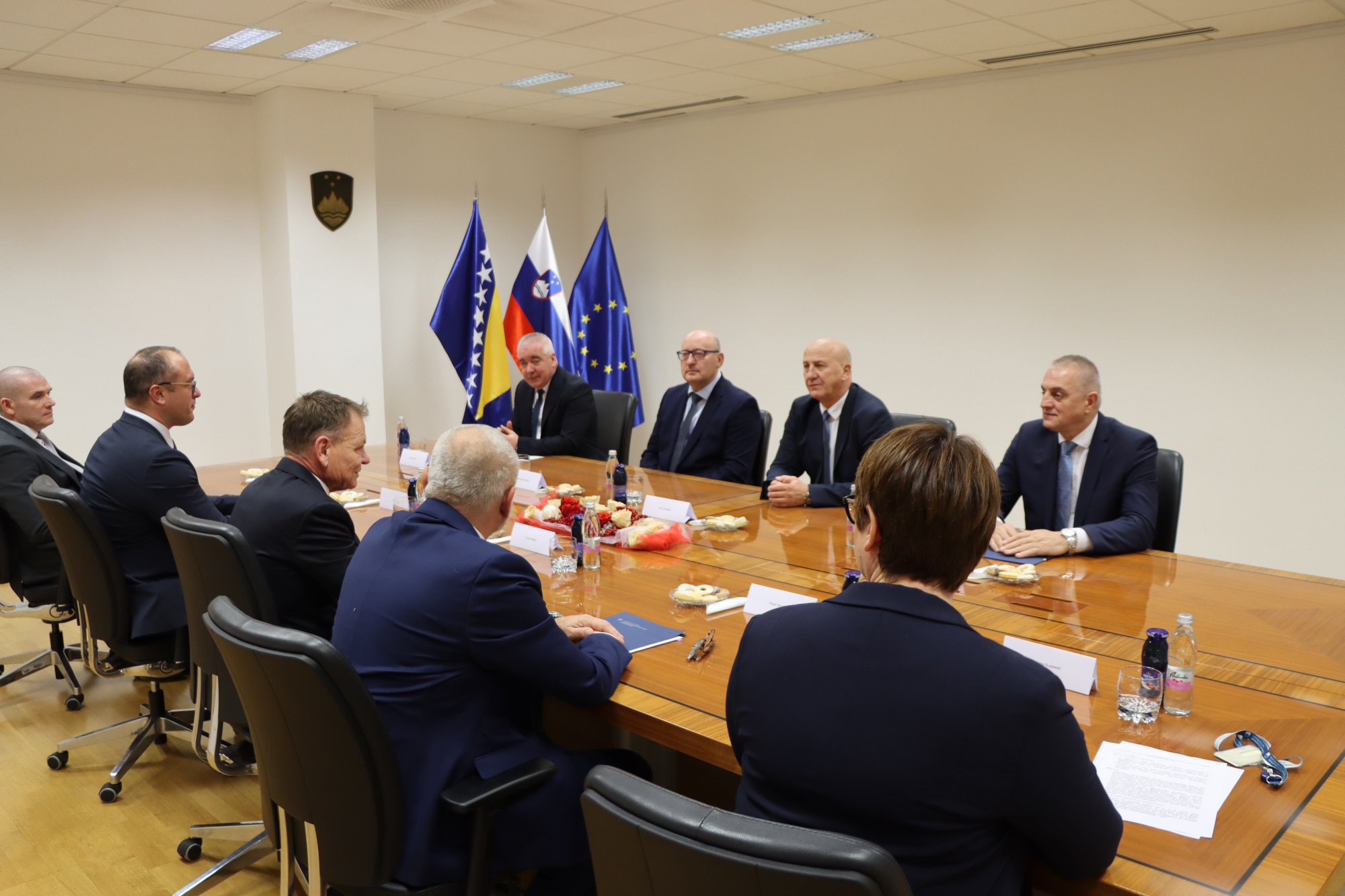
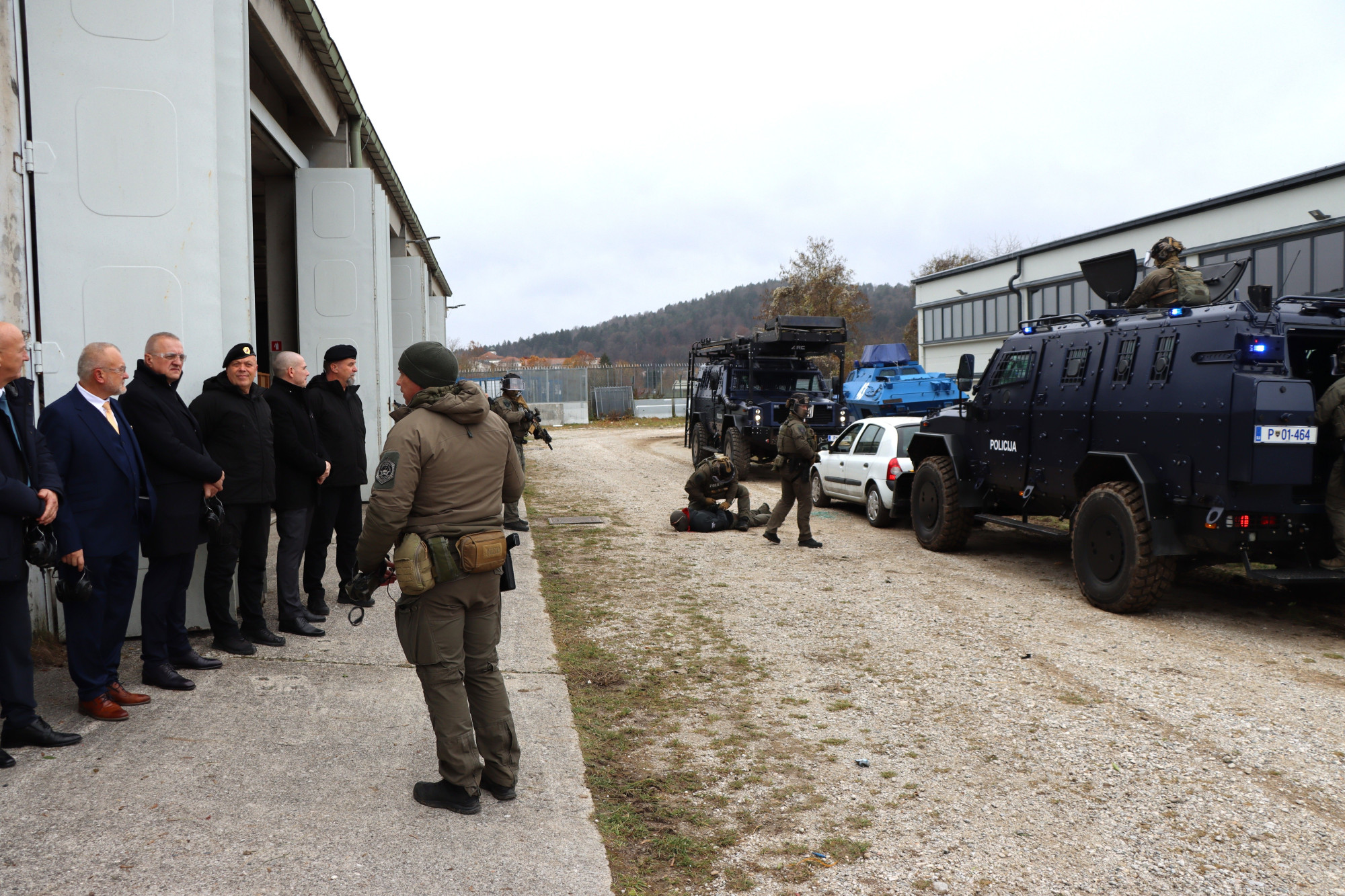
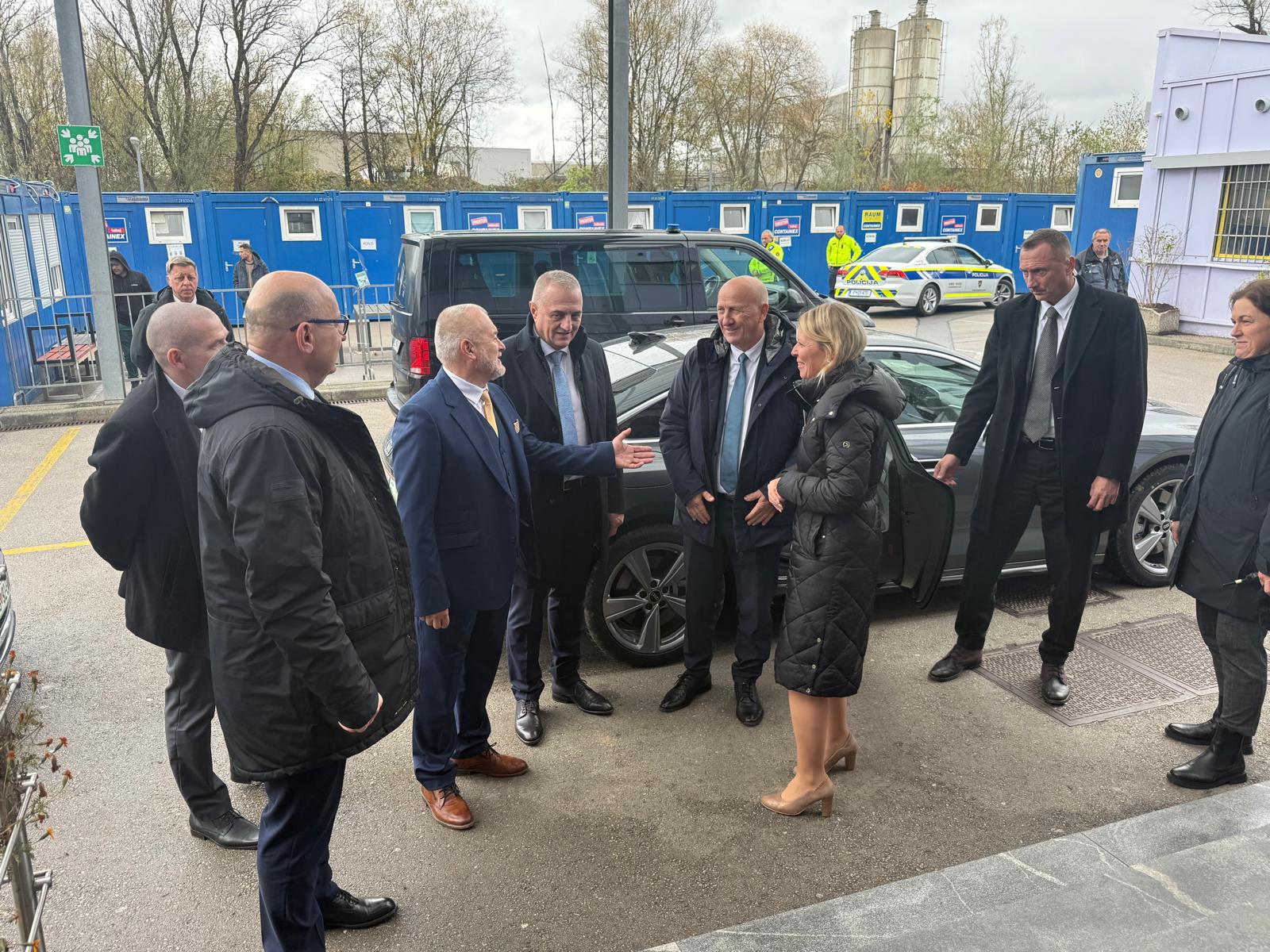
The delegation was received by Franci Matoz, the Minister of the Interior and Public Administration. This was followed by a bilateral meeting between the delegations at the ministry, after which they observed a Special Unit exercise and visited the Asylum Centre in Ljubljana.
The purpose of the official visit was to explore opportunities for closer cooperation between Slovenia and Bosnia and Herzegovina in the area of home affairs. The discussions primarily focused on the region's migration situation.
Slovenia recognises Bosnia and Herzegovina as a very important transit country on the Western Balkan migration route, given its geographical proximity, political fragmentation and the lack of alignment of its visa regime with that of the European Union. Changes in Bosnia and Herzegovina could therefore lead to an improvement or deterioration in Slovenia's migration situation.
In a press release following the visit to the Asylum Centre in Ljubljana, State Secretary Franc Kangler stated that the aim is to strengthen the cooperation between the two countries' ministries and police forces. Damjan Žagar, the police attaché in Bosnia and Herzegovina, plays an important role in this regard. "Most of the migrants housed here come from Bosnia and Herzegovina, so it is in our interest to discuss and agree on ways to prevent illegal migration into Slovenia. As State Secretary, I am actively engaged in this process with Croatia, Bosnia and Montenegro, and my visit to Romania is also a result of Slovenia’s desire to play an active role in addressing this issue." The State Secretary also announced visits to Serbia, North Macedonia, Greece and Turkey. "If necessary, we would like to sign bilateral agreements with the police forces, primarily to prevent criminal activity."
He also mentioned the annual cost of the Office for the Support and Integration of Migrants, which stands at around 65 million euros. To this must be added the costs of the police, the ministry's directorate and certain other migration-related services (for example, contracts for translation services amount to around two million euros).