

Prime Minister Janša: Europe Must Play an Active Role in Shaping a New International Order
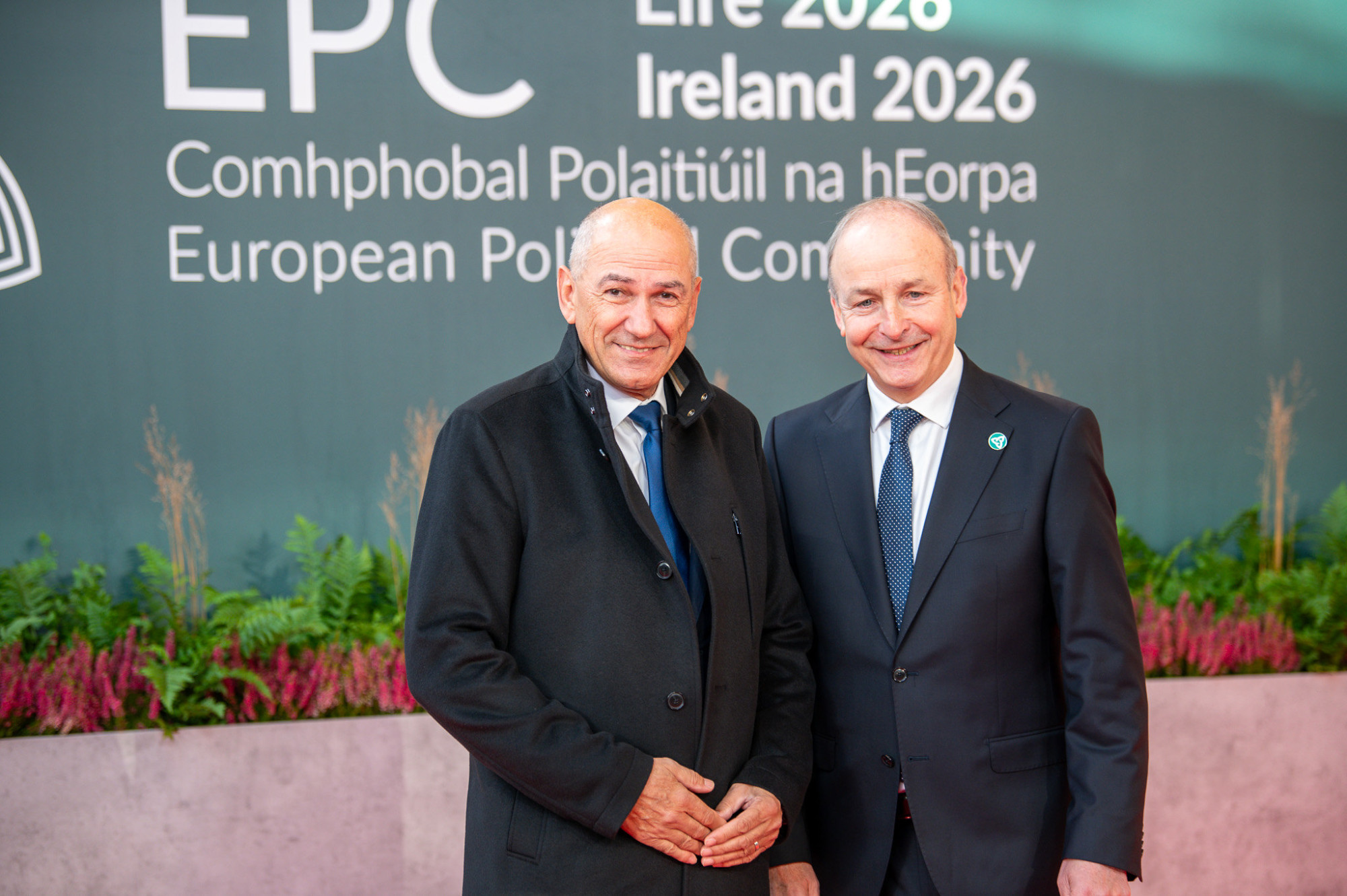
Prime Minister Janez Janša and Irish Prime Minister Micheál Martin | Author Office of the Prime Minister
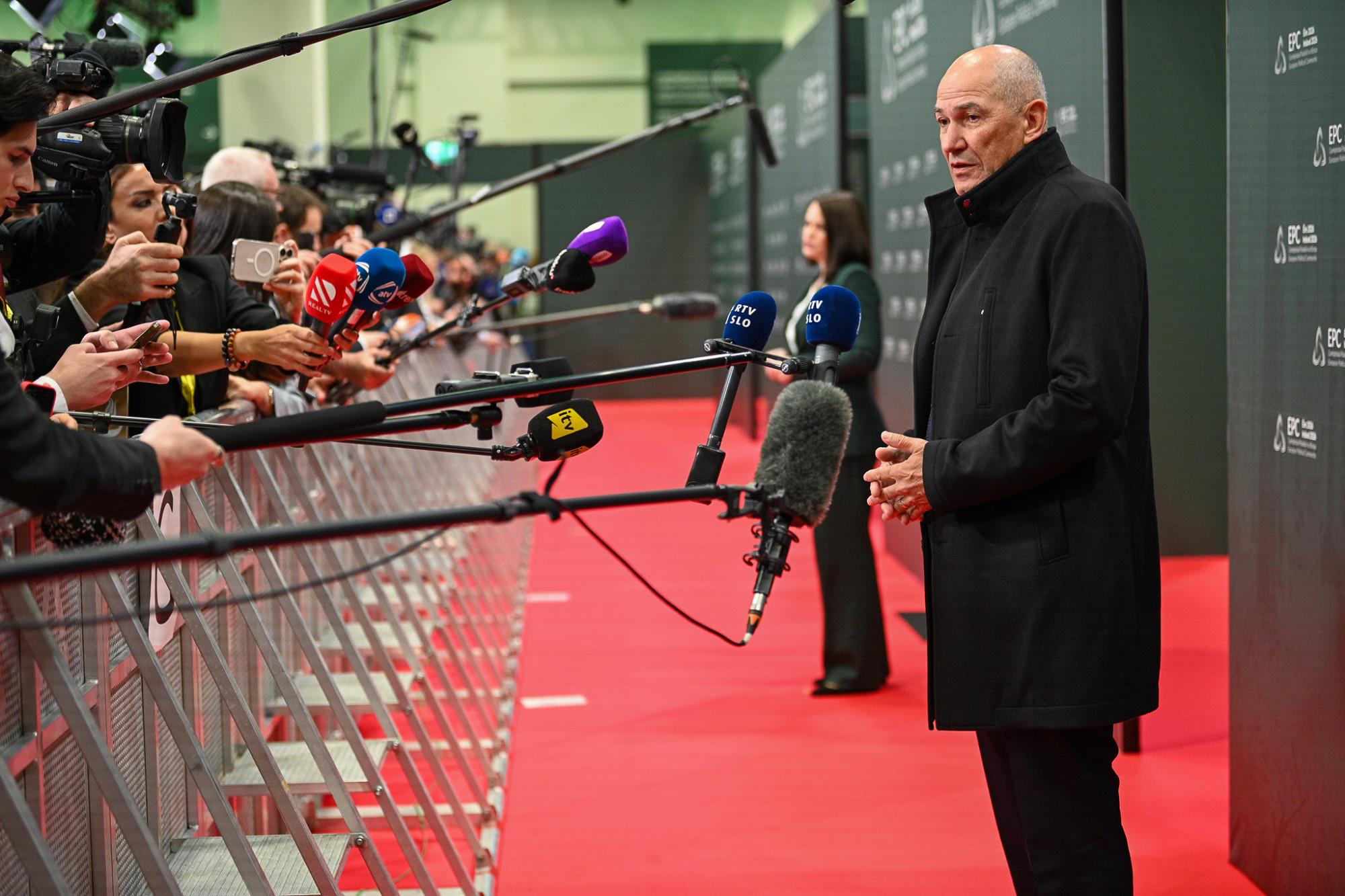
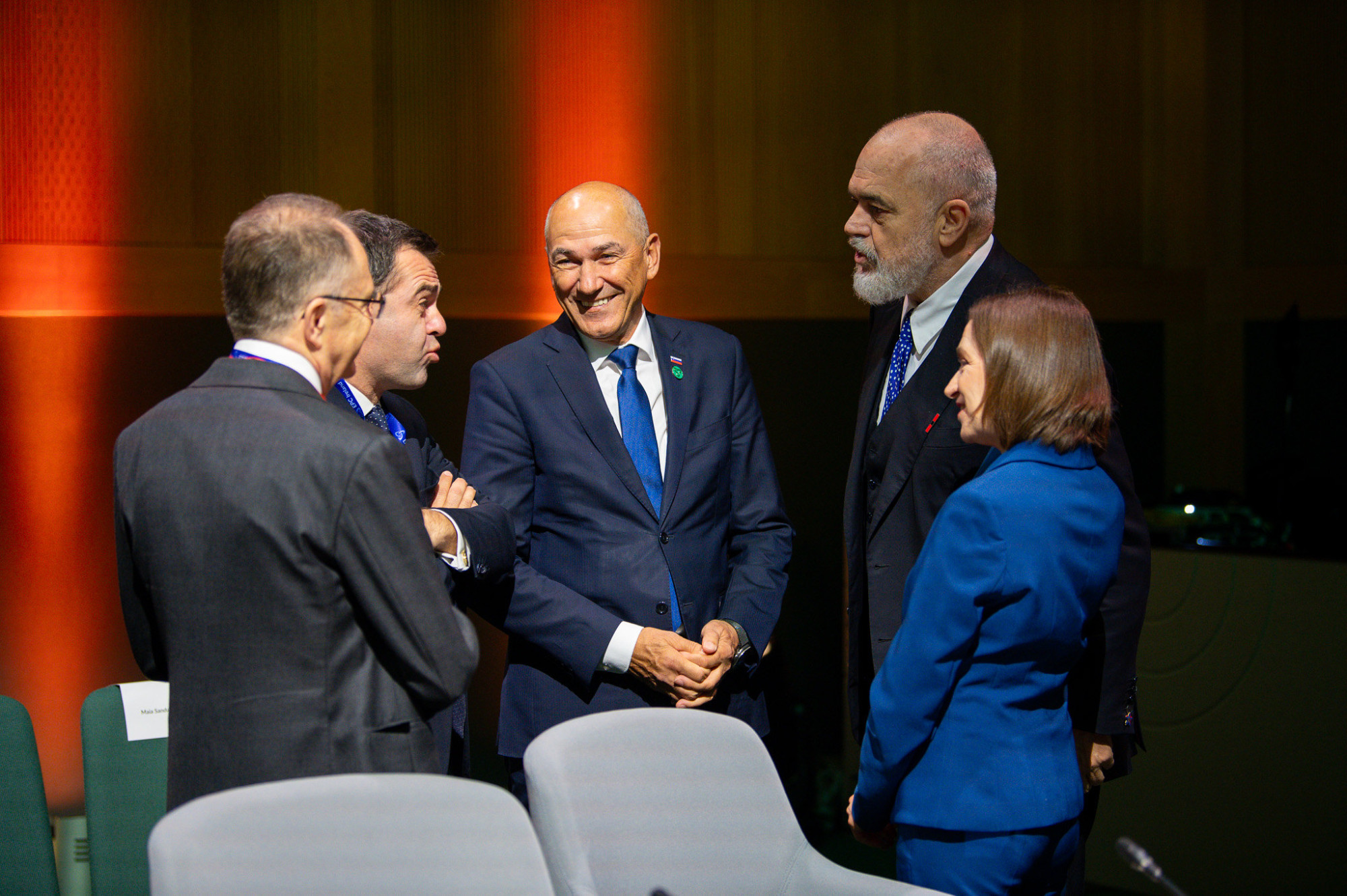
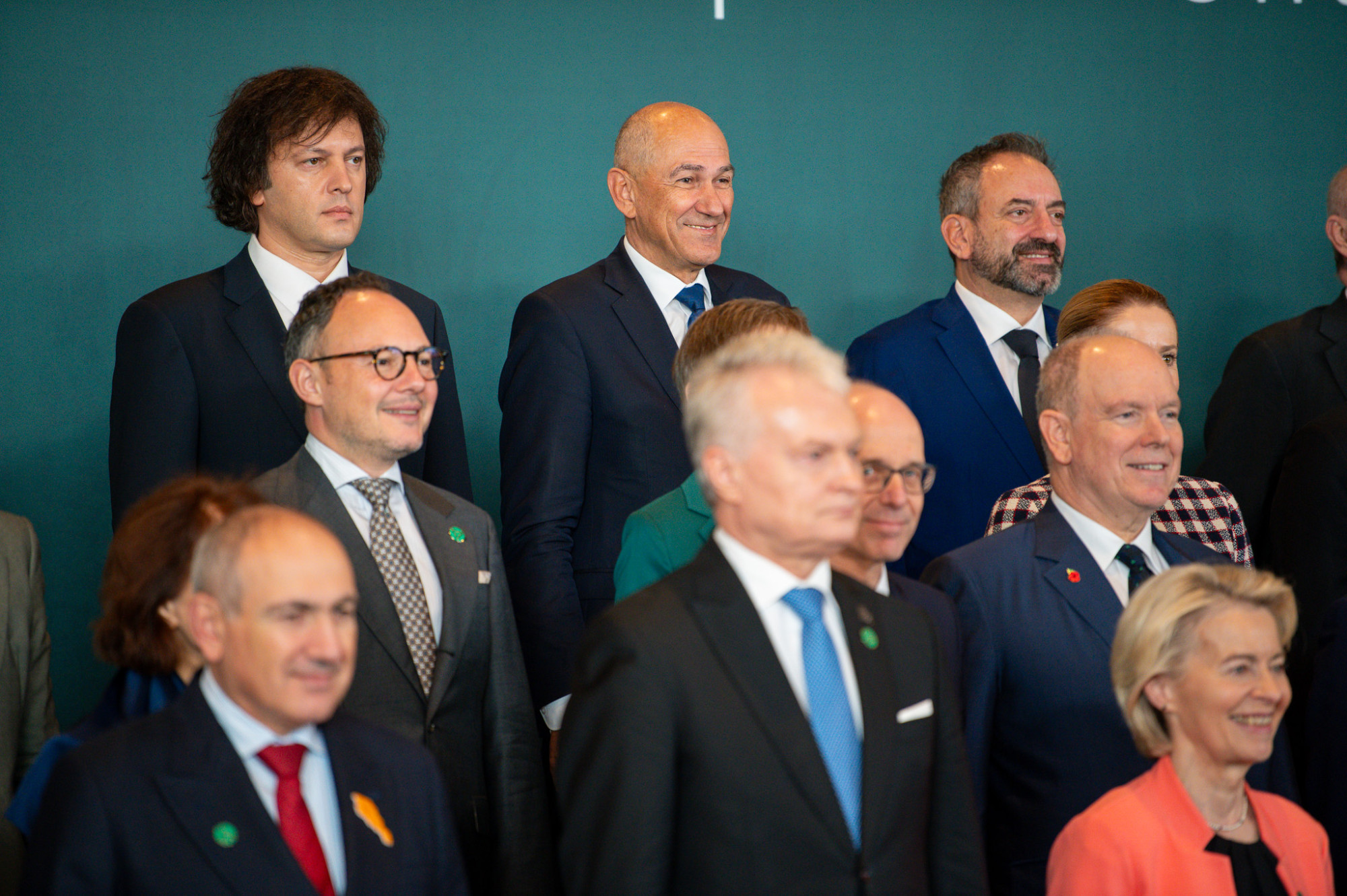
On the sidelines of the meeting, he stressed the importance of Europe playing an active role in shaping a new international order, the need for Europe to present a united front in peace negotiations on Ukraine, and the importance of strengthening European energy security and strategic autonomy.
Upon arriving at the meeting, the Prime Minister highlighted that the world is undergoing a period of profound geopolitical change, in which Europe must assume a more active role.
"The order established after the Second World War has largely collapsed, and a new one has yet to emerge. We find ourselves in a kind of transitional period," he said, emphasising that it is in the interests of the European continent, including Slovenia, to establish a new and effective international order.
He described the European Political Community meeting as an important, albeit still relatively loosely defined, attempt by European countries to contribute jointly to shaping the future international order. He also underlined that an effective international legal order is particularly important for countries that do not hold veto power in the United Nations Security Council.
The European Union Must Speak with One Voice in Negotiations on Ukraine
The war in Ukraine is among the central topics of the meeting. The Prime Minister drew attention to the complexity of peace negotiations and stressed that the aggressor and the victim cannot be held equally responsible when seeking a solution.
"The aggressor and the victim cannot be treated on an equal footing," he emphasised.
He also pointed to shortcomings in the existing international system, which fails to ensure an effective response when a country with veto power in the Security Council attacks another country.
He was particularly critical of the European Union's lack of coordination in negotiations concerning Ukraine's future and European security. He stressed that the European Union has established institutions and clearly defined competences, and that its representation in international negotiations must therefore be properly coordinated.
"The European Union cannot be represented by a Member State that neither holds the Presidency of the Council of the EU nor has been authorised to do so by the European Council," he said.
According to the Prime Minister, the European Union should be represented in negotiations by the President of the European Council or by a person appointed by the European Council with a full mandate to act on its behalf.
The Prime Minister stressed that the European Union's substantial financial and other support for Ukraine gives it considerable leverage, which it is not using to its full potential due to a lack of coordination.
"We all know that the European Union's substantial support, particularly its financial assistance, is crucial to Ukraine's ability to survive and continue its fight. The European Union therefore has a powerful lever at its disposal, but it is not playing the role it should," he warned.
Prime Minister Janša expressed the hope that European leaders would use the informal discussions to take a step towards a more coordinated and effective European approach.
Energy Security is Key to European Strategic Autonomy
The Prime Minister also highlighted the strategic importance of the Caspian region for Europe's long-term energy security.
He recalled efforts made approximately 25 years ago to establish alternative energy links aimed at reducing Europe's dependence on Russian energy resources and supply routes.
"Had those efforts been successful, the whole of Europe would be in a different position today," he emphasised.
According to Janez Janša, the Caspian region, with its extensive energy resources, offers a significant opportunity to diversify Europe's energy supplies, strengthen energy security and enhance strategic autonomy for the European continent.
Future EU Budget and Bilateral Cooperation Also on the Agenda
Discussions on the sidelines of the meeting are also addressing other important European issues, including negotiations on the European Union's next Multiannual Financial Framework.
The Prime Minister announced several bilateral meetings, including one with the President of Finland, aimed at continuing discussions on outstanding issues and strengthening cooperation between countries.
Regarding various European initiatives, including those relating to migration, he explained that Slovenia had already joined some of them, while others were still being coordinated.
The Prime Minister concluded by emphasising the importance of effective cooperation among European countries and the need for Europe to act in a united and responsible manner in addressing key international challenges.