

Prime Minister Janša: The Development Act paves the way for higher wages, greater prosperity and a more competitive Slovenia
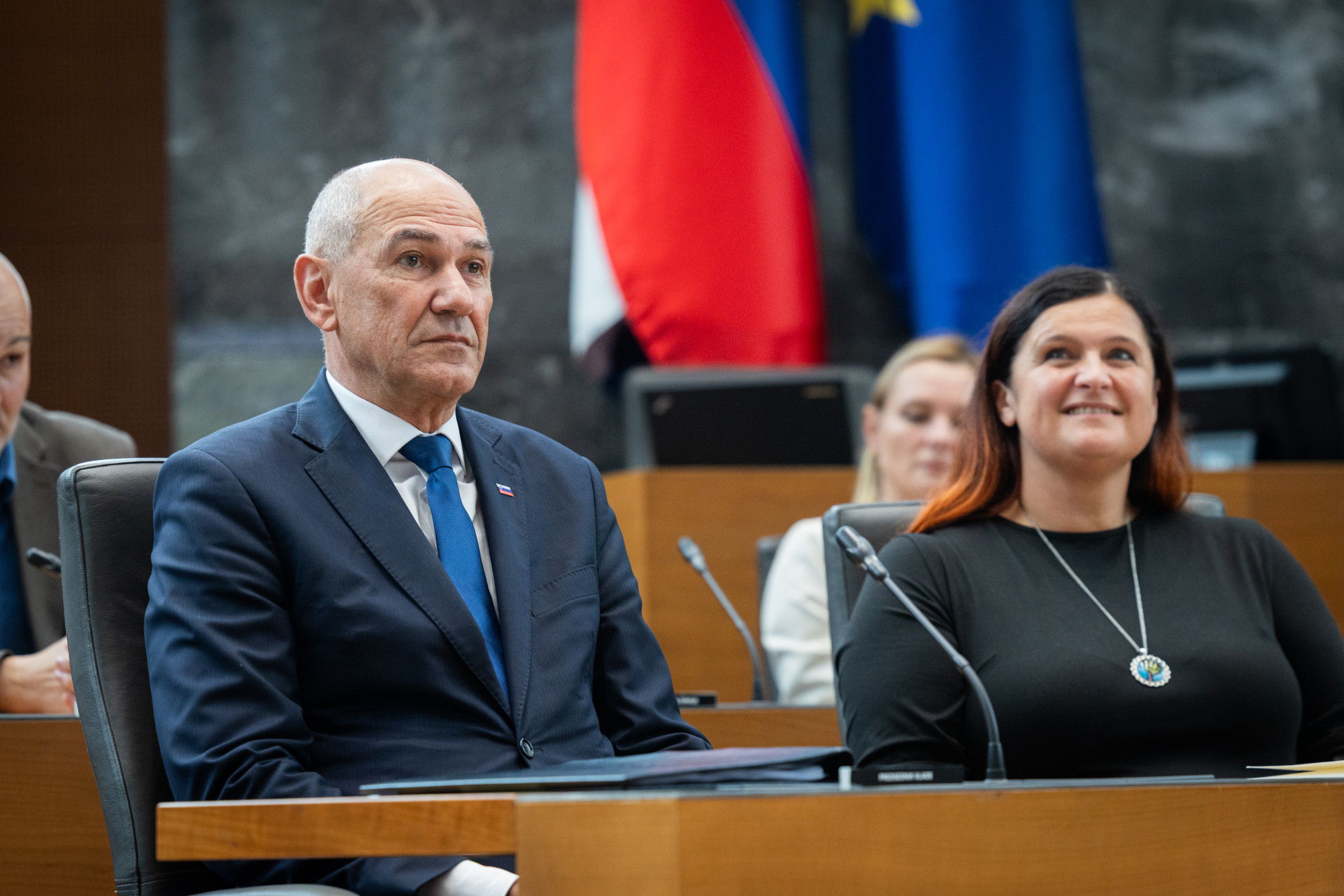
Prime Minister Janez Janša | Author Bor Slana, STA
The Development Act is an opportunity for higher wages and greater prosperity
In response to a question from Deputy Iva Dimic about the planned tax relief measures, the Prime Minister emphasised that increasing the general income tax allowance is one of the next key steps following the entry into force of the Development Act. Together with the development cap, such measures would help reduce the tax burden on labour, increase net wages and improve the competitiveness of the Slovenian economy.
The Prime Minister also recalled that the previous government's tax reform had been halted halfway through, costing an employee earning an average wage €2,500 and depriving the Slovenian economy of a significant part of its competitive advantage.
"An excessive tax burden on labour is one of the key obstacles to greater competitiveness in Slovenia," the Prime Minister stressed, warning that high taxation – particularly of better-paid and highly skilled workers – reduces Slovenia's attractiveness to both domestic experts and foreign investors.
He also rejected criticism that the Development Act is intended solely for the wealthier. "This is not a law for the rich; it is a law that will enable this generation, as well as our children and grandchildren, to become wealthy," he said. He emphasised that the development cap creates the conditions for higher added value, better-paid jobs and long-term growth in prosperity.
The Prime Minister also announced further steps in the tax reform. The Strategic Council for the Economy is finalising proposals that will serve as the basis for expert assessments of their fiscal impact and for preparing a timetable for the implementation of the measures. He also expressed his readiness to seek broader political consensus on tax relief measures.
Prime Minister Janša specifically highlighted the importance of the Development Act in addressing the impact of high energy prices ahead of the coming winter. The Act provides for the possibility of temporarily reducing taxes on energy products for a period of nine months, which, according to the Prime Minister, could lower prices by approximately ten per cent.
"We must also get through this winter, which will be a difficult one," the Prime Minister warned. He emphasised that all available options at both European and national levels should be used to stabilise energy prices. The referendum process has delayed the entry into force of the measures contained in the Development Act, which, in his words, means lost time and additional costs for households.
The education system must equip young people with the knowledge they need for the future
In response to a question from Deputy Damijan Bezjak Zrim about the planned reform of the education system, the Prime Minister stressed that education is one of the most important foundations of the country's long-term development.
He highlighted the findings of international studies showing a decline in Slovenian pupils' performance in several areas. He said it was therefore essential to modernise the education system and adapt it to rapid technological change and the growing importance of lifelong learning.
"If you want what is best for Slovenia and the younger generation, you cannot oppose fixing something that is not working properly," he stressed.
The Prime Minister emphasised that improving educational outcomes depends not only on staffing levels in the education system, but also on more appropriate norms, the removal of administrative burdens and greater autonomy for teachers.
He explained that the reform's objectives include raising the status of the teaching profession, strengthening teachers' authority, respecting their professional autonomy and ensuring ideological neutrality in schools. He also made it clear that the reform could not be implemented without the involvement of teachers, education specialists and other experts.
Food is a strategic resource and therefore Slovenian agriculture must be protected
In response to a question from Deputy Katja Kokot about increasing the share of locally produced food in public procurement, the Prime Minister stressed that Slovenian farmers and producers must not be placed at a competitive disadvantage by national rules that are stricter than those in the countries from which Slovenia imports products.
He announced plans to amend legislation and the Decree on Green Public Procurement to increase the share of locally produced food in public institutions. The draft law is currently undergoing public consultation, and the relevant decree will be prepared once the law has been adopted.
The Prime Minister also referred to the negotiations on the EU's next multiannual financial framework and to Slovenia's efforts to maintain adequate funding for the common agricultural policy.
"Food is a strategic resource," he stressed, pointing out that recent crises had demonstrated the importance of maintaining local food production and ensuring food security. Slovenia is therefore advocating adequate support for agriculture and recognition of the strategic importance of food self-sufficiency in EU negotiations.
Referendums are an important form of direct decision-making by citizens
In response to a question from Deputy Asta Vrečko about referendums and respect for the will of voters, the Prime Minister explained the difference between legislative and consultative referendums.
He stressed that the outcomes of legislative referendums are binding, whereas the purpose of a consultative referendum is to seek voters' views on matters that are subsequently decided by the legislature.
"In Slovenia, power is vested in the people," he said, citing Article 3 of the Constitution and emphasising the importance of the direct exercise of power.
Referring to the consultative referendum on the mandatory RTV Slovenija licence fee, he drew attention to the close result of the vote, which he interpreted as reflecting sharply divided views among voters. He was also critical of the way the public broadcaster is currently governed and funded, and stressed the need for public funds to be managed more efficiently and responsibly.
As he concluded his replies, the Prime Minister once again emphasised the importance of measures that will enable Slovenia to become more competitive, increase productivity, create better-paid jobs and achieve long-term economic growth. He identified the entry into force of the Development Act, together with further reductions in the tax burden on labour, as one of Slovenia's key development opportunities.