

Cohesion policy must strengthen regional competitiveness and uphold the right to stay
Author Council of the European Union
In her intervention, Dr Kirbiš Rojs underlined that cohesion policy must continue to reduce regional development disparities and ensure a level playing field for all citizens regardless of where they live. “Europe is only as competitive as its regions. A stronger place-based approach is not an alternative to European objectives, it is a prerequisite for achieving them,” she said.
She placed particular emphasis on the principle of the right to stay, stressing that people should have the opportunity to live, work and build their future in the place they call home, regardless of whether they live in urban areas, border regions or less developed areas.
At the same time, Minister Kirbiš Rojs emphasised that the competitiveness of the European economy cannot be built without successful businesses across all regions. Future cohesion policy should therefore create a more favourable environment for investment, innovation and business growth. “Member states should continue their efforts to reduce administrative burdens for businesses at all levels, helping to ensure that the right to stay becomes a reality.”
Simplification of procedures, greater predictability of the regulatory framework and the reduction of administrative barriers will accelerate project implementation and ensure more efficient use of public funding, creating better conditions for economic development and creation of quality jobs. In this context, the Minister underlined the importance of investments in knowledge, skills development, reskilling, research and innovation, as well as in business support ecosystem.
“Cohesion policy translates European objectives into tangible projects, new jobs and a better quality of life for citizens. Therefore, it must remain strong, adequately funded and tailored to meet the specific needs of individual regions,” the Minister stressed. She added that “the new implementation model should be result-oriented, while preserving stability, predictability and legal certainty. Control should be reliable and proportionate, and the effectiveness of investments should be assessed on the basis of their actual development impact.”
Slovenia remains an advocate of a strong, adequately funded and place-based cohesion policy that supports the development of all regions, strengthens competitiveness and enables citizens to build their future wherever they choose.
On the sidelines of the event, Minister Kirbiš Rojs met with the Executive Vice-President of the European Commission Raffaele Fitto. The Minister was accompanied by the President of the National Council of the Republic of Slovenia Marko Lotrič and Acting Director-General of Cohesion Directorate Matjaž Dragar.
They discussed the implementation of cohesion policy in the 2021-2027 programming period, ways to accelerate and improve project delivery, and preparations for the next programming period. Minister Kirbiš Rojs emphasised that Slovenia supports maintaining an adequate level of funding for both cohesion policy and common agricultural policy, as the two policies remain the EU’s key investment policies for promoting development, competitiveness and territorial cohesion.
She called for a swift conclusion of negotiations on the EU’s legislative and financial framework: “It is important for the European Union to agree on the legislative and financial framework for the next programming period by the end of the year. This will enable national authorities to prepare the relevant programming documents in good time and ensure a smooth start to programme implementation and investment delivery,” she said.
They agreed that a stable and predictable financial framework, administrative simplifications and close collaboration between the European Commission, member states and regional partners will be key for the effective implementation of future cohesion policy.
Ahead of the ministerial meeting, Minister Kirbiš Rojs and Mr Lotrič met with the Chair of the Irish Senate, Senator Maria Byrne. Their discussions focused on regional development, decentralisation and the role of local communities in shaping and delivering development policies. Slovenian delegation also visited Leinster House, the seat of Ireland’s Parliament.
Slovenian delegation also stopped at the Technological University Dublin, where it learned about good practices in linking higher education, research, innovation and entrepreneurship. Representatives of the University presented examples of successful collaboration of the University with industry and showcased projects designed to facilitate the transfer of knowledge into practice and strengthening regional development.
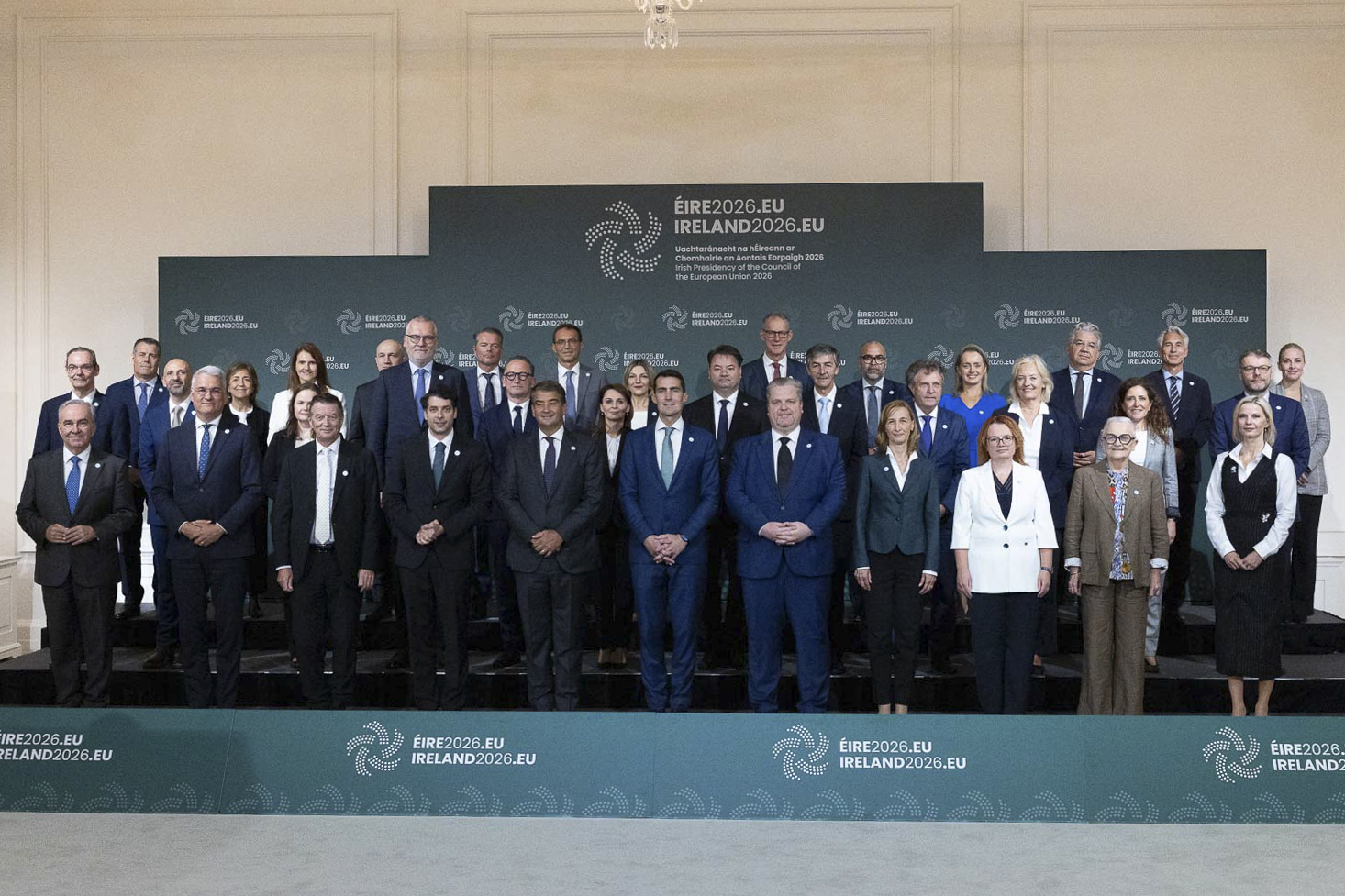
The informal meeting of EU Ministers responsible for cohesion policy, together with the bilateral meetings held on its margins, provided an opportunity to present Slovenia’s position on the future of cohesion policy and to strengthen dialogue with EU institutions and Irish partners. Slovenia remains a steadfast advocate of cohesion policy that supports the development of all regions, enhances the competitiveness of the European economy and helps build a more connected and resilient Europe.