

Prime Minister Janez Janša: A country stands on the shoulders of those who chose the right path, not the easiest one
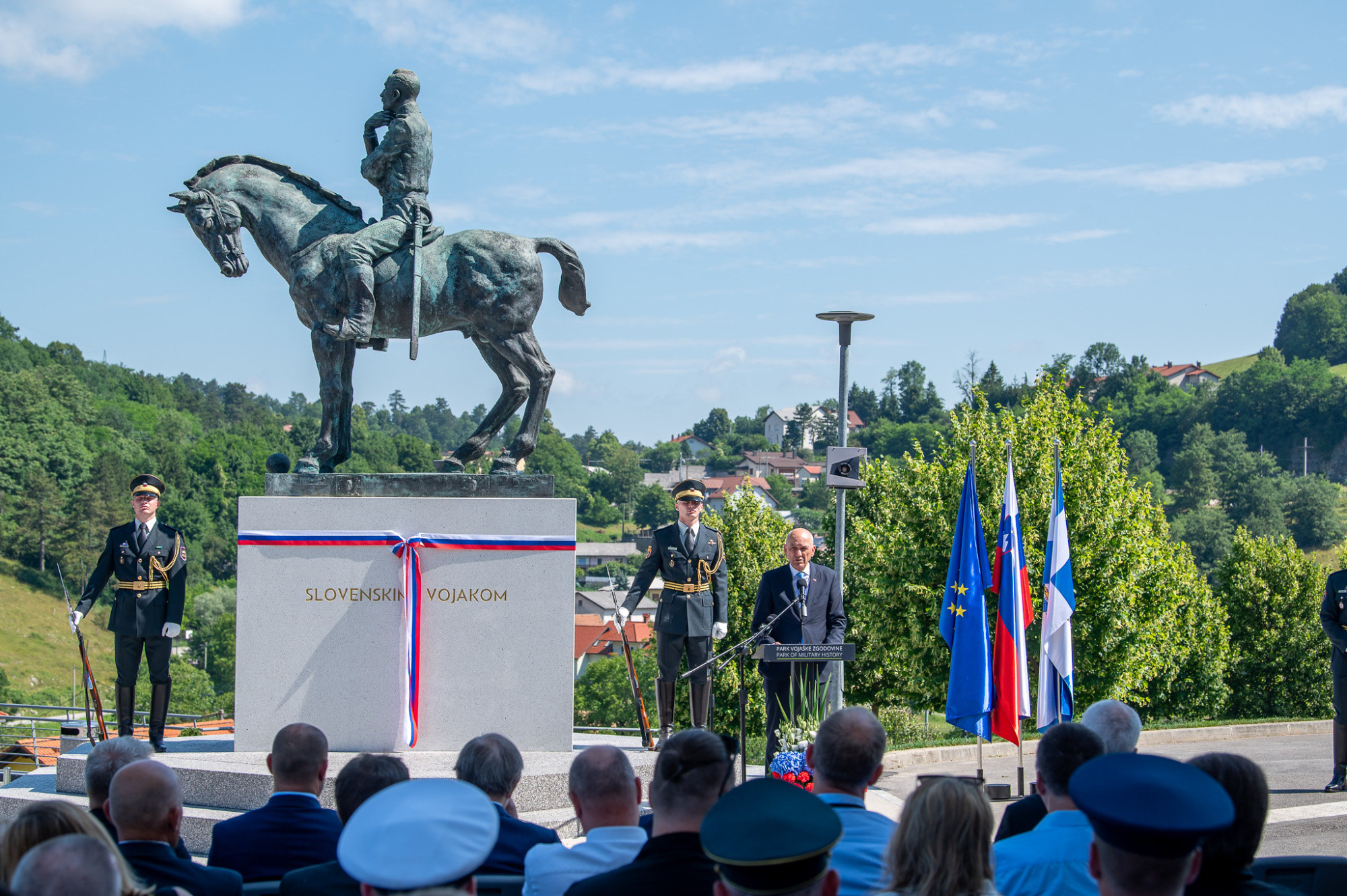
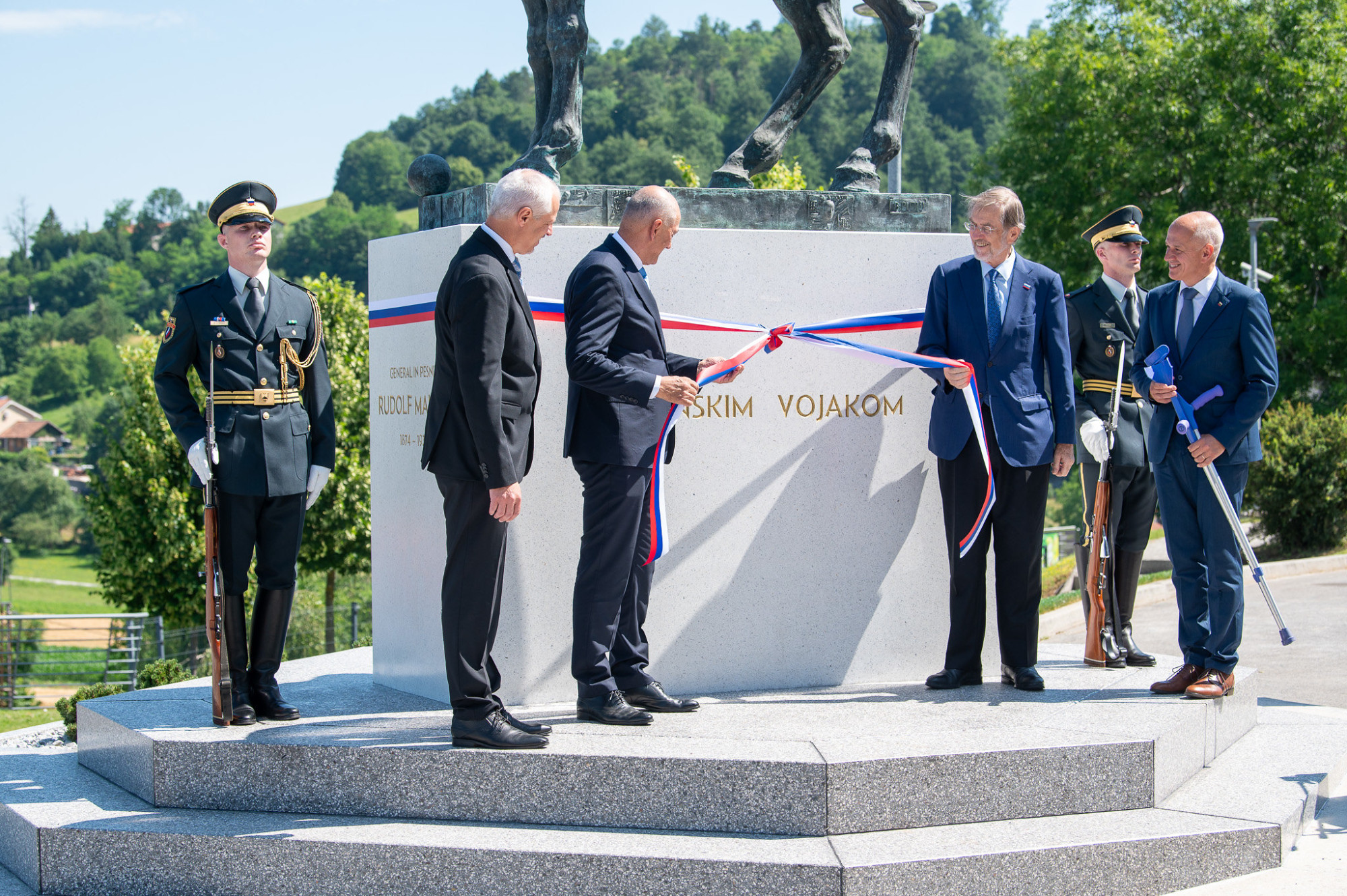
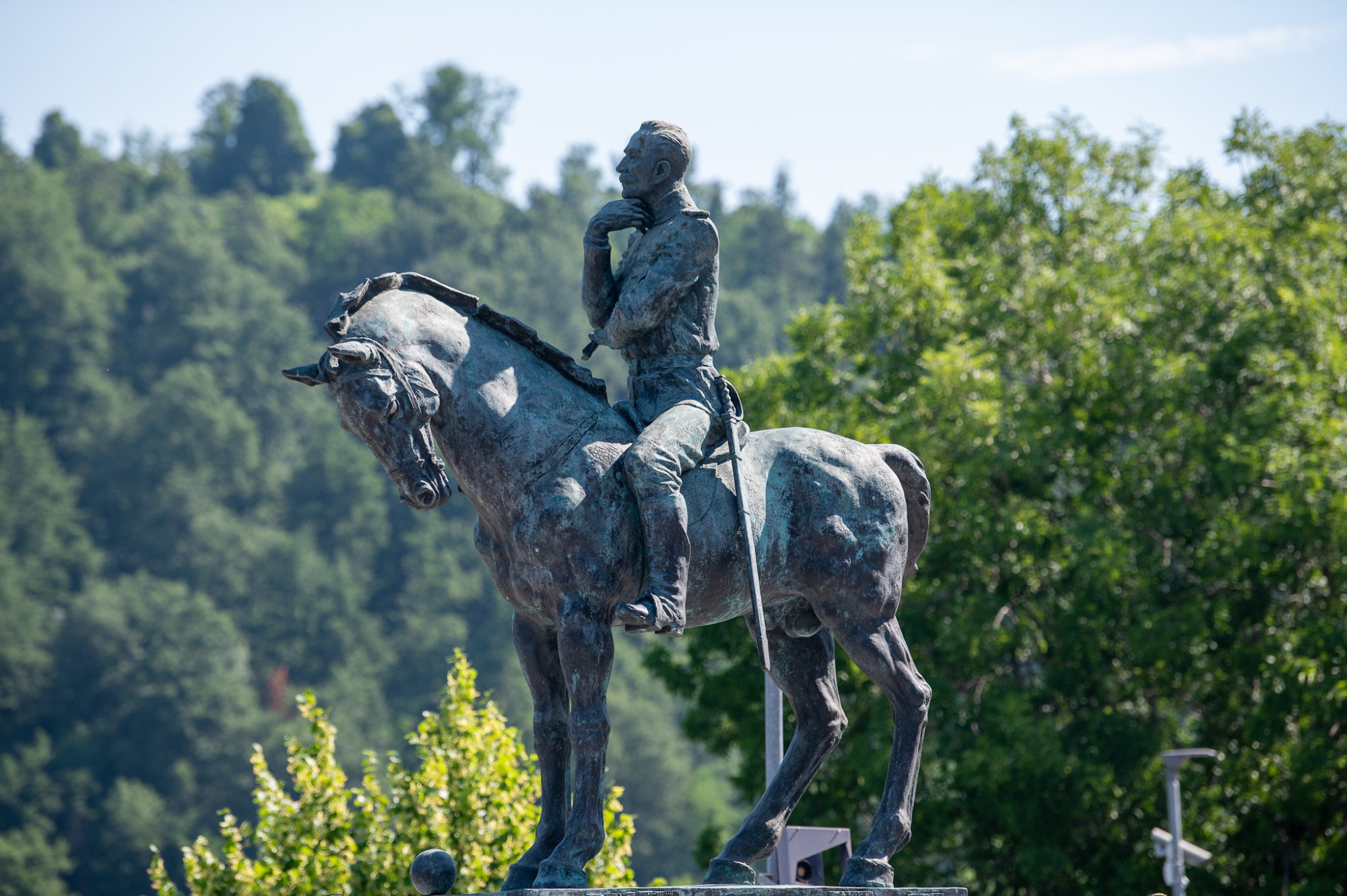
At the ceremony, held on the eve of Slovenia's Statehood Day, the Prime Minister emphasised that, throughout history, Slovenians have repeatedly demonstrated courage and determination in shaping their own future. He highlighted the important roles of Primož Trubar, Matija Majar Ziljski, Rudolf Maister and Jože Pučnik in strengthening the nation's identity, advancing its political emancipation and laying the foundations for an independent state. He also emphasised that, by gaining independence in 1991, Slovenia proved to the world that the willingness to defend freedom is one of the fundamental values of the Slovenian nation.
The Prime Minister's full address:
"Dear Mr Robert Smrdelj, Mayor of the Municipality of Pivka,
Dear Mr Janko Boštjančič, Director of the Park of Military History,
Dear Mr Alojz Peterle, Prime Minister of the first democratically elected Government of the Republic of Slovenia,
Dear Monsignor Dr Peter Štumpf,
Dear Admiral George Wikoff,
Dear deputies, dear ministers, distinguished guests,
Ladies and gentlemen,
Slovenians are a nation that has repeatedly demonstrated throughout history that adversity does not break us, but instead awakens in us the courage to shape our own future. When Primož Trubar laid the foundations of the standard Slovenian language, he strengthened the nation's identity at a time when the existence of the Slovenian nation was far from assured. When Matija Majar Ziljski developed the programme for a United Slovenia in the midst of the Spring of Nations, he set a political goal that would inspire generations of Slovenians for decades to come. When Rudolf Maister secured Slovenia's northern border following the dissolution of Austria-Hungary, he preserved a significant part of Slovenia's ethnic territory. And when Jože Pučnik helped pave the way to an independent state during the period of democratisation and independence, he made a significant contribution to fulfilling the Slovenian nation's centuries-old aspiration for its own state. In 1991, when we embarked on the path to independence, we proved to the world, once and for all, that the willingness to defend freedom is one of the noblest virtues of our nation.
Today, some regard Slovenia's independence as something that can simply be taken for granted. As a historic moment that unfolded almost naturally, without particular risks, real dilemmas or genuine danger. However, those of us who experienced the tense days of the summer of 1991 first-hand know that this was not the case. We know that our country's future was neither predetermined nor guaranteed, and that Slovenian statehood was not given to us, but earned.
When sirens echoed through Slovenian towns and villages, when families sought refuge with their children in bunders, cellars and other improvised shleters, no one could know with certainty how or when it would end. Scenes unfolded before people's eyes that, until then, we had thought belonged only to films depicting distant conflicts: tanks on the roads, military convoys, warplanes overhead, barricades of lorries and civilian vehicles, and threats and acts of violence intended to overturn the decision of the Slovenian nation.
Nothing was a given then. Influential figures within the state at the time made it clear that any attempt at secession would be suppressed and punished. The communist regime's powerful propaganda machine proclaimed that any resistance would be "destroyed by all means", and that those who dared to resist would pay a heavy price.
Blagoje Adžić, Chief of the General Staff of the Yugoslav People's Army said at the time: "Unlawful armed formations will be disarmed, and their organisers will face criminal prosecution before the military authorities." These were no empty threats. What this meant was clear to every Slovenian: summary trials before military courts, lengthy prison sentences or even death – not only for the members of the defence leadership and commanders of territorial units, but also for ordinary civilians who dared believe in the thousand-year-old dream of the Slovenian nation to have a state of its own. People knew what it meant to stand on the side of freedom at a time when the balance of power was not on their side.
Yet we persevered, because we believed in the inalienable right to independence. Because, at that decisive moment, we achieved something exceptionally rare in history as a nation – unity. The nation stood united despite political divisions. On 25 June 1991, only 180 out of 240 delegates voted for the Basic Constitutional Charter on the Sovereignty and Independence of the Republic of Slovenia. Yet it was a constitutional majority. We understood that we first had to recognise ourselves if we wanted others to recognise us.
Today, as we unveil the statue of General and poet Rudolf Maister, the work of academic sculptor Boštjan Putrih, we remember not only one of the great figures of Slovenian history. We also remember the courage shown at another pivotal moment in history, when the future of much of Slovenia was far from assured, yet a decision nevertheless had to be made.
Even Rudolf Maister's disarmament of the German Security Guard on 23 November 1918 was not a given. Still less was it without risk. Following the dissolution of the great state of Austria-Hungary, at a time of political uncertainty and in the absence of clear rules, it was necessary to show determination, readiness and the courage to take responsibility for the fate of one's own nation. The German armed groups in Maribor were organised, trained and well prepared. The outcome could easily have been different. Had Rudolf Maister's military operation failed, the outcome for those involved could have been just as brutal as it would have been for Slovenia's independence movement had it failed – and far less "historically inevitable" than today's textbooks might suggest.
Our country stands on the shoulders of giants – individuals who did not know whether they would succeed, or who may well have known that this could be their final battle, yet nevertheless persevered. They did not seek the easy path, but chose the right one, and with it accepted all the burdens of the age in which they lived.
That is why memory matters. It matters because a nation without historical memory begins to believe that freedom, peace and a state of its own are things that can simply be taken for granted. Something that simply exists of its own accord. The Park of Military History in Pivka is one of the institutions that preserves that memory. Here, it is not only military equipment, tanks, helicopters and uniforms that are preserved. Here, the time in which Slovenians took their fate into their own has rings out loud and proud.
In recent years, our commitment to preserving the memory of the defining periods of Slovenian history has too often been neglected. That is why institutions that preserve our historical memory are all the more important. A nation that forgets its defining moments finds it harder to recognise the challenges of the future. As Ronald Reagan once said: "Freedom is never more than one generation away from extinction." It does not pass from one generation to the next on its own. Every generation must understand it, protect it and pass it on to the next. If we fail to do so, one day we will tell our children and grandchildren what it was like in our youth, when we still had a country of our own.
May the statue of Rudolf Maister therefore be more than merely a monument to a man. May it serve as a reminder that history was not made by people without fear, but by people who had the courage not to let fear decide for them. Just like the red Yugo crushed beneath the heavy tracks of the Yugoslav tank in this museum: a silent witness to history that reminds us how the Slovenian nation found the resolve to stand up to a far more powerful opponent by every means at its disposal and, against all odds, prevail.
My sincere congratulations and thanks to Lojze Peterle, Prime Minister of the independence government, for the idea of erecting a monument to Rudolf Maister at this very site. I also extend my sincere congratulations and thanks to the Director of the Museum, Janko Boštjančič, for this achievement and, indeed, for the museum project as a whole, whose significance already extends well beyond the national context.
My sincere congratulations to everyone gathered here on the 35th anniversary of our country's independence. God bless Slovenia."