

Spanish researchers win the Golden Bee Award: A breakthrough in the fight against the invasive hornet
- Ministry of Agriculture, Forestry and Food
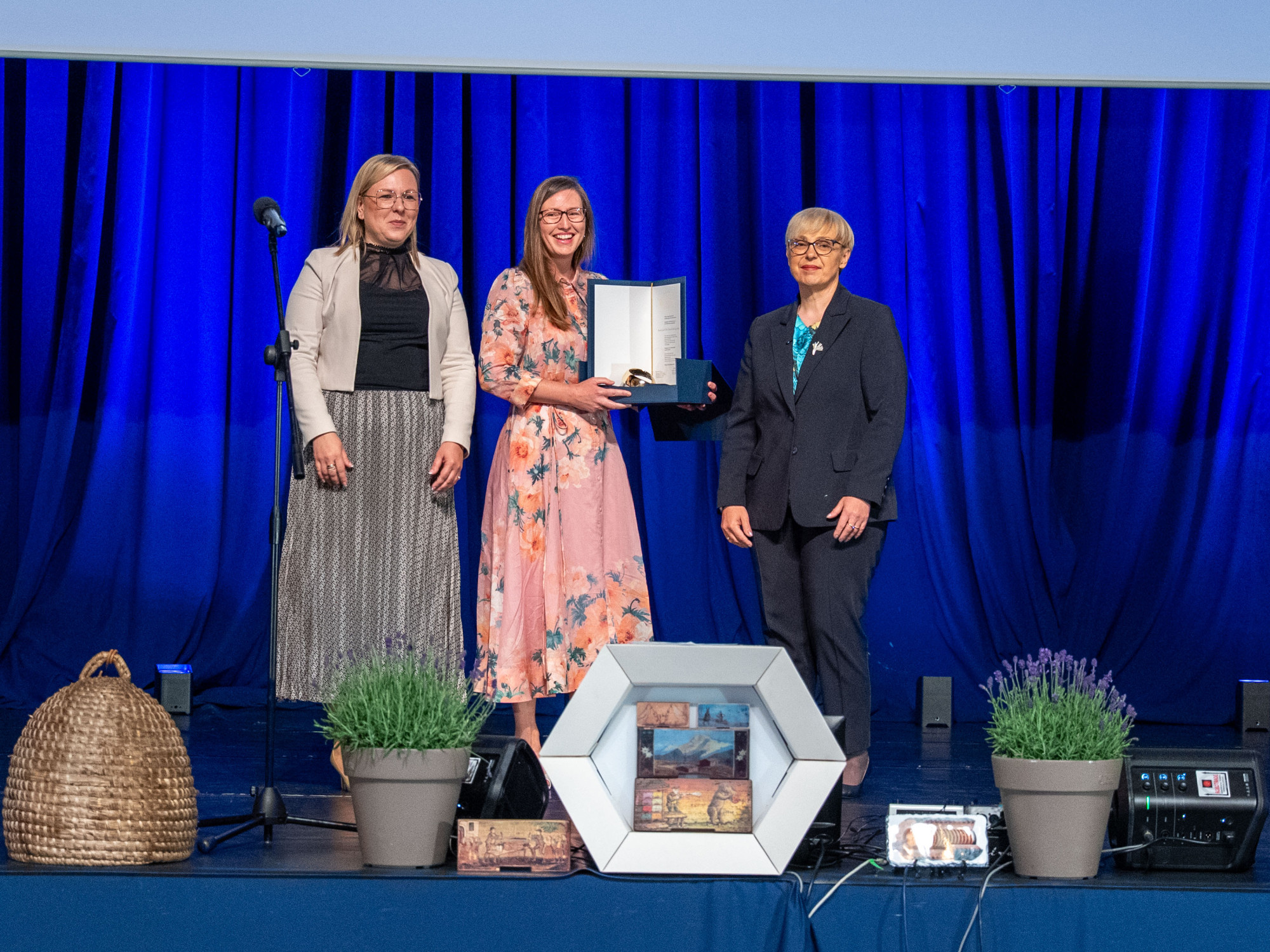
From left to right minister Mateja Čalušić, award recipient Mar Leza Salor, president of the Republic of Slovenia dr. Nataša Pirc Musar. | Author Ministry of Agriculture, Forestry and Food.
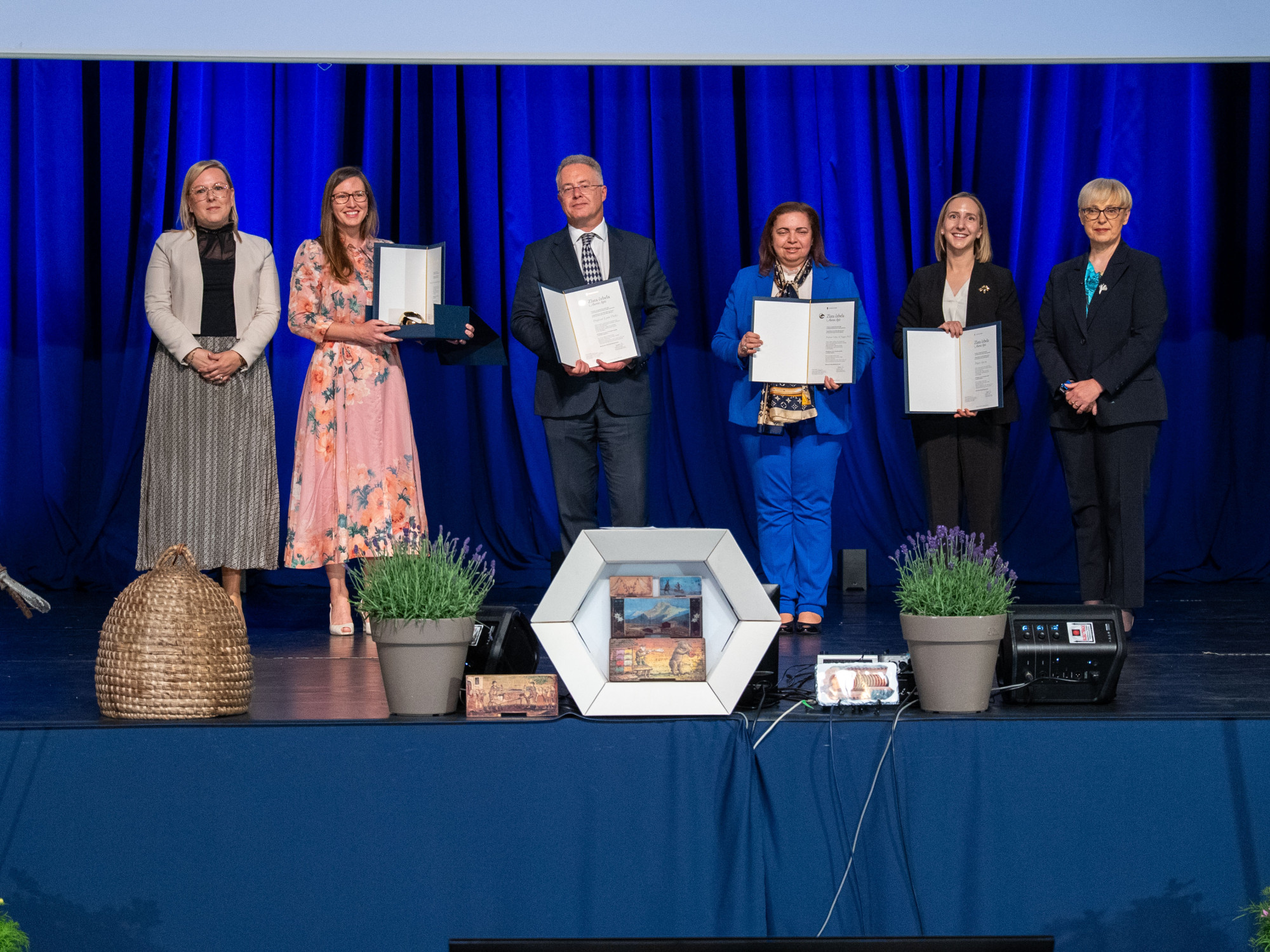
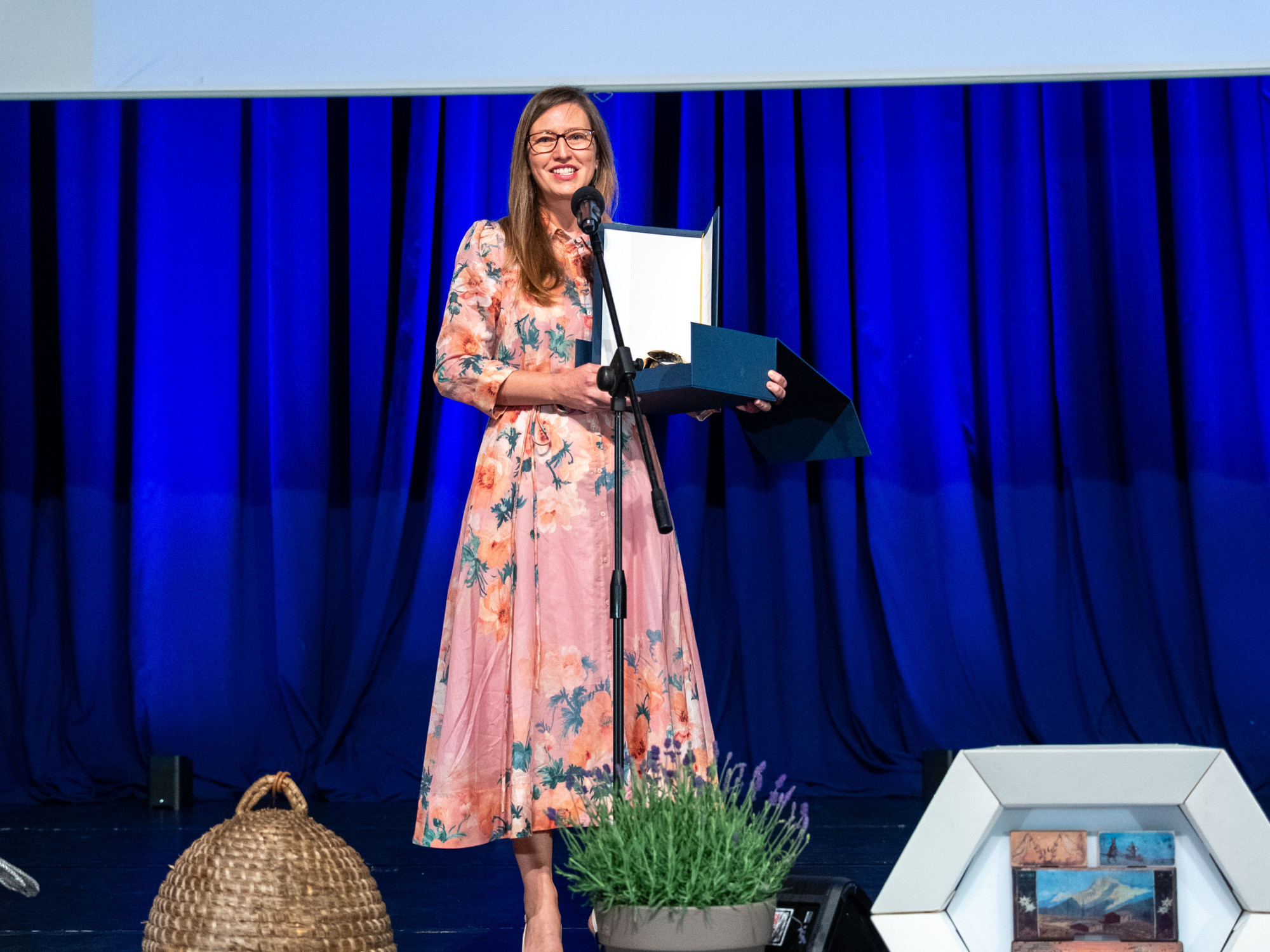
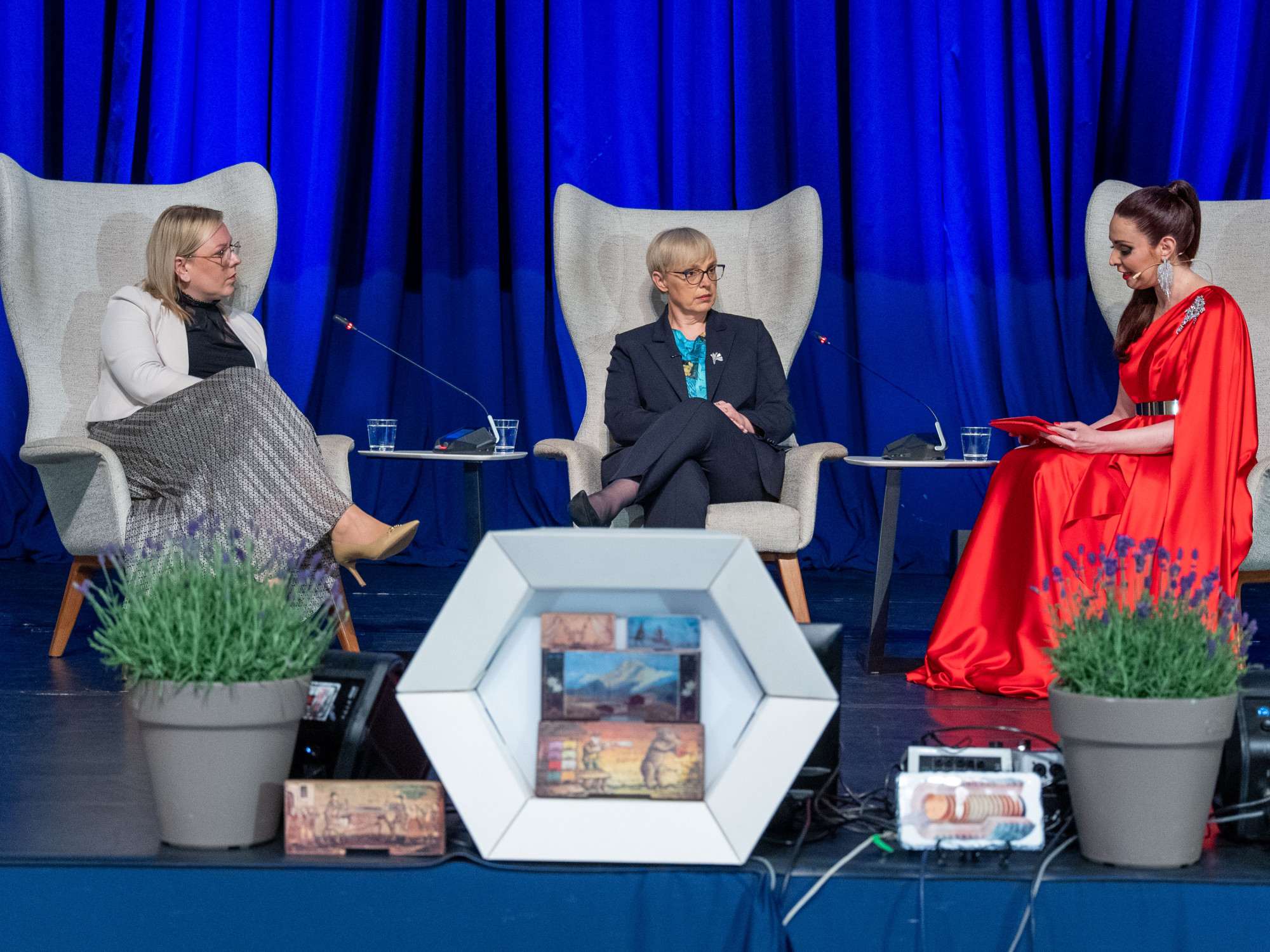
The award committee received 13 research proposals from ten countries, namely Croatia, Serbia, Italy, Germany, Spain, the United Kingdom, the United States, Canada, Egypt and Togo. The winner was announced by the Minister of Agriculture, Forestry and Food, Mateja Čalušić, and the golden statue was presented to the Bee-etal mentor and project leader María del Mar Leza Salord by the President of the Republic of Slovenia, Nataša Pirc Musar.
The research team based at the University of the Balearic Islands specialised in pollinator ecology, invasive species and environmental stressors. In their work, they use modern approaches and innovative technologies and work closely with farmers and public services. They were the first in Europe to successfully eradicate the invasive Asian hornet on Mallorca.
In her remarks, Minister Mateja Čalušić said: "Bee-etal Lab demonstrates how interdisciplinary approaches – ranging from ecological modelling to genetic analysis – can serve as a flexible model for pollinator conservation across Europe and around the world."
Award recipient María del Mar Leza Salord explained how important it is for scientists, beekeepers, the local community and others to work hand in hand, as significant results can only be achieved through collaboration. She stressed that bees are also part of the community: "Bees work silently, carrying out a great deal of unseen work. They not only carry pollen, but also the very life of our planet."
On World Bee Day, President of the Republic Nataša Pirc Musar emphasised: "By caring for bees, we are actually caring for the future of humanity, food security and the common good."
Minister Čalušić also drew attention to the new European rules on honey origin labelling, which were adopted as part of the revision of the Honey Directive and put an end to misleading labels. From 14 June 2026 onwards, honey producers will be required to label the origin of their honey, listing all countries of origin in descending order alongside the corresponding percentage share, accurate to the nearest five per cent.
Minister Čalušić said: "From now on, consumers will have clear information about all countries of origin. This is a major victory for Slovenia, which has been striving for transparency for many years." What's more, products of Slovenian origin will also be marked with the Slovenian flag to ensure even greater transparency and visibility on store shelves.
By conferring this international award, Slovenia builds strong international ties and strengthens its reputation as a green and biodiverse country, renowned for its beekeeping tradition. This encourages the efforts in food safety, sustainable agriculture and environment protection both domestically and abroad. Through World Bee Day and the Golden Bee Award, Slovenia promotes the transfer of knowledge and technology, further solidifying its global reputation as a green, healthy, proactive and innovative country.
World Bee Day
Commemorating World Bee Day serves to raise public awareness about the critical role bees and other pollinators play in our survival on this planet. Unfortunately, bees are critically endangered in many regions due to various factors, most notably climate change. Bees require clean air, water and a healthy environment. By preserving the environment and supporting bees' survival, humanity benefits from a healthier and more beautiful world. Above all, we must once again recognise the vital role each individual plays in preserving bees and other pollinators.
Slovenia has already established a global reputation as a bee-friendly country, not least through the inscription of Slovenian beekeeping on the UNESCO Representative List of the Intangible Cultural Heritage of Humanity, holding the record for the highest number of beekeepers per capita, and by its unique native bee species – the Carniolan Honey Bee, renowned for its gentle nature and diligence.
World Bee Day is also an excellent opportunity to highlight the importance of nature preservation, sustainable development and respect for the natural resources vital for the well-being of our planet and future generations.